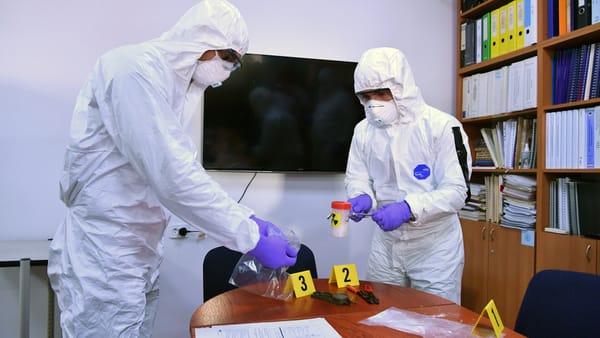

I’ve loved chess for as long as I can remember, despite not being very good at it. At time of writing, the FIDE World Championship just finished, and the fact that the games started at 4 am here on the east coast may or may not have completely destroyed my sleep schedule more than it usually is.
Many of you may think that watching a five hour classical chess game live is a good way to put yourself to sleep, and it largely was. A few of the games did manage to be really exciting, though I was a bit annoyed to fall asleep near the end of game 14 when the position was a dead draw, only to wake up and find out that one of the players blundered and we had a new world champion.
Anyway, a big part of why I never got very good at chess is that I didn’t really have anyone to play with growing up. The only real practice I got was in high school, and no I was not a member of the chess club, just the math team. One of my friends would bring a chessboard to school so we would play during study hall, and sometimes English class.
But there are a lot of things you can do with a chessboard besides just play chess. Most obviously, you can also play checkers. Or you can teach somebody about the concept of exponential growth by putting an item on one square then trying to double the number of items on each subsequent square. You can even whack your classmate in the back of the head with it if the teacher isn’t looking.
For Alexander Pichushkin, however, his prized chessboard was used to keep track of his number of murder victims. His goal was to fill all 64 squares with victims and beat out Andrei Chikatilo for the title of most prolific serial killer in modern Russian history.
Early Life
Alexander Pichushkin was born on April 9, 1974. We’ve covered a lot of murderers on this channel, and there’s usually some sort of horrific backstory. So much so, that “don’t fuck up your kids” is one of the most important rules here on the Casual Criminalist. However, that’s not really what happened here. Alexander’s father was a worthless drunk who abandoned the family when Alexander was only nine months old, but having no father is almost certainly better than having a drunk and abusive father.
His mother is also sometimes described as neglectful, though I’m not entirely sure how fair that is. She was a single mother raising a child and also trying to find a new husband, so of course she was going to be very busy. As far as I can tell she was a loving parent, and by all accounts Alexander was a happy and normal kid with a normal childhood. Had nothing gone wrong, it’s suspected that he would have led a quiet and peaceful life.
But something did go wrong, although what happened probably wouldn’t be anywhere in your first thousand guesses. The major turning point in Alexander’s childhood wasn’t some act of abuse or witnessing something truly horrific that broke his psyche. Instead, it was a fairly ridiculous accident that sounds like it came straight out of a Charlie Brown cartoon.
When Alexander was four years old, he was playing on a swing, as children are wont to do. However, he went too high and fell backwards off the swing. Alexander wasn’t injured so he quickly stood back up, just in time for the seat to swing back down and hit him directly in the forehead.
We often think of children as being made of rubber, because compared to adults they are. Children’s bones are much more flexible than the bones of an adult, which makes them less susceptible to breaking. Unfortunately they also aren’t as strong, with a child’s skull only being about one eighth as strong as an adult’s.
According to experts, it’s believed that this blow to the head caused damage to the frontal cortex of Alexander’s brain. Damaging this part of the brain can result in aggression and poor impulse control, and Alexander’s mother immediately noticed a change in his behaviour. He had once been a friendly and sociable child, but after the accident he became aggressive and impulsive.
The injury also caused language problems for Alexander, as he was now reversing the letters es and sha both in speech and in writing. Those are the Cyrillic letters that make the “s” and “sh” sounds, so it would have sounded a bit like he was speaking with a lisp. The fact that he was writing with the letters reversed was a bigger problem when it came to school.
And there was no shortage of problems at school for Alexander. In addition to this difficulty with those two letters, his impulsive behaviour made him stand out as well. Standing out because you’re exceptional at something can be great in school, but standing out because you’re constantly misbehaving and can’t spell simple words correctly is not. Alexander’s classmates would torment him, bullying him endlessly and referring to him as “that retard” (it was the 1970s, after all).
Alexander’s mother transferred him to a school for children with disabilities, hoping that his ability to socialize and develop would improve once he was away from all the bullies. He attended a boarding school specializing in speech therapy, though I’m unclear if that was the initial school his mother sent him to or if she transferred him a second time. Regardless, it did not help. No matter where he went, Alexander felt like an outsider and his socializing skills didn’t really improve.
However, as he approached adolescence, his grandfather decided that it was time for a change. He had always believed Alexander was highly intelligent, and he thought that the boy’s talents were being wasted. The special schools Alexander attended were focused on overcoming disability rather than on actual school stuff, so his grandfather felt that he wasn’t really being given an opportunity to excel.
Instead, Alexander’s grandfather pulled him out of the boarding school and moved him into his own home. He was put back into the mainstream public school, and his grandfather encouraged him to try sports and to pursue some intellectual pursuits outside of school.
Alexander never got into sports, but he did enjoy working out. His grandfather installed a horizontal bar so that Alexander could use it for pull-ups. This was theoretically great for Alexander, as he believed getting visibly swol would prevent the other kids from bullying him anymore. More importantly, however, his grandfather taught him how to play chess.
And he was a natural. Within days, Alexander was winning almost every game the two played together. His grandfather was thrilled, so he took Alexander down to Bitsevski Park, better known as Bitsa Park, to play chess.
In case anyone is unfamiliar, this is an extremely common thing. Chess is frequently played in parks, and in New York City alone you can find people playing in Washington Square Park, Central Park, and Union Square Park on a pretty daily basis. Probably less so in the winter. There are always people of all ages and skill levels playing, but one of the biggest draws of these locations is the chess hustlers.
At least back in the day when this story was happening the parks were full of hustlers, anyway. Don’t get me wrong, there are still plenty of extremely strong players hanging out in these parks, and sometimes well known international masters and grandmasters will go there as well. I just mean that the master level players who hang out in the park are no longer trying to hustle people and swindle them out of money. These days you just pay upfront to play a game against them and maybe receive friendly advice along the way, rather than it being gambling where they let you think you have a chance to win.
Going back to Bitsa Park though, this place is enormous. The entire park is 18 square km, or nearly 4500 acres. By comparison, Central Park in New York is a mere 840 acres, meaning Bitsa Park is over five times as large. Of course, a lot of the park isn’t really used for anything. There are large sections of the park that are heavily wooded and isolated, areas that there aren’t even walking trails through. That’s probably not important though, so let’s move on.
But in the section of the park where people were playing chess, Alexander finally felt like he belonged somewhere for the first time in his life. He had always felt like an outsider, but the old men playing chess in the park absolutely loved him. Their affection for him only increased once he started whooping all of their asses in chess. They saw him as their own little chess prodigy, and even though he was still being bullied at school (he wasn’t swol yet), they made sure he knew that he would always have a place in the park with them.
Not only did chess give Alexander something to be proud of and a community of people that made him feel like he belonged, but it was also an outlet to release his aggression. Not through physical violence, but by domination in chess. Sure, his opponents would spend the entire day chugging vodka in the park while they played, but even drunk they were still probably better than you or I am at chess.
Unfortunately for Alexander, things began taking a turn when he was 14. His grandfather started dating a woman, and he spent most of his time with her. To be fair, that makes sense. I can’t find his grandfather’s exact age anywhere, but if Alexander was 14 then his grandfather was probably at least 54, and likely closer to 64. At that age if he suddenly had the opportunity to get laid on a regular basis, it’s hard to imagine he wouldn’t immediately seize the chance.
But this situation filled Alexander with resentment. He felt like his grandfather was abandoning him just like his father had, and he became bitter against the world and people in general. His grandfather’s romantic endeavours weren’t going to last, though. Not because he and the woman broke up, but because he suddenly died.
The First Murder
Alexander had to go back to live with his mother, and he enrolled in a local vocational school to study carpentry. He also began drinking vodka to numb the loss of his grandfather, who was also his best friend. The old men in the park were always drinking while they played chess, so now he would join them in getting shitfaced. The only difference was that it didn’t seem to hinder his gameplay at all. That’s what he claimed anyway, but this might have been one of those “I drive better when I’m drunk” situations.
During this time period, Alexander also began adjusting to his new school, in a manner of speaking. He had spent the past few years doing pretty much nothing except playing chess and doing pull-ups, and the effects of the latter were now extremely visible. I don’t know exactly how old he was in these pictures, but here are some younger photos of Alexander to give you an idea of how strong he had become. I’m sure I’ll mention it multiple times going forward, so I figured you’d appreciate if I give you a frame of reference rather than just having you guess.
Girls really seemed to like him, or at least the fact that he looked like he could break them in half, and his mother even recollected finding a note one of his female classmates gave him that was romantic in nature. However, she also said that she never remembered him having a girlfriend at any point in his life. Instead, he continued to gravitate to the old men in the park. According to his mother, it was clear that he had daddy issues and was desperate for the love and approval of some sort of father figure, especially after the sudden unexpected passing of his grandfather.
But it wasn’t just his new physique that got Alexander attention at school. It was also his money. He wasn’t rich or anything, and honestly I’m not sure where he got any money in the first place unless it was from hustling at chess, but he was always happy to offer his classmates loans. He was extremely generous about lending people money, and he only asked for one thing from them in return: a suicide note.
Alexander explained to anyone that borrowed money from him that if they didn’t pay it back he would fucking murder them, then use the note to make it look like a suicide. Would that plan actually work? Of course not. When his classmates all tipped off the police and they found he had a collection of dozens of these suicide notes from different students, it would be pretty easy to put together what really happened.
That said, nobody actually wanted to test Alexander on this either. Sure, he wouldn’t actually get away with murdering them, but that doesn’t mean he wasn’t crazy enough to do it. Everyone was pretty sure it was a dumb joke and that he wasn’t serious about it, just not sure enough to risk their lives on it.
However, as concerning as that whole thing may be, during this time period Alexander developed a much more unsettling hobby: tormenting children. He had spent most of his life being physically and verbally bullied by the other children, and now he wanted revenge. Not on the people that actually bullied him, but on any random child he came across.
This often occurred in Bitsa Park while he was playing chess. I guess the old men either didn’t care or they thought it was all in good fun, since Alexander usually presented his threats in a joking manner. Or maybe they were just too drunk to notice. He would also torment children in his apartment building as well, a five story apartment complex in southern Moscow.
Obviously this is not appropriate behaviour, but it’s not unpredictable either. It’s well known that perpetrators of bullying or abuse were often victims of it themselves, creating a never ending cycle. However, Alexander’s actions went beyond just bullying children because of his own unresolved childhood issues.
Whenever he was going somewhere that he knew he would come into contact with children, he would bring a video camera with him. He would then proceed to record himself harassing the children so that he could watch the videos back later and revel in the feelings of God-like power that his assaults gave him.
In one of these videos, he held a child from his apartment building over a balcony by one leg. He then looked at the camera and said, “You are in my power now. I am going to drop you and you will fall fifteen meters to your death.” Fortunately he didn’t drop the kid, but eventually these threats weren’t going to be enough to sate Alexander’s lust for power. And that’s when he found a source of inspiration.
In 1992, Andrei Chikatilo was convicted of 52 of the 53 murders for which he was tried. He began making headlines as the most prolific serial killer in Russian history, though this isn’t completely accurate.
There were these two women back in the days of the Russian Empire: Darya Saltykova in the 1700s and Olga Briscom in the 1800s. Both were members of the aristocracy who were known for torturing and murdering serfs on their estates. Olga had 128 confirmed victims, and though Darya only had 38 confirmed, she is believed to have murdered 147 serfs. Maybe they aren’t normally listed because it happened so long ago, or maybe it’s because serfs weren’t considered people so those murders didn’t count.
Regardless, Chikatilo was big news, and he became Alexander’s idol. He started dressing like Chikatilo and collecting newspaper clippings about him. It’s said that he had never actually considered murder before this, though I don’t know how sure of that we can be since he isn’t always the most reliable narrator when it comes to his own motivations. Regardless, Alexander had just turned 18 years old, which meant it was time for him to decide what he was going to do for the rest of his life.
And his decision was to become Russia’s most prolific murderer.
But it was more specific than that. He was going to murder 64 people, one for every square on a chessboard. At least that may have been the original goal. After his arrest, Alexander denied any intentions of stopping at 64 murders, and he said that once his chessboard was full he was going to start filling all 100 squares on an international checkers board. I didn’t even know such a game existed, but it’s just checkers played on a 10x10 board instead of an 8x8 one.
Now that Alexander had his plan, there was just one problem. Two if you count the fact that his plan was insane and he should absolutely not go through with it. But to Alexander, the problem was that he had never murdered anybody before, and he wasn’t really sure how to go about doing it. Intent on breaking every one of the Casual Criminalist’s rules for criminals, he decided that perhaps he needed an accomplice to commit the murders with.
Alexander went to his friend and classmate, Mikhail Odïtchuk, and said that he wanted a partner to help him murder a bunch of people. Mikhail’s response was essentially, “Fuck yeah! I am so down to be a serial killer!” According to Alexander, they both claimed that they wanted to be maniacs, so they began planning how to kill people. They agreed that their weapon of choice would be a hammer.
Unfortunately for Mikhail, his heart wasn’t really in it. He wasn’t actually interested in killing people and had originally gone along with it for a laugh, but now he was in a bind. He didn’t know how to distance himself from the bloodthirsty Alexander, so he halfheartedly kept going along with things, feigning his desire to commit murder.
This decline in interest really pissed Alexander off. He thought he had found a partner to commit his crimes with, but it was clear to him that Mikhail thought it was all a game. His resentment towards Mikhail continued to grow until he decided that if Mikhail wasn’t going to be his accomplice, he would instead be the first victim.
Over the next two months, Alexander plotted Mikhail’s death. Not only was it going to be his first murder, but ultimately it would be the only one that involved any long term planning. Alexander didn’t want to get caught, but he knew he was going to be a suspect. Eventually he decided that as long as a body was never found, it wouldn’t be ruled as a crime.
Initially he thought about burying Mikhail’s body or drowning him in a lake, but he ruled these out. Both options seemed like they would require far too much time and effort, with too high a chance of being noticed. Instead he came up with a much more elegant solution.
Alexander invited Mikhail to Bitsa Park, claiming that they were going to search for a spot to lure their first victim. Mikhail agreed, not realizing that he was the first victim being lured to his death. As they ventured off the path and into the woods, they arrived at what is alternatively described as either a well or a sewer.
Basically it was a manhole cover that led to sewers running beneath the entire park, emptying into the city’s main sewer system. A body that was dumped into one of these sewers would either be lost forever or turn up at one of the city’s sewage treatment plants. When this happened there would be no way to determine where the body entered the sewers, and the deaths would be written off as either accidents or suicides.
Once they arrived at the location, Alexander wrapped a nylon cord around Mikhail’s neck and strangled him to death before dumping his body into the sewer and heading home. And he fucking loved it. He equated his first murder to his first love, and was thrilled that it had been somebody he knew. Although a number of his eventual victims would be strangers, Alexander much preferred to kill people that he was acquainted with.
Even if it was a complete stranger, he would talk to the person as much as possible before ending their life. He wanted to know all of their hopes and dreams, reveling in the knowledge that they had all of these plans for the future, a future that they would never see because of him. Having direct knowledge of the life he was robbing his victims of made Alexander feel like a powerful deity.
Of course, once Mikhail disappeared, police came knocking on Alexander’s door. He was the last person anyone had seen Mikhail with, and another classmate undoubtedly revealed to police that Mikhail was among the people that had written one of those suicide notes in exchange for a loan.
But Alexander was able to remain completely calm while being interviewed, hiding his sadistic glee over the situation. He admitted to going to Bitsa Park with Mikhail, but said that he had left his friend there unharmed. I mean, probably not in those exact words since that would sound suspicious, but you know what I mean. They went to the park and everything was fine, then Alexander walked the five minutes back to his apartment.
In the end, with no body and no reason to suspect foul play, Mikhail’s file was tossed among the countless other missing person cold cases. However, the whole ordeal with being interrogated by the police spooked Alexander. Despite being in very good shape already, he was also concerned that he wouldn’t be able to overpower someone stronger than Mikhail. As a result, Alexander didn’t kill again for nine years, spending much of his time focusing on working out and getting even stronger.
Now if anybody reading this is familiar with the case, there’s a good chance you may have heard a story that contradicts what I just said. There is a frequently repeated claim that Alexander killed one more person in 1992 and another a few years later, before his real spree began. There are even two different versions of that story.
According to the story, Alexander had a neighbour named Olga, who it is claimed he was in love with. In some versions of the story she had no interest in him, and in others she had been his girlfriend but dumped him. Either way, she began dating another boy named Sergei. It’s said that Alexander went to Sergei’s apartment to confront him and threw him out of a window.
Although Alexander was interviewed as a possible lead in the case, it was ruled a suicide by police. Five years later, Olga was found dead in Bitsa Park and it is believed by some that she was one of Alexander’s victims.
I figured it was worth addressing since I’ve seen this story so many times and maybe people may be familiar with it, but I am like 99% sure that never happened, especially because there are no last names for the supposed victims and the story didn’t appear in a single Russian source I found. There indeed was a woman named Olga who Alexander fell in love with, a victim named Sergei whose girlfriend Alexander met, and a defenestration, but those are three unrelated stories that will all come later. I’m pretty sure this was a case of one person publishing a story with some of the details mixed up, possibly from faulty translations, and it then getting repeated in countless other articles, because internet.
The Nine Year Lull
After graduating high school, there was an obvious next course of action for Alexander. He had been studying to become a carpenter, but there was a much more appealing career opportunity. He was in excellent physical shape, his skill on the chessboard showed a brilliant tactical mind, and he really wanted to kill people. What would possibly be a better fit than joining the army?
Unfortunately for Alexander, the army disagreed. I don’t know what the Hell he said during his interview when trying to enlist, but it must have been pretty concerning. He failed his psych eval and was instead given a referral for a psychiatric facility to treat what they perceived as serious mental health problems. Alexander did not take them up on this offer, instead coping with the rejection by becoming a severe alcoholic.
He had already been drinking lots of vodka at this point, but it got really bad. Alexander would get so shitfaced that when he returned home to the apartment building, he would have to wait for his mother to get home to help him up the stairs. Aside from the old men in the park with whom he played chess, he had no friends. The only two that he really cared about were his pet cat and dog.
While serial killers often start by torturing and killing animals, Alexander was an animal lover. It was one of the few things his neighbours knew about him. A neighbour even recalled finding Alexander drunk and sobbing in the stairwell of the apartment building because an animal had died and he was unable to help it. It wasn’t even one of his own pets in this instance, either.
But with his dreams of joining the military over, Alexander did need to get a job. Rather than going into carpentry as he had trained for at the vocational school, he got a job stocking shelves at a local grocery store. This would be the same job he held until he was finally arrested.
And really, that’s pretty much all that happened for the next nine years. Alexander was either at work, drunk, playing chess, or some combination of those things. Even though people generally regarded him as friendly and he is usually described as well liked, he was mostly just floating through life.
And I say he’s usually described as well liked, but he apparently also had a rather disturbing tendency of spending his free time at work hanging out in the back room and mercilessly stabbing boxes with his box cutter. Even if his neighbours and random acquaintances thought he was nice, his coworkers who witnessed this behaviour thought he was a weird and creepy guy they wanted nothing to do with, and understandably so.
Then, tragedy struck. I’m not sure whether this happened in 2001 or if it was earlier, but Alexander’s beloved pet dog died. He buried the dog in Bitsa Park, at a location to which he would frequently return.
The Sewer Years
On May 17, 2001, Alexander would claim his second victim, a 52 year old man named Yevgeny Pronin. The two were actually well acquainted, as Yevgeny was one of the older men with whom Alexander would play chess in the park. After their game, he said it was the anniversary of his dog’s death and asked if Yevgeny would come to the grave to share a toast with him in honour of the dog.
The park was considered a safe place until Alexander rose to infamy, so there was no reason to be suspicious of walking into the woods. Plus, Yevgeny was never one to turn down a free drink. His nickname was “Kayf”, which was a term used in Russia to describe drug induced euphoria. Basically, he was so perpetually intoxicated that his name was just “stoned”.
They walked into the woods, presumably to where Alexander had buried his dog, and they shared some vodka while toasting to the memory of Alexander’s beloved pet. Then, Alexander swung the vodka bottle against the back of Yegveny’s head, incapacitating the man. He then tossed the body into the sewers, where Yegveny died by drowning in sewage.
Alexander then went home to begin tallying his victims. Before using his chessboard, he originally used the “fifteen squares”, which is either a nickname for one of those sliding puzzles with 15 tiles or it’s just an awkward translation. Either way, he glued the numbers 1 and 2 onto the tiles to represent Mikhail and Yevgeny’s murders, using numbers that were cut out of either a magazine or newspaper.
This continued until all 15 tiles were filled, at which point Alexander switched to his chessboard. He began filling the chessboard squares by gluing checkers to the board. Once he ran out of checkers, he used bottle caps from beer and vodka bottles. This was eventually replaced with a board using numbers as the original sliding puzzle had.
And it didn’t take long for Alexander to exhaust the tiles on the sliding puzzle, as his third murder took place just six days after the murder of Yevgeny. This time, his victim was a 64 year old man named Vyacheslav Klimov. He met Klimov at a nearby metro station, and the two began talking and drinking together.
For the most part, all of the early murders were extremely similar. Alexander would target old men and lure them to the woods in Bitsa Park to toast to the anniversary of his dog’s death. The men he targeted were generally either homeless or loners, and they were almost always alcoholics. It was easy to lure people into the park with the promise of free cigarettes and vodka, and once there Alexander would toss them into the sewers to drown.
A month after Klimov’s murder Alexander tried again, though this time things didn’t go quite so smoothly. He met a roughly 60 year old man he referred to as Yuri, though the body was never properly identified so his full name and age are unknown. Yuri was outside a nearby sporting goods store, and Alexander lured him into the woods as he had the others. When he tossed Yuri into the well, however, Yuri caught himself on a piece of metal on the way down.
Alexander had to lower himself down past the manhole cover and hit Yuri’s hands until he finally let go and fell to his death.
Four days later Alexander struck again, this time targeting 65 year old Nikolai Tikhomirov. Three days later, 73 year old Nikolai Filippov went out to buy cigarettes and never returned. Another three days later, it was 49 year old Oleg Lyov.
Oleg and Alexander had actually known each other for about five years and had stayed in touch pretty much the entire time. I believe it was one of his chess friends from Bitsa Park. However, when they ran into each other that day in July, Oleg revealed that he had been homeless for about two weeks at that point. Thanks to this new revelation, Alexander decided he would be the next victim and invited Oleg to come toast his dog in the woods.
Of all of the people he killed, Oleg is the only one that Alexander admitted to ever feeling any guilt or remorse over. It must have weighed heavy on his soul, because after taking another victim every three or four days for almost two weeks, Alexander instead took a break for eleven whole days.
Then on July 13th, he met Gennady Safonov, a 61 year old man who had escaped from a local rehab facility. The next day, Alexander ran into an acquaintance, 44 year old Sergei Pavlov. Alexander invited Sergei to come drink with him in the woods, which was weird since he was walking home with his girlfriend at the time. At first Sergei refused, but eventually he sent his girlfriend home ahead of him and went into the woods with Alexander.
Sergei was the youngest victim since Mikhail, and he was also the first person to fight back. Unfortunately Alexander was able to overpower him and toss him into the sewers. A week later, Alexander did the same to 45 year old Viktor Yelistratov and 54 year old Viktor Volkov on consecutive days.
That was ten victims in just two months, all of whom disappeared in the same place. It’s the sort of thing you would expect to get a lot of press, right?
Well sadly, no. Nikolai Tikhomirov’s body was discovered at a sewage treatment plant the day after he was murdered. When his stepson was informed that Nikolai had been found dead there, his response was essentially, “Yeah, that sounds about right.” Nikolai was a severe alcoholic who was frequently too drunk to walk without falling over, so the idea that he would have accidentally fallen into a sewer and drowned just seemed to make sense.
I don’t want that description to come across as being disrespectful to the victims, but the stepson’s reaction was exactly why these were the people Alexander was targeting. He wanted to murder people that either didn’t have anyone who would notice they were gone, or who could plausibly disappear without warning and/or accidentally wind up dead in a sewer.
That’s not to say that there wasn’t anybody concerned about the other disappearances, though. Some of them were reported missing, but those reports weren’t given a lot of attention. The sewers in which Alexander disposed of his victims were near the southern portion of Bitsa Park, bordering the Yuzhnoye Butovo District of Moscow. This area was known to locals as “zhopa mira”, literally “the asshole of the world”.
That nickname was used to describe various places throughout Russia that were poor and underdeveloped, but for those in Moscow it almost always meant the Yuzhnoye Butovo District. In the 1990s and early 2000s anyway, it’s a lot nicer now.
But as it turns out, some people don’t want to live in the world’s asshole, they wanted a better life. As such, people disappearing was a pretty common thing. They would try to move somewhere in search of better opportunities, but more often than not they would always return. Given how frequently this happened, police didn’t take a handful of disappearances seriously. After all, it’s not like they knew that all of these men had disappeared in the same place after last being seen with the same person.
As far as the police were concerned, these men were probably just trying to escape their shitty lives and would be back within a couple weeks after failing. If they never came back, then either they succeeded and decided to start a new life without their existing family, or they were roaming the streets of Moscow as drunken transients. Either way, the police felt it wasn’t their problem. Ten murders in two months, and the police had no idea there had been a single murder, let alone that there was a maniacal serial killer on the loose.
On July 26, five days after his previous murder, Alexander would try again. But this time he made a mistake that nearly resulted in him getting caught. His victim was 22 year old Andrey Konovaltsev, better known to his friends as “The Terminator”. Unfortunately, despite the badass nickname, this encounter didn’t end the way we all would have wanted.
Alexander was able to overpower Andrey and toss him into the sewers, but one blow to the back of the head with a vodka bottle hadn’t been enough to take him down. Andrey was able to resist and call for help, but by the time anyone arrived both Andrey and Alexander were gone. And I guess they either didn’t notice the manhole cover or it didn’t occur to them someone could have been thrown down there.
Still, it was too close a call, and Alexander decided to lay low for the next six months. But he wasn’t able to resist his urges. As he later explained when asked why he killed so many people, “For me, life without murder is like life without food for you.” He needed to kill again but he didn’t want to get caught, so he decided to try something different.
On January 18, 2002, Alexander ran into a 39 year old homeless man known only as Vyacheslav. He convinced the man to come join him for a “party” in the stairwell of a nearby 16 story building. The two drank in the stairwell together for a bit, then Alexander threw the man off the 16th story of the building.
The death was ruled an accident so Alexander was able to avoid suspicion, but he wasn’t satisfied. Murder usually gave him sexual gratification, as well as a feeling of God-like power, but this method didn’t do anything for him. So it was back to his tried and true method of murder back in Bitsa Park, as he already knew that would give him the pleasure he sought.
Eleven days later, he murdered 42 year old Andrei Veselovsky. Two weeks later, his victim was 47 year old Yuri Chumakov. These murders played out exactly as all the others had, and again his victims were both known alcoholics whose disappearances didn’t draw any attention.
But two weeks later on February 23, he would change things up a bit. Rather than targeting predominantly older men, he was ready to take his first female victim: 19 year old Maria Viricheva, who was five months pregnant with a baby girl. She had a stand selling cosmetics near the metro station where Alexander would frequently search for drunken victims, and the two had been casually acquainted for about a year.
That night, Maria was crying because she had a fight with her boyfriend, so Alexander made her an offer to help cheer her up. There are two different stories of exactly what he offered to lure her into the park. In one version, he offered to pay her to help him carry some heavy bags home. You know, because pregnant women are known for carrying heavy things for people and not the other way around.
According to the other version of the story, he offered to give her some boxes of cameras he had stolen from a factory and hidden in the woods. He told her she could make a lot of money pushing the stolen cameras at her stand, and that he would let her keep most of the profits. Regardless of which method he used, he was able to lure Maria into the woods and toss her into the sewer.
Maria managed to catch herself as she was falling by grabbing onto the sides of the opening to the sewers, so Alexander grabbed her by the hair and smashed her head into the stone walls of the well until she let go and fell into the sewer. Unlike most of the other victims, however, Maria survived the fall. She was initially in shock after plunging into the icy waters below, but she managed to regain her composure as the current began carrying her away.
She found a fixture she could grab onto to keep from getting swept away, and she knew there had to be a hatch through which she could escape. But it was nighttime, so there was no way for her to see. All she could do was hold on and stand waist deep in the frigid waters until dawn broke, hoping she would see sunlight sneaking into the sewers from a hatch through which she could escape.
As it turned out, the hatch had been right next to her the entire time. Maria used the last of her strength to open the hatch and crawl out before collapsing on the ground and calling for help. Some passersby heard her and immediately called an ambulance and the police.
She was taken to the hospital to treat her still bleeding head wound and was interviewed by the police. Maria explained that this man had tried to murder her in Bitsa Park and that she could definitively identify him. The police’s response to her story was something that many of you may have heard Simon say numerous times before: “Papers, please”.
When the Soviet Union fell a decade earlier, jobs in Russia were difficult to find. Many people, including Maria, illegally moved to Moscow for work without proper registration papers. The police decided that they’d let her crime slide so long as she dropped this whole attempted murder thing and didn’t go ahead with filing charges.
Now obviously that is fucked, and I’m not going to defend the police here. I do think I can at least explain why this might have happened though. I mean, to start there was a lot of police corruption. But when authorities finally acknowledged there was a serial killer on the loose, the head of the Moscow Criminal Investigations Department was Andrei Suprunenko. The reason Andrei was able to be promoted to this position was because his predecessor was murdered by the organized criminals in Moscow.
That’s still no excuse for what happened and if you’re too scared of criminals to do your job then don’t become a police officer, but given that the Russian mafia apparently had no problem murdering cops, I can at least sort of understand why they may not have wanted to risk their lives over a mere attempted murder. Or maybe they were just fucking lazy. Either way, sounds like whoever interviewed Maria really shouldn’t have become a cop in the first place.
In the interest of fairness though, I will mention that one Russian source (most of which were silent on this matter) specified that it was Maria who chose not to involve police at all, with her instead claiming she fell into the sewers by accident to avoid drawing attention to herself and the fact that she was in Moscow illegally. It’s possible this was just revisionist history by the Russian press to keep the police from looking bad, but both versions of the story agree that her lack of registration papers was the reason an investigation into her attempted murder never went anywhere.
On the bright side, though, none of this had any effect on Maria’s pregnancy, and she gave birth to a healthy baby girl a few months later.
Of course, Alexander had no idea any of that happened. As far as he knew Maria’s murder had been just as successful as the others, so four days later he took another female victim, Vera Zakharova.
A week later, his victim was 47 year old Boris Nesterov. Alexander had already had some problems with his younger victims fighting back, but this time he was shocked when Boris did something he hadn’t even considered. The two drank in the woods for a bit, then Boris just started walking away back to the park entrance before Alexander even had a chance to attack him.
Alexander chased after Boris, who turned around and quickly punched him in the throat. It wasn’t enough to dissuade him though, and he was able to knock Boris down, kicking him in the head until he stopped resisting. He then dragged Boris’s body back to the sewer and dropped it inside.
With this murder not having gone quite as expected, Alexander decided to choose an easier target for the very next day. Alexei Fedorov was a 42 year old man living with his mother and sister in the same building where Alexander lived. Alexei was another heavy drinker and was also disabled. This murder went according to the usual plan, with the only difficulty being that Alexei was so overweight it took Alexander about 20 minutes to force his body into the sewer.
Two days later, Alexander chose 13 year old Mikhail Lobov as his new victim. Mikhail was an orphan who often ran away from the orphanage. He would hang out with other young punks drinking vodka near the metro station where Alexander often found his victims. Alexander enticed him to the woods by offering him money for helping move some heavy appliances. They drank as they walked, then Alexander hit him in the back of the head with the vodka bottle and tossed him into the sewer like all the others.
But just like Maria, Mikhail survived the fall. His jacket got snagged on something preventing him from being swept away, and he climbed his way back out of the sewers. Once again Mikhail went to the police fully able to identify Alexander, and once again the police weren’t interested. Even though Mikhail had just survived an attempted murder, all the police saw was a punk kid who reeked of vodka and sewer water who was trying to play a prank on them.
A few days later, Mikhail and Alexander saw one another at the metro station. Mikhail understandably freaked the fuck out and tried to alert a nearby police officer, but again the police weren’t interested in what they saw as the lunatic ravings of a punk teenager.
Once again though, Alexander was spooked and decided to lay low for a bit. It would be over five months before he killed again. More importantly, he decided he had to change things up. He still didn’t know that Maria survived, but he had seen Mikhail alive and well after he thought the boy was dead. That couldn’t happen again, so from now on he wasn’t going to throw anybody into the sewers until he was sure they were dead.
His next murder would be completely different, though. On August 24, he chose 43 year old German Chervyakov as his new victim. German was a violinist by trade, but he had recently lost his job and his home. However, there was a cabin he was staying in for the summer. It’s unclear whether he owned this cabin, was being allowed to stay there by someone else, or was squatting, but that’s not really important.
Alexander had acquired a new weapon, and the cabin gave him somewhere isolated to test it out. That weapon was a pen gun. I kinda thought these were fictional or at least impractical devices that only really existed in spy movies, but they are apparently very real and widely available for sale. Well not in Russia, Alexander had to get his illegally, but if you’re an American you can just buy them.
Because who wouldn’t want to keep a gun clipped to their breast pocket so that if it misfires it shoots directly into your heart.
Anyway, Alexander snuck into the cabin in the early morning hours and fired his pen gun at German. He missed, so he fired again and the second bullet killed German instantly. Alexander then went home and left the body in the cabin, though this wouldn’t be tied to the other murders until he confessed to it, because of how different it was.
He used the pen gun to take two more victims in September, Nikolai Ilyinsky and Vyacheslav Minaev. His next attempt on September 30th didn’t go as well though. His new victim was 42 year old Sergei Fedorov. Sergei, also known as “hedgehog” for reasons I haven’t been able to deduce, was a homeless man living in Bitsa Park. Alexander again lured him to the sewer with free booze and attempted to shoot him from behind with the pen gun.
Alexander fired twice, hitting Sergei in the head both times, but Sergei didn’t die. Alexander then injured himself while trying to reload, so he just grabbed the crowbar he used to pry open the manhole cover and hit Sergei in the head with it. He threw Sergei’s body into the sewer, then tossed the pen gun in as well, deciding it was a useless weapon.
Instead, he was going to rely on something much more simple. He was going to use the weapon that he and Mikhail had agreed upon all those years ago: a hammer. His method still remained largely the same, luring people into the woods to toast the anniversary of his dead dog, but now instead of just tossing them into the sewers Alexander would bash their skulls in with a hammer first.
He would always attack from behind, both for the element of surprise and because he thought it would prevent blood from getting on his clothes. The repeated strikes from the hammer would often leave a hole in the back of the victim’s head, and Alexander would occasionally shove a stick or the neck of a vodka bottle into the hole before disposing of the body.
Over the next year Alexander would kill 12 more people this way. Because he was making sure the victims were dead before leaving the bodies and using a reliable weapon, these murders largely went without incident.
Two days after killing Sergei, Alexander took his first victim using this new method. The man was 46 year old Alexei Pushov, a disabled friend of Alexander. Because every time things went wrong with his method of killing people, he apparently liked to test his new method out on a disabled person. Ten days later, Alexander took the life of Valery Dolmatov.
After Valery’s murder, there was a brief pause for a few months. Unlike the previous pauses this one wasn’t preceded by a close call, so I’m not sure why Alexander chose to take a hiatus. Things started up again on March 13, 2003 with the murder of 73 year old Liang Fatkulin. Two weeks later, Alexander murdered 42 year old Viktor Ilyin. A week later, it was 62 year old Igor Kashtanov, with 42 year old Oleg Boyarov two days later.
A month later, Alexander killed his coworker from the grocery store, 40 year old Vasily Stanovoy. Two days later, he murdered 45 year old Sergei Chudin. There was another break of just over three months before he killed a man identified only as Vladimir. Three days after that Alexander struck again, murdering 42 year old Yegor Kudryastev.
And just so we’re clear: no, police still had no idea that there was a serial killer on the loose. The only bodies that had been found were at sewage treatment plants, and they were all ruled to have been accidental deaths. When Yegor was reported missing, he was presumed by the police to either be in prison or a psychiatric hospital, so they didn’t even search for him. It would have been really easy for them to verify their hunch by looking to see if Yegor had been admitted to either, but they didn’t even do that.
On October 14, Alexander murdered 43 year old Vladimir Fomin, another coworker of his. A month later, 43 year old Vladimir Fedosov became Alexander’s 34th murder victim, all but one of which had taken place in the span of just two and a half years.
Alexander’s final attack of 2003 took place on November 15, the day right after his previous murder. This time the victim was his 31 year old friend and neighbour Nikolai Polikarpov. As usual, Alexander plied his victim with vodka before hitting him multiple times in the head with the hammer and tossing the presumed corpse into the sewer.
But while Nikolai was knocked unconscious, he survived the blows to the head. After being thrown into the sewer, his jacket got caught, preventing him from getting taken by the current. Fortunately, he was also caught in such a way that his head was above water, preventing him from drowning. After regaining consciousness, Nikolai managed to climb his way out of the sewer and return home.
A few days later, Alexander happened to see Nikolai outside of the apartment building, so he walked up and asked how he was doing. As it turned out, Nikolai had absolutely no memory of what happened thanks to his traumatic head injury. It was a close call and everything could have ended right here (for the third time), but once again luck was for some reason on Alexander’s side.
This was by far his closest call yet though. The victim who survived wasn’t just someone that could pick Alexander out of a lineup, it was someone who knew his name, where he lived, where he worked and hung out. It was once again time to lay low, so he put his murderous ways on hiatus for the next year and a half.
Alexander didn’t strike again until June of 2005, when he killed his 40 year old friend Andrei Maslov. But this was the last time he would dump a body into the sewers. He had murdered 36 people now, but nobody knew. As far as everybody knew there were a bunch of missing persons cases, but that wasn’t anything out of the ordinary. It didn’t even occur to anyone that one of Russia’s worst killers was active in their neighbourhood.
For Alexander, that wouldn’t do at all. He wanted to be the very best, like no one ever was. To kill them was his real test, but recognition was his cause. It had all started with an obsession with Chikatilo and the media circus surrounding his trial and conviction.
All along he had wanted to claim more victims than Chikatilo did, but would it even count if nobody even knew he was doing it? From that day forward, Alexander decided that he would leave the bodies out in the open and make sure that people knew there was a serial killer on the loose.
The Bitsa Park Maniac
Rumours of the Bitsa Park Maniac had existed since the 1980s, but nobody ever took it seriously. It was an urban legend meant to scare children, and there was no evidence for claiming such a person existed. The park was considered a safe place, and was one of the prides of Moscow. That all changed in 2005 after Alexander decided to stop hiding the bodies of his victims.
He took a few months after the previous murder to compose himself and prepare for going public, but on September 28th he was ready. His victim was 46 year old Yuri Kuznetsov. The plan was to murder Yuri with his hammer, but things didn’t go down as expected. After drinking a bottle of vodka Yuri passed out, and Alexander decided to refrain from his normal modus operandi.
Instead, he filled Yuri’s mouth with vodka, covered his mouth and nose, and shook his head to force the vodka down his throat and into his lungs, drowning him. The body was discovered by some people walking through the park the next day, but the police assumed he died of alcohol poisoning.
A month later, Alexander tried again. This time his victim was a 31 year old homeless man named Nikolai Vorobyov. Alexander began with his usual routine to lure his victim into the woods, then hit him in the back of the head with the hammer. The blow wasn’t fatal, and instead of playing dead and hoping Alexander would leave him there, Nikolai immediately got up and bolted as fast as he could.
Alexander gave chase, but, despite the head injury, Nikolai was fast. They raced through the woods, and before long Nikolai was just a few meters from escaping the woods and reaching the busy street running alongside Bitsa Park. That’s when Alexander finally caught up and finished what he had begun.
When Nikolai’s body was found, police finally had to admit something was going on in Bitsa Park. There had been a disproportionately high number of missing persons cases originating from the park and surrounding area, but that had just been chalked up to variance.
It wasn’t until the next body was found, however, that police understood they had a serial killer on their hands. Alexander’s next victim was 63 year old Nikolai Zakharchenko, a former police sergeant. Alexander killed Nikolai with his hammer as he had killed so many before, shattering his skull. He then inserted the neck of a vodka bottle into the hole he created, something he would do with all his subsequent victims to ensure people knew there was a serial killer and how many lives he had personally taken based on how many bodies were found in the Bitsa Park woods with these vodka bottles in their heads.
Of course, not all of the bodies of Alexander’s victims were found before he was caught. Moscow has a huge population of wild dogs. There are hundreds of dogs that live in the metro stations, especially in colder months. A couple dozen of them are so familiar with the train system that they’ve actually learned how to commute from one specific location to another.
Not all the wild dogs have learned such adorable tricks though. Some are feral, nocturnal beasts scavenging the woods at night for food. And the bodies of a number of Alexander’s victims weren’t found because they were instead eaten by these feral dogs.
Five days after the murder of the former police sergeant, Alexander struck again. He murdered 36 year old Oleg Lavrenenko. A week later, he murdered Vladimir Dudukin, a 73 year old disabled person.
That was three murders in November, and Alexander would claim four more victims in December: 72 year old Nikolai Koryagin, 49 year old Viktor Solovyov, 64 year old Boris Grishin, and 51 year old Alexander Levochkin.
It was only a month since police realized there was a serial killer on the loose, and there were already seven murders. Three of those bodies were taken by feral dogs so I suppose they only knew about four, but that’s still a whole lot for one month. People were terrified, and the Bitsa Park Maniac was no longer a silly urban legend, he was now a very real threat.
By the end of 2005, most people were too terrified to enter Bitsa Park. There was a monster or possibly monsters lurking there; people weren’t even sure if it was a single killer or a group of people working together.
There were undercover police patrolling the park 24/7 and even helicopter surveillance, but as I mentioned at the beginning of the episode, the park is fucking huge. There was no way to have eyes everywhere at all times, but it was still enough to deter Alexander from killing for the time being.
However, he still went down to the park every single day hoping to play some chess. His mother grew increasingly worried that he wasn’t taking the presence of the murderer seriously, but he insisted on heading to the park for chess every single day, regardless of whether or not any of the other men he played with were going to show up.
For a while it seemed like the police presence was going to keep the Bitsa Park Maniac from committing any more murders, but then in February of 2006 an arrest was made. Police stopped a cross-dresser who was walking through the park and they made a startling discovery. Inside the man’s purse was a hammer. He was immediately arrested, and the next day all of the papers ran headlines about the Bitsa Park Maniac finally having been caught.
As it turns out though, the police were pretty confident that they had the wrong man within 24 hours of the arrest, despite the headlines that were published. He claimed to be carrying the hammer for protection, and he had airtight alibis for the murders. Even though the police were pretty sure they had arrested an innocent person, it took about a week to verify the alibis and officially clear his name.
But that week was more than enough to piss Alexander off. He had spent years trying to become the most prolific murderer in Russian history, and now someone else was stealing the credit for all of his hard work? He couldn’t let that stand, so he had to start leaving bodies again, police presence be damned.
On February 27th, 2006, Alexander was finally able to lure 55 year old Yuri Romashkin to his death. Five days later, he murdered 57 year old Stepan Vasilchenko. At the end of March, he murdered 25 year old Makmud Zholdoshev. Makmud was Alexander’s 50th victim, and the 47th that he successfully murdered.
The One That Got Away and the One That Got Him Caught
I don’t know if you use this saying in the UK, Simon, but there’s an old kernel of wisdom that has been passed down from generation to generation in the United States: don’t shit where you eat. Usually this is meant as a warning against workplace romance, but it generally means to avoid doing reckless or illegal things at work, home, or anywhere else that a person regularly finds themselves.
In Alexander’s case, this would mean not to attempt to sleep with or murder any of his coworkers, though we already know he had broken that rule multiple times. Ultimately though, it was his refusal to stick to this rule that would lead to his downfall.
In May of 2005, the supermarket where Alexander worked hired a new woman for the meat department: Olga Sinyugina. She was a beautiful blonde woman who Alexander was immediately attracted to, so he decided to shoot his shot and ask her out. Olga was emphatically not interested and turned him down immediately.
This infuriated Alexander, who wanted to exact his revenge. We already know that he preferred killing people that he knew, so what better target than someone who had rejected his romantic advances? There was an obvious problem, though. Olga had made it clear that she had absolutely zero interest in Alexander, so there was no chance he would ever be able to get her to go into the woods of Bitsa Park with him.
Instead, he decided he was going to try something much more brazen. If he couldn’t lure Olga into the woods, he’d just have to follow her home from work and murder her on the street. This required planning though. The closest he had come to a public murder was the man he tossed off the 16th story of a building, and murdering Olga on the street without getting caught would be challenging to say the least.
Although he kept this plan in the back of his mind, he decided to continue killing safer targets in the woods for the time being, until he could figure out how to successfully murder Olga without getting caught.
At this point I will note that the main source for the story about Olga is the Russian newspaper Komsomolskaya Pravda, which is considered to be of questionable reliability because of its status as government propaganda. That said, the paper does have a number of respected journalists and this story isn’t political in nature, so I’m inclined to believe it could be accurate. Just know that it comes from a potentially dubious source, so you can decide for yourself whether or not you think it’s just tabloid fiction.
On April 11, 2006, Alexander claimed his 51st victim, 48 year old Larisa Kulagina. Larisa had recently started working at the grocery store with Alexander, and on the date in question their shifts ended at the same time. Larisa was outside the store struggling to light her cigarette, so Alexander offered her a light and he began walking her home.
As it turned out, they lived really close to each other, which meant that Larisa lived close to Bitsa Park as well. When they arrived at her house she decided she wanted another cigarette before going inside, so Alexander invited her to take a walk with him in the park. Despite how dangerous the park was and people’s reluctance to step inside it, Larisa likely believed that walking with Alexander would keep her safe from any would be attackers. It wasn’t until they had strayed far into the woods away from any other people that she realized she had been walking with the murderer all along, and her body was found in the same state as the others.
Two months later on June 14th, Alexander would claim his final victim, another woman with whom he worked. Thirty-six year old Marina Moskaleva had just started working at the store. Alexander had only met her the day before, but he invited her to a picnic in the park. She agreed, but she was a little nervous about Bitsa Park as the location.
Marina, who was a single mother, decided that she should let her son, Sergei, know where she was going, just in case. Her phone was dead so she was unable to call him, but they stopped by her apartment instead so she could leave a note.
Marina wrote down Alexander’s name and phone number so her son would know where she was and how to reach her, and then she and Alexander took the metro to the park to go for their walk. Alexander was well aware that she had left this note behind, and he realized that her murder would be easily traced back to him. He contemplated not going through with it out of self preservation, but in the end his desire to murder was too strong. Marina’s body was found in the park the next day with a vodka bottle sticking out of her skull.
Arrest and Trial
When Marina hadn’t returned home after a few hours, Sergei decided to call the number his mother had left for him. Alexander answered the phone, told Sergei he hadn’t seen his mother in months, then hung up. This was a bizarre lie to tell, and many believe that Alexander’s recklessness with Marina’s murder was because he wanted to finally receive the credit for what he had done.
Police found Marina’s body in the park, and Sergei was brought down to the station to identify the body. They had found a metro ticket in her pocket, and Sergei told them she had gone out for a walk with a boyfriend, Sasha.
Police searched the home where they found the note Marina left, and they identified the phone number as being registered to 32 year old Alexander Pichushkin, an employee at the same grocery store where Marina worked. Note that in Russia the name Alexander is commonly shortened to Sasha rather than Alex; he hadn’t tried to lie about his identity to Marina or anything like that.
Using the time stamped on the metro ticket found in Marina’s pocket, police were able to find CCTV footage of her and Alexander walking through the station together. This, combined with the note she had left for her son, was enough to arrest Alexander for her murder.
At around 10 pm on June 16th, two days after he had killed Marina, police swarmed the apartment complex where Alexander lived, banging on the door to be let in. They immediately went to Alexander’s apartment, where his mother answered the door. Perhaps trying to spare her feelings for the time being, the police told her that her son was wanted in connection with a burglary. She didn’t really believe this since her apartment was being flooded with teams of officers who had their guns drawn, but it was sweet of them to lie to her…I guess?
Alexander was arrested, and inside his bedroom they found his hammer and the chessboard with 61 squares covered. Fragments found in the skull of one of his victims were matched to the handle of the hammer found in his room. At first, despite the damning evidence, Alexander denied murdering Marina and refused to talk. But then he changed his mind.
He would tell the police everything, but they had to grant him one request if they wanted him to talk. One version of the story is that he demanded a press conference to tell his story to the public, so police set up microphones and TV cameras and let him speak without broadcasting anything he said on TV.
The other version is that he demanded a bottle of vodka and to speak to Olga Sinyugina. He said that he had killed a lot of people, and he wanted to tell her everything. In this version of the story, Olga was brought to the police station where Alexander immediately jumped up from his chair and shouted at her, “You were supposed to be next! It’s a pity I didn’t make it in time.”
After listening to his confession, Olga then packed her bags and moved in with family in Kazakhstan. Again, the Olga thing is from a somewhat dubious source, but I figured I’d present both stories and you can believe whichever version you want.
Regardless of the demands surrounding his confession, the results of it were the same. The Bitsa Park Maniac had been suspected of 14 murders, the fourteen that took place once he started leaving bodies out in the open. It wasn’t until they interviewed Alexander and took his confession, however, that they understood the full extent of his crimes.
Unaware that Maria had survived, he believed to have committed 61 murders as evidenced by his chessboard. Police were skeptical of this number though, since criminals love to exaggerate the extent of their crimes.
However, because they weren’t treated as criminal cases, the number of bodies that had shown up in sewage treatment plants had never been disclosed. After Alexander confessed to these murders in great detail, it was revealed that the bodies of 29 of his victims had shown up at the plants.
With these additional bodies, police began taking his claims more seriously. They believed that the 61 squares on the chessboard signified 61 crimes, but that not all of them were murders.
Still, they needed more evidence than just Alexander’s confession, because people give fake confessions all the time, especially when it comes to serial murder. A standard procedure in Russia in cases like these is to bring the accused to the scene of the crimes and film them attempting to reenact what they did. It’s an effective method, as this can help display inconsistencies between the actual evidence and what the person is claiming, in the event it is a false confession for attention.
On the other hand, it’s not ideal when they already are convinced the person is guilty. They still have to go through with it because due diligence and all that, but criminals like Alexander absolutely get off on this shit. Despite their best efforts to prevent him from enjoying the reenactments, it was obvious that Alexander really enjoyed talking about his crimes and getting to act them out again.
But some really important things came from all of this. First, the elaborate confession helped solidify his guilt. Before Marina’s murder, there had been essentially no evidence as to the killer’s identity. Even though he left a vodka bottle embedded in the skull of each victim, there were never any fingerprints on the bottles.
He even had brushed away their shoe prints so that there was nothing to lead people to the bodies and no way to identify his shoes or anything. They did have the hammer fragments, but the level of detail with which Alexander was able to describe the crimes was too accurate to write off as a false confession.
More importantly, he led them to bodies that had not yet been discovered. While it was suspected that there were 14 murders in Bitsa Park since 2005, they hadn’t found all 14 bodies. As I said, feral dogs got to some of them first. Alexander was able to lead police to the locations he had left these victims, where they found scattered skeletal remains.
In total, he was charged with 49 counts of murder and 3 counts of attempted murder for the 52 victims we discussed today. It wasn’t the full number of victims he had claimed to have taken, but it was all of the ones police could prove.
The trial began the following year, and as Alexander was being led into the courthouse he told the journalists that were there, “I will return to Bitsevski Park. My hand remembers the hammer well.” I’m sure his defense attorney was thrilled with this statement.
Then again, there was only one way for this trial to go anyway. Alexander had confessed to everything, and he showed absolutely no remorse for any of his crimes, except for the murder of his friend Oleg.
Throughout the trial, Alexander was kept inside a glass cage, as had been done with Chikatilo during his trial. This was something that undoubtedly pleased Alexander, as he was open about his desire to break Chikatilo’s record. But it wasn’t nearly as special when it happened with Alexander.
The point of the cage, made from bulletproof glass, was to protect the accused from spectators, not the other way around as one might initially suspect. By this point use of the cages was standard procedure in Russia for any trial involving a notorious criminal, though any similarity or comparison between Chikatilo and Alexander was likely appreciated by the lunatic.
The rather open and shut trial lasted a little over a month, and the jury’s deliberation lasted around three hours. If Russian courts are anything like American courts, I suspect the deliberation lasted exactly as long as it would take for the jurors to get their free lunch, because there was absolutely no doubt in anyone’s mind that Alexander was guilty.
After he was convicted of all 49 murders and the three attempted murders, Alexander was given the opportunity to make a statement before being sentenced. Rather than showing remorse or begging for mercy, he instead implored the judge to increase his conviction to 60 murders in fairness to his other victims and their families. And I’m sure that was the real reason, and not because Chikatilo was convicted of 52 murders, meaning that Alexander officially fell short of his goal.
Unsurprisingly, the judge denied this request. But even though he only faced 49 convictions, the majority opinion seems to be that Alexander’s personal count was accurate, save for Maria, and that he is Russia’s most prolific murderer in modern times.
Unfortunately, the death penalty was not on the table. Although technically capital punishment is still on the books in Russia, abolition of the death penalty is a requirement for joining the Council of Europe (though they will also accept a moratorium, as they recognized laws take time to pass). No prisoner has been executed in Russia since they joined the council in 1996, at least not officially.
As such, Alexander was sentenced to the harshest punishment available under Russian law: life in prison with the first 15 years to be served in solitary confinement. The solitary confinement would have ended two years ago, but there haven’t been any updates on his status. Technically he will be eligible for parole soon, but there is basically a zero percent chance that this will be granted.
Throughout his time in prison, Alexander has repeatedly stated, “If I were released now, the first thing I would do would be to kill a couple of people to relieve stress, [sexually assault] a woman, and drink vodka.”
So yeah, I think it’s pretty safe to assume that he’s going to die in prison where he belongs. At the end of the day, I think there are two important things we can learn from today’s episode. Three if you count the fact that Alexander was a psychotic piece of shit who can’t possibly die soon enough.
First, serfs are people too, so there was no chance he was ever going to become history’s most prolific Russian killer. Second, and much more importantly, never let your small child play on a swing unsupervised.
Key Takeaways
- Alexander Pichushkin, the ‘Chessboard Killer,’ used a chessboard to track his victims, aiming to fill all 64 squares to surpass Andrei Chikatilo’s murder count.
- A childhood swing accident at age four caused frontal cortex damage, leading to aggression, impulsivity, and behavioral changes that contributed to his violent tendencies.
- Pichushkin primarily targeted vulnerable individuals—elderly alcoholics, homeless people, and loners—luring them to Bitsa Park with free vodka before killing them.
- Police repeatedly failed to investigate despite multiple survivors identifying him, dismissing reports due to victim poverty, corruption, and bureaucratic indifference.
- He was finally caught in 2006 after coworker Marina Moskaleva left a note with his name and number before he murdered her, leading police directly to him.
Dana Ortiz covers prosecutorial mechanics, evidentiary procedure, and how investigations unwind decades after the original case file went cold.
Frequently Asked Questions
What was Alexander Pichushkin’s goal with his chessboard?
Alexander Pichushkin used his prized chessboard to keep track of his number of murder victims. His goal was to fill all 64 squares with victims and beat out Andrei Chikatilo for the title of most prolific serial killer in modern Russian history. After his arrest, he denied any intentions of stopping at 64 murders and said he was going to start filling all 100 squares on an international checkers board once his chessboard was full.
What caused the major turning point in Alexander Pichushkin’s childhood?
When Alexander was four years old, he was playing on a swing, went too high, and fell backwards off it. He quickly stood back up, just in time for the seat to swing back down and hit him directly in the forehead. According to experts, this blow to the head caused damage to the frontal cortex of his brain, resulting in aggression and poor impulse control. His mother immediately noticed a change in his behavior—he had once been a friendly and sociable child, but after the accident he became aggressive and impulsive.
Who was Alexander Pichushkin’s first murder victim and how did he kill him?
Alexander Pichushkin’s first murder victim was his friend and classmate Mikhail Odïtchuk. Alexander had originally approached Mikhail to be his accomplice in murder, but became resentful when he realized Mikhail wasn’t serious about it. Over two months, Alexander plotted Mikhail’s death. He invited Mikhail to Bitsa Park claiming they were going to search for a spot to lure their first victim.
Once they ventured into the woods, Alexander wrapped a nylon cord around Mikhail’s neck and strangled him to death before dumping his body into a sewer.
Why did Alexander Pichushkin target homeless men and alcoholics for his early murders?
Alexander Pichushkin targeted homeless men and alcoholics because they were easy to lure into Bitsa Park with the promise of free cigarettes and vodka, and their disappearances wouldn’t draw attention. These were people who either didn’t have anyone who would notice they were gone, or who could plausibly disappear without warning and/or accidentally wind up dead in a sewer. The area where he disposed of victims was known as ‘zhopa mira’ (the asshole of the world), a poor and underdeveloped district where people disappearing was common and police didn’t take such reports seriously.
How did Alexander Pichushkin’s murder method evolve over time?
Alexander Pichushkin’s murder method evolved significantly. Initially, he lured victims to sewers in Bitsa Park and tossed them in to drown. After close calls where victims survived (Maria Viricheva and Mikhail Lobov), he began ensuring victims were dead before disposal. He briefly used a pen gun, which proved ineffective.
He then settled on his signature method: attacking from behind with a hammer, often leaving a hole in the back of the victim’s head and sometimes shoving a stick or vodka bottle neck into it. In 2005, he began leaving bodies out in the open with vodka bottles in their skulls to gain recognition as a serial killer.
What finally led to Alexander Pichushkin’s arrest?
Alexander Pichushkin was arrested due to his final victim, Marina Moskaleva. Marina, a single mother, had just started working at the grocery store where Alexander worked. He invited her to a picnic in Bitsa Park. Before going, Marina left a note for her son Sergei with Alexander’s name and phone number.
When Marina didn’t return, Sergei called the number and Alexander bizarrely claimed he hadn’t seen her in months. Police found Marina’s body, the note, and CCTV footage of her and Alexander together at the metro station. They arrested him on June 16, 2006.
How many murders was Alexander Pichushkin convicted of, and what was his sentence?
Alexander Pichushkin was charged with 49 counts of murder and 3 counts of attempted murder. He was convicted of all 49 murders and the three attempted murders. He was sentenced to life in prison with the first 15 years to be served in solitary confinement. The death penalty was not available as Russia had joined the Council of Europe in 1996 and had not officially executed anyone since then.
What was Alexander Pichushkin’s behavior during his trial?
During his trial, Alexander Pichushkin showed absolutely no remorse for his crimes except for the murder of his friend Oleg. He was kept inside a glass cage, standard procedure for notorious criminals in Russia. As he was being led into the courthouse, he told journalists, ‘I will return to Bitsevski Park. My hand remembers the hammer well.’
When given the opportunity to make a statement before sentencing, he implored the judge to increase his conviction to 60 murders in ‘fairness to his other victims and their families,’ though this would also have put him ahead of Chikatilo’s 52 convictions.
What role did Andrei Chikatilo play in Alexander Pichushkin’s motivation?
Andrei Chikatilo became Alexander Pichushkin’s idol after Chikatilo was convicted in 1992 of 52 murders and began making headlines as the most prolific serial killer in Russian history. Alexander started dressing like Chikatilo and collecting newspaper clippings about him. It’s said that he had never actually considered murder before this. Alexander decided to become Russia’s most prolific murderer, specifically planning to murder 64 people—one for every square on a chessboard—to surpass Chikatilo’s victim count.
What happened to the victims who survived Alexander Pichushkin’s attacks?
Three victims survived Alexander Pichushkin’s attacks, though he was unaware that Maria Viricheva had survived. Maria, who was five months pregnant, was thrown into a sewer in February 2002 but managed to grab onto a fixture, find a hatch, and escape. Police dismissed her report due to her lack of registration papers. Mikhail Lobov, a 13-year-old orphan, also survived after his jacket got snagged in the sewer in 2002; police dismissed him as a punk kid playing a prank.
Nikolai Polikarpov survived in November 2003 after his jacket caught in the sewer and he climbed out, but he had no memory of the attack due to head trauma. Alexander saw him later and was spooked into laying low.
Sources
- Original Casual Criminalist video: Alexander Pichushkin: The Chessboard Killer
- Hero image source by Nockson / openverse, by-sa.