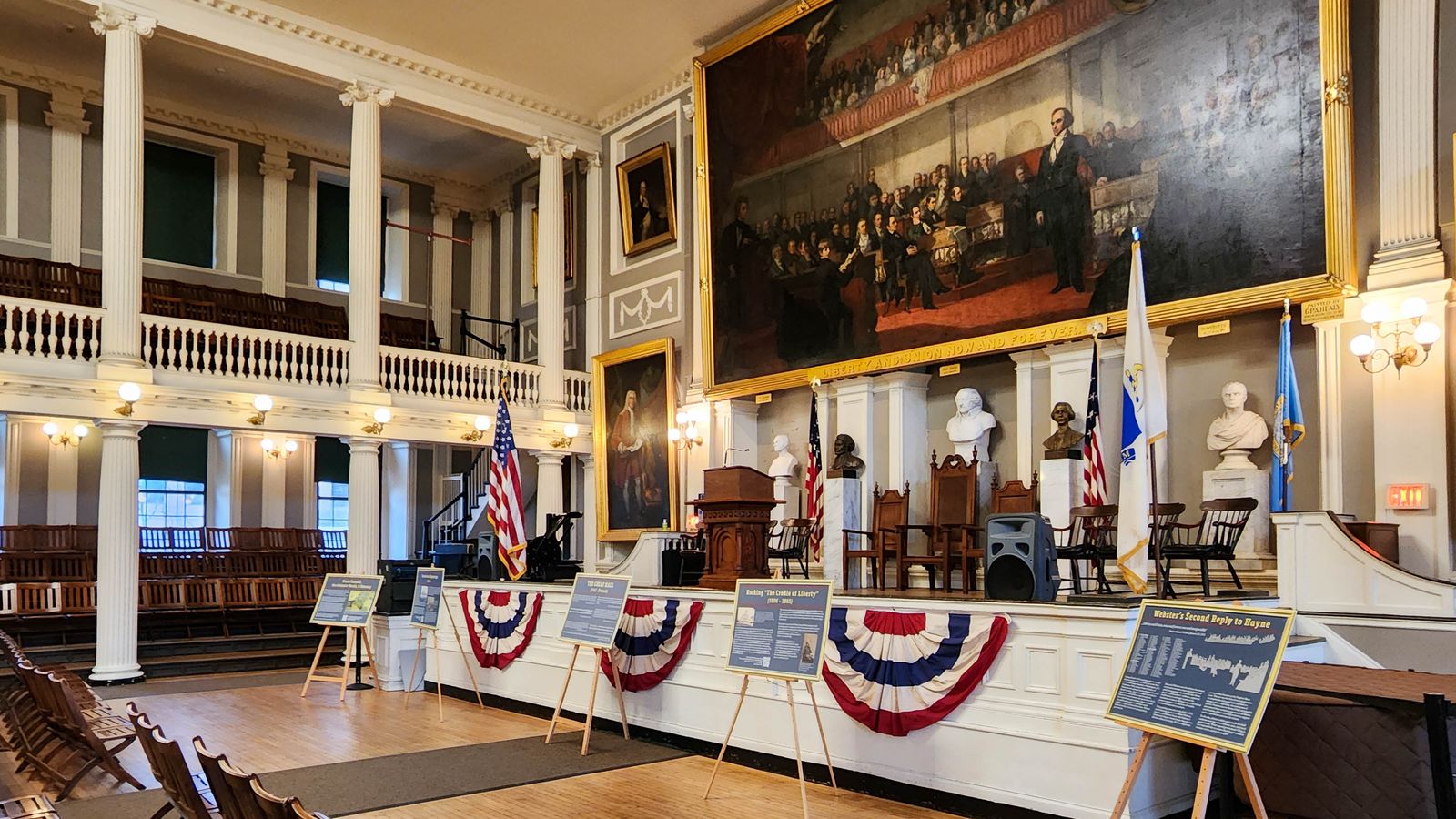
Pack your bags, ladies and gents, we’re heading to Boston! Arguably one of the most famous cities in the United States, its relevance dates all the way back to the Revolutionary War, including the Boston Tea Party. Boston boasts a diverse population of up to 645,776, the majority of which are descended from Irish immigrants. It is also home to renowned universities such as Harvard and MIT, and the city is considered to be a global pioneer in innovation and entrepreneurship.
However, we aren’t here to visit friends or to discuss the pleasant history of such a fine city. No, today we’re here to discuss one of the darkest chapters in the history of the City of Boston. Between June 1962 and January 1964, a total of 13 women were strangled in their homes. At the same time, a number of other crimes were starting to stack up, eventually leading to the apprehension of a suspect.
While in custody, the suspect confessed to all the murders, blowing the case wide open. He went to trial, was convicted, and spent the rest of his life in prison…but did he actually do it?
From the moment the suspect confessed all the way to the present day, the validity of his confession and if the police truly got the killer has been in question. As we enter into the darkness once again, it falls on us today to try and find the truth. Was he actually brought to justice? Or did the real killer slip through the cracks as someone else took the rap for his evil deeds?
It’s one of the biggest crime mysteries in United States history, and it’s been the subject of controversy and conspiracy for over 50 years. This is the tale, and the potentially unsolved mystery, of The Boston Strangler.
The Silk Stocking Murders
It all began on June 14th, 1962, at 77 Gainsborough Street in Boston. That day, 55-year-old seamstress Anna Slesers was alone in her apartment, getting ready for a church service that night. She had just finished baking muffins and was running a bath…when it all came to an end. At 7:45 p.m. her 25-year-old son arrived to drive her to the service.
Entering the apartment, he noticed the door was unlocked and he found her lying lifeless on the kitchen floor next to the bathroom, her own bathrobe tie wrapped around her neck in what was identified, both ironically and horrifyingly, as a granny knot. Believing she had hanged herself, he called the police, who quickly determined that this was a murder.
Along with the fresh muffins and the full bathtub, indicating she had clearly planned to go out, many who take their own life attempt to make themselves look as presentable as they can, wishing to seem put together when they end it all. Anna was anything but put together, clad only in her bathrobe which was open and nearly falling off when she was found. This was a murder, pure and simple…and it wouldn’t be the last.
On June 30th, 1962, 66-year-old Nina Nichols was meant to go to her sister’s house for a nice dinner with family…but she never showed up. Getting worried, Nina’s sister had her husband call the superintendent to Nina’s apartment building at 1940 Commonwealth Avenue, asking if he could check on her. Heading up to the apartment on the fourth floor, the super let himself in and was met with a terrible sight.
Nina was lying on her bedroom floor, one of her stockings wrapped around her throat once more in a granny knot, her housecoat was pulled up so she was exposed from the waist down, and she had been sexually assaulted. The police were called, they examined the scene and once again, they determined that this was a homicide.
Helen Blake was next, and it was the first killing that took place outside Boston, this time in the city of Lynn. When the 65-year-old wasn’t seen all that weekend, it made her neighbors who also lived at 73 Newhall Street nervous and worried. It wasn’t until July 2nd that they went to check on her.
Borrowing the key from the superintendent, they made their way to her room and opened the door, only to be met by a grisly sight. She was found face down on her bed, strangled with a stocking, tied in a granny knot, and with her pajamas pushed up over her shoulders. The police were called and, upon examining the body and the scene, they made two conclusions.
The first was that Helen had also been killed on June 30th, the same day as Nina. The second was that the ends of her bra were tied under her chin into a floppy bow. Looking back at the other crime scenes, this seemed to be a staple of the killer, since Anna’s bathrobe tie and Nina’s stocking had been tied in a similar fashion.
The apartment was in shambles as well, and it seemed like the killer wanted the scene to look like a robbery gone wrong. According to journalists Jean Marie Cole and Loretta McLaughlin: “Some drawers are pulled out of a desk and a bureau. Others are removed completely and set on the floor. … Helen’s watches have all been examined and placed on the bureau.
Her jewelry boxes have been opened and are on the floor. Her pocketbooks have been gone through. Even the sugar bowl and teapot have been looked into.” Keep those ladies in mind, we’ll be back to them shortly.
After that, the killer went quiet for over a month. No attacks were reported and no women were found strangled. That is, of course, until August 22nd, 1962. On that day, at 7 Grove Street in the West End of Boston, another body was discovered.
This was 75-year-old Ida Irga, and she was found on the living room floor of her fifth-floor apartment. A pillowcase was tied in a granny knot around her neck, but the investigation revealed that she had been strangled manually. Given the state of the body, it was determined that she had been dead for several days, putting the time of death to be on August 19th.
Several days later, on the afternoon of August 30th, 1962, victim number 5 was found. 67-year-old Jane Sullivan was discovered in her first-floor apartment in the Boston neighborhood of Dorchester. She lived just across town from the previous victim, and much like most of the previous deceased, she had been strangled with her own stockings. Like the previous victims, the stockings were still around her neck in, you guessed it, a granny knot. It was determined that she had been dead since the 21st, leaving her to rot in her home, sight unseen, for 9 whole days.
There was one major difference from the other victims up until this point though: she had been posed. When she was found, Jane had been left in a kneeling position in her bathtub, her face and forearms in six inches of water. Why the killer had done this is not known, but it is quite disturbing.
That’s 5 women in the span of two months, all strangled. The police seemingly had no clue where to start investigating their deaths, they still didn’t have a suspect, and the women of Boston were scared. The police were in overdrive trying to figure out the source of all these deaths, all while trying to keep the public as safe as they could. With at least two of the murders happening on the same day, the police set up an emergency hotline for women to contact them should they see any suspicious characters.
This hotline would be a precursor to 9-1-1, which wasn’t established until 1968.
The public was on edge, the women of Boston understandably more so. They were encouraged by the police not to talk to any strangers, not to let strangers into their homes, and to keep their doors locked at all times. People who didn’t have deadbolts on their doors had them installed, and some had new locks put in their doors just to be safe.
Most women even started carrying around extra protection for when they were walking home alone or should they be attacked in their homes, keeping things like pepper spray, tear gas guns, or hat pins on their person for self-defense. For some though, the threat of a lady killer loose in the city was too much, and a number of women simply packed up and moved out of the area for their own safety.
The scariest part? The police were working under the suspicion that, given that no forced entry was detected at any of the scenes, the slain women knew their attacker. They knew him well enough to simply unlock their doors and let the monster into their homes where they were murdered and defiled.
The police did everything they could, with Police Commissioner Edmund McNamara assigning every available cop to the murders and arranging for dozens of his detectives to attend an FBI seminar on sex crimes. Regardless, the police had no real leads on the identity of the killer, and the hotline was backfiring in a major way. Women were calling in for every little infraction, reporting any and all men who simply looked at them in a way they didn’t like or approached them on a whim.
They wouldn’t even let the police near them, conducting all interviews through the safety of a dead-bolted door. Countless men were interviewed, and countless men were let go. Whether they were caught loitering, peeping, being drunk and disorderly, or a litany of other reasons, the women in the neighborhoods all saw them as a potential killer, and they were all dragged away under suspicion and questioned until their innocence was proven.
Some even called the police out of spite. One example includes when a woman called the police on her ex-husband in order to get him thrown in jail, knowing full well he was innocent, wanting nothing more than to see him suffer.
A Womanly Touch
When it comes to the press, they weren’t helping much either, and their coverage of the murders caused panic to spread like wildfire. The Boston Globe was perhaps one of the worst early offenders, reporting on the monstrous killer who unleashed, as they put it, a “maniacal spree of violence [that has] gripped in terror thousands of Greater Boston women who live alone.” Many of the other papers did their best to try and keep the populace calm.
The Boston Herald did their best to tell the ladies of Boston that the chances of them getting targeted by the killer were almost impossible, while The Boston Advertiser attempted to reach out to the murderer. They wrote and published a message on their front page, urging the killer to stop and to reach out to the paper itself for the help they so clearly needed. None of this actually helped, but they get props for the effort.
However, when talking about the Boston Strangler case and the press, there’s no way to talk about it without speaking about two very important women: journalists Jean Cole and Loretta McLaughlin.
At the time, the police were all over the case, but one thing was up for debate within the departments: the uncertainty, or perhaps the unwillingness to accept, that all the killings up until that point were done by a singular murderer. Nothing was definitive and nothing was announced, resulting in the public being kept mostly in the dark and unable to protect themselves. That is, until two women with good heads on their shoulders forced the police to come clean.
Jean Marie Cole was born on May 13th, 1926 in Scituate, Massachusetts. The second of six children, she graduated from Scituate High School in 1944 and was shortly after accepted into the United States Army Nurse Corps at Quincy City Hospital, mostly because she didn’t have much choice at the time. There weren’t many opportunities for women back in the day, and nursing was one of the biggest viable options.
Jean didn’t want to become a nurse though, she wanted to be a reporter. And she dove headlong into it, accepting the position as a copyboy in 1944 at the Boston American Record, a tabloid newspaper. Apparently, she had a huge knack for it, and went from being an apprentice reporter to getting her first byline within the span of only a few months.
She kept on busting her butt as the years rolled by, working as an undercover reporter during the 1950s, investigating nursing homes in the Boston area, and writing a series of articles on their terrible conditions. For these articles and her phenomenal work ethic, she was named Woman of the Year in 1953 by the New England Woman’s Press Association, and Boston Newspapermen’s Benevolent Association awarded her its Press Association Award in 1963.
While working at the Record, Jean made the acquaintance of Loretta McLaughlin. Born Loretta McDermott in 1928 in Woburn, Massachusetts, she was one of 4 children. Moving to South Boston when she was a child, she eventually graduated from South Boston High School before attending Boston University on an academic scholarship. After graduating with a bachelor’s degree in journalism in 1949, her career started at the Boston Record in the 1950s.
When the killings were at their height, Loretta decided to take a look at the case. Examining all the information they were afforded, she came to a dark conclusion: this was certainly the work of a singular murderer. She went right to their editor with the idea, stating they needed to warn the public, they needed to write an editorial on this, and get the information out there. But her editor wasn’t interested in her ideas.
McLaughlin recounted decades later: “An editor disputed the worth of a series on the four dead women, noting that they were ‘nobodies.’ That was it exactly, I felt. Why should anyone murder four obscure women? That was what made them so interesting…sisters in anonymity, like all of us.”
So she was dismissed for her ideas…until more bodies were discovered. On December 5th, 1962, four months after the last victim was found, the body of Sophie Clark was discovered at 315 Huntington Avenue in the neighborhood of Back Bay in Boston. Now there are four things of note here.
The first is the age of the victim. All the victims up until this point were all on the older side, the youngest being 55 and the oldest 85. This time, the victim was only 20 years old, a nursing student.
Second is that she was African American, unlike the other victims who were all Caucasian women. The third thing is that she didn’t live alone like the other victims did, she had been living with two roommates for some time. And fourth, unlike all the previous crime scenes, the killer had left behind…let’s say a sample of his enjoyment.
Of course DNA testing wasn’t even remotely conceivable back in those days, so while they now had a new clue to the identity of their killer, they couldn’t really do much with it.
And with the police still no closer to nailing the scumbag, he struck again. He started the month with a murder, and ended it in kind because on December 31st, 1962, another body was found. 23-year-old Patricia Bissette was found in her home at 515 Park Drive in Back Bay, the exact same neighborhood as the last victim. She was found in bed, tucked in with her covers coming up to her chin. When they were pulled back, the stockings and white blouse that were used to kill her were still around her neck, knotted tight with the same style of granny knot.
After these two newest killings, Jean and Loretta were finally listened to and assigned the case. Together they wrote an article, leaning into the idea that all these deaths were the work of one demented madman loose on their streets. And, on January 9th, 1963, their article was published on the front page, with the headline reading: “Two Girl Reporters Analyze Strangler.”
What followed was twofold. The first result was about 29 more articles analyzing the killer and reconstructing the crimes in their entirety, releasing details from each murder that the police had held back from the public. They made pretty much everything known through their articles, including the names and ages of the victims, their times and causes of death, when their bodies were found, what they were wearing when they were killed, and the probability of sexual assault.
And throughout every article, the pair stayed convinced that the culprit of these murders had to be a single, intelligent psychopath with a history of sexually deviant behavior. He also seemed to have a preference, as all the women he targeted were single, orderly, well-groomed, self-sufficient, and respectable.
The second result was the police response, along with that of other locals, including other papers. To say they reacted negatively would be a laughable understatement. The authorities were livid at the amount of detail that was revealed in the initial article and publicly denounced the notion that a singular murderer was to blame for this mayhem.
The fact that these two journalists, these two women, had the nerve, the audacity, the unmitigated gall, to question and embarrass the police by doing an objectively better job than them, was unthinkable. The misogyny was strong back in the 1960s, and sadly Jean and Loretta caught quite the backlash from it, including a tidal wave of creepy letters and threatening phone calls.
Regardless of the backlash though, and no matter how much the police tried to suppress the information, the articles did their job, informing the public of what they had a right to know. And it was because of these works that the killer behind this streak of evil was given the moniker: The Boston Strangler.
The Killings Continue
Even with the public more aware and paranoid than ever, it didn’t stop the deaths from continuing to pile up. Beverly Samans was the next victim. The 23-year-old Boston University grad student was killed in her apartment at 4 University Road in Lawrence, Massachusetts on March 6th, 1963, though her body wasn’t found until two days later.
Her fiance hadn’t heard from her, so he went to check on her. Entering her apartment, he found her on her pull-out couch. Now this is where things start to stray from the previous MO.
For clarification, stockings were found around her neck, tied in a granny knot just like the other victims, and her wrists were tied with a sequin-studded silk scarf. However, the stockings weren’t what killed her, they were simply there as set dressing. Beverly had been viciously attacked as the killer made his way inside, and she had been stabbed a total of 22 times with her body being staged afterward to resemble the others.
While this would raise suspicion of this being a copycat killing, it was later verified that this was indeed done by the same monster.
Next was Evelyn Corbin. She was found in her Salem apartment at 224 Lafayette Street on September 8th, 1963. In line with the earlier victims, she was a woman later in her years at 58, and she too was strangled with her own stockings. Unlike the other victims though, she had her underwear stuffed into her mouth and another stocking tied to her ankle.
The killing method continued to remain fairly constant, but nearly every crime scene had its own unique little differences. Was this to throw off the investigators? Or did the demon simply have a flair for the theatrical?
On November 23rd, 1963, not even 24 hours after the assassination of John F. Kennedy, another murder took place. 23-year-old Joann Graff was in her apartment at 54 Essex Street in Lawrence, Massachusetts, minding her own business, when death came for her. After being sexually assaulted, she was strangled with her own stockings. In another unique bit of evidence, when she was found, stockings still around her throat, the police also found noticeable bite marks on her left breast.
The Strangler seemed to be getting more vicious, though his reign of terror was soon coming to an end.
The final victim was also the youngest. This was Mary Sullivan, a girl of only 19. It was January 4th, 1964, a new year had come and it was over a month since the last victim was found. Mary lived in an apartment at 44-A Charles Street in Beacon Hill in Boston.
She had recently moved there with two roommates who had lived together for some time, and it was those two roommates who found her. That day they returned to the apartment, and they discovered her on her bed, splayed out, stockings around her neck along with a pink silk scarf tied in a big bow. These calling cards confirmed that it was the work of the Strangler, bringing his body count up to 11, and the police still had no clue as to who he was.
It got to the point where Edward William Brooke III, the Assistant Attorney General at the time, created a major task force known to many as the “Strangler Bureau,” promising to use every technique available to them in order to catch the monster. And yet they simply couldn’t find him.
Luckily, at the exact same time that the Boston Strangler case was going on, another series of crimes were taking place all across Boston…and it was this case that would blow the whole investigation wide open.
DeSalvo
Boston was red hot, burning with fear over the Boston Strangler. However, another string of crimes had begun two years beforehand in the Cambridge, Massachusetts area where multiple women fell victim to sexual attacks. When interviewed, the women would all describe him the same way: A white man in his late-twenties, decently attractive and with a silver tongue to boot.
He would go door to door, ready and waiting for the beautiful occupants to answer their doorbell. If it was a man who answered, he would simply apologize and move on, but if it was a young woman…well he would get to work. He would introduce himself as a talent scout from a modeling agency looking for new models, and what happened next depended solely on their answer.
If they said no, he simply accepted it and went on his way, leaving the fortunate women unmolested. If they said yes and wished to continue talks, he smiled and said he would need to come in and take their measurements. Excited for this new opportunity, the women would allow him inside their home where he would take out his measuring tape.
Using this as an excuse to get close and handsy, he would feel them up all over, leaving them feeling used and violated.
Like many infamous criminals, this serial offender was given a nickname by the media: The Measuring Man. Thankfully he was actually caught in March 1960 while breaking into a woman’s house. He fully admitted to being The Measuring Man, he was sentenced to 18 months in jail, served 11, and was released for good behavior in 1962. This man’s name was Albert DeSalvo.
Born on September 3rd, 1931 in Chelsea, Massachusetts, Albert was subjected to the darkness of the world almost from the word go. His father Frank DeSalvo was a violent alcoholic who would make their lives a living misery. He would beat his wife Charlotte, would make the children watch, and even went so far as to not only bend her fingers all the way back until they actually broke, but he also made a point to knock out every last one of her teeth. And of course, he was a cheater as well, and he wasn’t even remotely ashamed of it, bringing home prostitutes regularly and making his wife and children sit and watch as he had his way.
Surprise surprise, all this negativity and instability at home didn’t a good person make. When he was younger, DeSalvo had already begun torturing animals. Add in the fact that he started shoplifting and stealing as he got older, and it isn’t looking too good for him.
It was November 1943 when he was arrested for the first time for battery and robbery, all at the tender age of 12. A month later, he would be sent to The Lyman School for Boys, a disciplinary boarding school. Less than a year later, he’d be paroled, only to be sentenced there again in August 1946 after stealing a car.
After his second release, he went into the Army, serving two stints as a Military Police sergeant with the 2nd Squadron, 14th Armored Cavalry Regiment, before being honorably discharged both times. That leads us to find DeSalvo under arrest for the Measuring Man incidents, for which he served less than a year.
So he was given another shot at freedom after he clearly should have gone down for much longer. Did that stop him? Of course not. He simply went back to his weirdo ways, going from house to house, woman to woman, getting his rocks off in the creepiest way possible.
Making his way throughout Massachusetts, Connecticut, Rhode Island, and New Hampshire, DeSalvo broke into over 400 homes and sexually assaulted over 300 women, almost always clad in green pants. This fashion choice earned him another nickname, The Green Man. All the while this scumbag was loose, the police weren’t able to catch him, and they weren’t any closer to closing the Boston Strangler case either.
Then, on October 27th, 1964, it all came tumbling down. That day, the police were called to a house in East Cambridge. The caller was a woman, and she had a story to tell. Earlier she had let a man inside her home, a man dressed as a detective with the police.
Upon entering, he wasted no time in pouncing on her, tying her to the bed, and sexually assaulting her. His business done, he simply cleaned himself up, turned to her, said “I’m sorry,” and exited the house. As if apologizing would make it all better. Going off the description of the man, the police knew exactly who to look for, and DeSalvo was arrested on November 3rd, 1964 on charges of assault, burglary, and sexual assault.
When asked about why he committed this series of assaults, DeSalvo said the following: “I’m not good-looking, I’m not educated, but I was able to put something over on high-class people. They were all college kids and I never had anything in my life and I outsmarted them.”
At the time, DeSalvo wasn’t linked to the Boston Strangler in the slightest, he wasn’t even on the list of suspects. He pleaded not guilty to the charges laid against him and was released on $8,000 bail. This didn’t last long though as his picture was in all the papers, and several more women came forth, saying it was he who broke in and violated them, leading to him being arrested again on November 5th.
He likely would have denied everything until the end if his wife, Irmgard DeSalvo, hadn’t told him to confess to it all. That’s right, this creep had a wife, as well as two children, at home waiting for him, and yet he went out and did this to so many women. Her words changed his mind and he confessed to all the break-ins and assaults, being transferred from jail to Bridgewater State Hospital after being diagnosed as sociopathic with schizoid features and depressive tendencies.
Being judged incompetent to stand trial, he was sentenced to the psychiatric facility on February 4th, 1965, for the foreseeable future. After that, things probably would have stayed in limbo…until new details came to light.
Confession and End
Remind me, how was it that Jean and Loretta described their view on the killer again? Oh right, a single, intelligent psychopath with a history of sexually deviant behavior. Sound familiar?
Well first off, let’s talk about one F. Lee Bailey. Being licensed in Massachusetts and Florida, Bailey was a well-known defense lawyer, known for defending such clients like Patty Hearst, Dr. Sam Shepard, and Ernest Medina, along with being a member of the Dream Team, part of the defense team that would get OJ Simpson off the hook for murder. Before that though, he rose to prominence by being the defense lawyer to Albert DeSalvo.
In late 1965, Bailey received a call from prison, one that he couldn’t have possibly predicted. It was from one George Nassar, a friend and fellow inmate of DeSalvo. Nassar made the claim that DeSalvo confessed to him that not only was he responsible for all the sexual assaults he was faced with, but that he was in fact the Boston Strangler. It took no time at all for Bailey to set up a meeting with DeSalvo.
Speaking plainly about it, DeSalvo confessed once again to the murders, taking credit for being the Mad Strangler of Boston. And to seal the deal even more, the confession was so clear and detailed that it seemed almost impossible that he wasn’t the killer. He knew which victim was which when shown photos that hadn’t been released to the public, and he could even identify the color of their furniture!
He confessed to Bailey, he confessed to physician William Joseph Bryan while under hypnosis, and he confessed to Assistant Attorney General John Bottomly while being interviewed. And on top of that, not only did he confess to the 11 murders known to the police, but to two more. 85-year-old Mary Mullen was the first unknown victim identified and within the timeline the second overall victim. He attacked her at 1435 Commonwealth Avenue in Boston on June 28th, 1962, but he never really got to finish the job.
Before he could kill her himself, the fear and stress of the attack caused old Mary to have a fatal heart attack, killing her there and then. The other woman he confessed to killing was 69-year-old Mary Brown on March 6th, 1963. This would make Mary the 9th victim of the group, being killed between the attacks on Patricia Bissette and Beverly Samans.
Much like the other victims, she was strangled in her home at 319 Park Street in Lawrence, though the killer also made sure to stab her numerous times beforehand for good measure.
So, chain him up and throw away the key, right? It’s clearly him. Well there was a bit of a problem, there was no actual physical evidence against DeSalvo. Nothing definitive, nothing concrete, and in the end, the confession was simply that, words.
The one thing they had was a chance at identification. The Strangler had one surviving victim, a woman by the name of Gertrude Gruen. She had been attacked in her apartment, but she had put up enough of a fight to drive him away. She was brought in and had time to see DeSalvo…and she said it wasn’t him, he wasn’t the man who attacked her.
Soon enough on June 30th, 1966, DeSalvo was finally found mentally competent to stand trial, but for his crimes as the Green Man, not as the Boston Strangler. Bailey did everything in his power to get his confessions submitted as evidence, more specifically evidence of DeSalvo’s insanity. He wanted the whole case to end with DeSalvo being found mentally unsound, and locked in a hospital for study…but the courts would hear none of it.
The judge saw the confession as having no bearing on the actual case at hand, and he threw it out, ruling it inadmissible. The trial continued regardless of Bailey’s objections, and eventually, he settled on a plea bargain. DeSalvo would be found guilty and convicted of 10 counts of rape and armed robbery, and in exchange, the death penalty would be off the table with the possibility of an eventual insanity verdict.
Bailey was incensed at it all, and he made it known: “My goal was to see the Strangler wind up in a hospital, where doctors could try to find out what made him kill. Society is deprived of a study that might help deter other mass killers who lived among us, waiting for the trigger to go off inside them.”
DeSalvo was sentenced to life imprisonment on January 18th, 1967, and was initially housed at the Bridgewater State Hospital, though that wouldn’t last long. A month later in February 1967, he left a note on his bunk for the superintendent of the hospital, stating he wanted to focus on his life situation and the conditions at the hospital. With that, he and two other inmates escaped the institution, resulting in a large-scale manhunt.
Apparently, the whole thing was a bit much for DeSalvo though as he reached out to his lawyer shortly after to turn himself in. He was found and caught the next day at a clothing store in Lynn, and because of his escape, he was transferred to the maximum security prison, The Massachusetts Correctional Institution – Cedar Junction, formerly known as Walpole.
Several years passed with him being locked away, and not much was heard of Albert DeSalvo. He remained in correspondence with Bailey the whole time he was in prison, and during that time he actually recanted his confession. That’s right, after all that time, DeSalvo took it all back, he said he wasn’t the Strangler, no matter how detailed and accurate the confession actually was.
And in the end…it all was for naught anyway. Charges were never laid against DeSalvo in regard to the Strangler case, and if he was the killer, he took it to the grave. On November 25th, 1973, the body of Albert DeSalvo was found in the prison infirmary.
He was stabbed to death, only 42 years old. And it simply stagnated from there. DeSalvo was dead, his killer or killers were never caught or identified, and since that day, no one has been brought up on charges for the murders of The Boston Strangler.
In essence, the case has truly never been solved.
Or has it?
Did He Actually Do It?
So, the biggest remaining questions are still this: Was Albert DeSalvo the Boston Strangler? Was the case solved despite there being no charge or trial? Here is where we’ll break down a couple of theories, and then we’ll double back to DeSalvo, and we’ll see which one lines up the best, especially with the development that came about 10 years ago.
The first alternate theory brings us back to a name mentioned a little earlier, that of George Nassar. Yes, the friend and cellmate that DeSalvo supposedly confided in and confessed to. First off, he was already a murderer, that much is known. In 1948, he was sentenced to life imprisonment for the murder of Dominic Kirmil, but that wouldn’t last as he was paroled in 1961.
And sadly he didn’t even last 4 years on the outside before he murdered Irvin Hilton, the owner of a Texaco station in Andover, Massachusetts in 1965. This time he was sentenced to death, but it was soon commuted to life imprisonment, during which he became acquainted with DeSalvo.
So why do we bring him up now? Simple, and for several reasons. First off, Nassar was free as a bird when the killings started and was free when they ended, only going to prison after the final victim was found. Furthermore, when the surviving victims of the Strangler were brought in to look at the suspects, they didn’t identify DeSalvo…but they did finger Nassar as their attacker.
The theory goes that Nassar was in fact The Boston Strangler, and the two of them conspired to use the confession, coached all the way through by Nassar, to split the $10,000 in reward money.
So…can we see why this doesn’t work? All this amounts to is theory and coincidence, with an end motive that clearly wouldn’t have actually worked. Aside from being a murderer in his own right, Nassar had nothing that connected him to the victims, there was no evidence he was in the area at the time of the spree, and his two past victims were male, plus they were shot. Quite different from lying his way into homes and strangling ladies with their stockings.
And the whole idea of splitting the reward is nothing but conjecture and conspiracy.
Theory number two: That the killings attributed by the Boston Strangler were actually perpetrated by not one, but multiple killers. From a certain angle, it makes sense. Most serial killers have a certain age group they target, while the Strangler targeted women of any age range, the oldest being 85 and the youngest 19.
Many experts and those who observed DeSalvo agree that DeSalvo wasn’t the killer and that multiple killers were a distinct possibility. Dr. Ames Robey, medical director of Bridgewater State Hospital, believed that DeSalvo simply confessed because he wanted the notoriety, that he was “a very clever, very smooth compulsive confessor who desperately needs to be recognized.”
Former FBI profiler Robert Ressler went on record as saying “You’re putting together so many different patterns regarding the Boston Strangler murders that it’s inconceivable behaviorally that all these could fit one individual.”
However, much like the Nassar idea, that’s all it is, an idea. While it could be the work of multiple killers, there’s no real evidence to fully support it. And the argument that many of the killings could be simple copycat killings after the details were released, the same argument could be made in favor of it simply being one murderer using the same MO.
And now, we return to DeSalvo. While no charges were filed and while still to this day the case is still technically unsolved, the general consensus is that Albert DeSalvo, in addition to being the Measuring Man and the Green Man, was also the Boston Strangler. The confessions were so detailed, so precise, that it still seems impossible that he could have pieced all them together from the info given in the articles that came from the case.
He even got a detail about a survivor’s apartment, the color of a piece of furniture, that the survivor herself got wrong. But even then, so many still had doubts, and to this day there are still those who aren’t certain of his guilt. The family of the final victim, Mary Sullivan, campaigned for years that they didn’t believe for a moment that Albert DeSalvo was the one who killed Mary.
And then 2013 came about. By then, DNA sequencing had come a long way, and it continues to advance even today. Back then, such an idea was nonexistent, and they had no way of testing physical evidence of that nature.
In July 2013, seminal fluid taken from Mary Sullivan’s body was tested against DNA from a nephew of DeSalvo. The results were a near-perfect match. With that, the body of Albert DeSalvo was exhumed and the test was performed again.
The results were quite revealing, and the police would announce that Albert DeSalvo was indeed the murderer of Mary Sullivan, there could be no doubt. To quote then-State Attorney General Martha Coakley in regard to the results and Mary’s family: “I hope this brings some measure of finality to Mary Sullivan’s family. This leaves no doubt that Albert DeSalvo was responsible for the brutal murder of Mary Sullivan, and most likely that he was responsible for the horrific murders of the other women he confessed to killing.”
Is it decisive proof that he was The Boston Strangler? Perhaps not, but it is one question solved, that he had indeed stolen a life, that of the final victim, and that might be the best answer we could hope for. To this day, The Boston Strangler has still not been 100% identified, but after DeSalvo’s capture, the police didn’t find more murder victims with granny knots around their necks, a fact that speaks for itself.
Wrap Up
The story of the Boston Strangler remains a mystery to this day, though one not as shrouded in uncertainty as it once was. While there will always be doubters until definitive proof is brought to light, it is still generally accepted that Albert DeSalvo was in fact the killer, and that he was caught before he could up his body count. While they weren’t experts on the matter, Loretta McLaughlin and Jean Cole, in their determination to spread the word and keep women safe, put together the most comprehensive investigation and theories about the killer, putting the cops to utter shame. And everything they compiled, everything they pieced together, fit DeSalvo to a T.
So do I believe that DeSalvo was actually the madman behind all this mayhem? Well, after looking through all the information, it’s this writer’s honest opinion that the Strangler most likely was Albert DeSalvo, and the ruddy bastard died painfully long ago, as he deserved.
Sadly neither Loretta or Jean are with us any longer. Jean passed away on August 8, 2015 at the age of 89, and Loretta on November 23rd, 2018 at the age of 90, but their legacy still lives on to this day. They are still remembered and credited for their work, and it’s impossible to talk about the Strangler without bringing up these incredible women.
In 2023, a new film about the Boston Strangler was released, with Keira Knightley and Carrie Coon playing the roles of Loretta and Jean respectively, keeping their memory alive. It’s a very well-made film, one of the best serial killer films in recent memory, and I’d recommend anyone checking it out if given the chance.
As the darkness recedes from us once more, I’d like to take a moment to remember the victims, as we always do. The Strangler might be the one everyone talks about, but these women were people too, simply enjoying their lives, thinking it was just another day in the neighborhood, when they opened the door to a monster. Anna Slesers, Mary Mullen, Nina Nichols, Helen Blake, Ida Irga, Jane Sullivan, Sophie Clark, Patricia Bissette, Mary Brown, Beverly Samans, Evelyn Corbin, Joann Graff, Mary Sullivan. May they all rest in peace, free from worry and pain, while the evil creep who stole their lives away burns down in the depths where he belongs.
Key Takeaways
- Between June 1962 and January 1964, thirteen women were strangled in their Boston-area homes, most with stockings or fabric tied in granny knots.
- Journalists Jean Cole and Loretta McLaughlin broke the story that one killer was responsible, coining the ‘Boston Strangler’ moniker despite police denials and misogynistic backlash.
- Albert DeSalvo, previously known as the ‘Measuring Man’ and ‘Green Man,’ confessed to the murders with detailed knowledge but was never formally charged for them.
- In 2013, DNA testing matched seminal fluid from final victim Mary Sullivan to DeSalvo, confirming he killed her though the full case remains technically unsolved.
- DeSalvo recanted his confession before being stabbed to death in prison in 1973, leaving lasting controversy over whether he committed all thirteen murders.
Dana Ortiz covers prosecutorial mechanics, evidentiary procedure, and how investigations unwind decades after the original case file went cold.
Frequently Asked Questions
When did the Boston Strangler murders take place?
The Boston Strangler murders took place between June 1962 and January 1964.
How many women were killed by the Boston Strangler?
A total of 13 women were strangled, though the killer was linked to 11 murders during the main spree, with two additional victims (Mary Mullen and Mary Brown) revealed later through confession.
What was the signature element found at the crime scenes?
The killer’s signature was tying ligatures (stockings, bathrobe ties, pillowcases, etc.) around victims’ necks in a granny knot, often with the ends tied into a floppy bow.
Who were the two journalists who first proposed the killings were the work of a single murderer?
Jean Cole and Loretta McLaughlin were the two journalists who analyzed the case and proposed that all the killings were committed by a single murderer, publishing their findings in January 1963.
What was Albert DeSalvo’s nickname before being linked to the Boston Strangler?
Before being linked to the Boston Strangler, Albert DeSalvo was known as ‘The Measuring Man’ for posing as a modeling talent scout to assault women, and later as ‘The Green Man’ for wearing green pants during his break-ins.
How was Albert DeSalvo caught?
DeSalvo was arrested on November 3, 1964, after a woman reported being assaulted by a man posing as a detective. His picture in the papers led more victims to come forward, and his wife convinced him to confess.
Was there physical evidence linking DeSalvo to the murders at the time of his confession?
No, there was no actual physical evidence against DeSalvo at the time. The surviving victim Gertrude Gruen even failed to identify him as her attacker.
What happened to DeSalvo after he was sentenced?
DeSalvo was sentenced to life imprisonment on January 18, 1967. He escaped from Bridgewater State Hospital in February 1967 but turned himself in the next day. He was then transferred to maximum security prison and was later stabbed to death in the prison infirmary on November 25, 1973.
What DNA evidence emerged in 2013 regarding the Boston Strangler case?
In July 2013, seminal fluid from Mary Sullivan’s body was tested against DNA from DeSalvo’s nephew, showing a near-perfect match. DeSalvo’s body was exhumed and testing confirmed he was responsible for Mary Sullivan’s murder.
Is the Boston Strangler case officially solved?
No, the case has still not been 100% officially solved. Despite DeSalvo’s detailed confession and the 2013 DNA match to Mary Sullivan, no charges were ever filed against him for the Strangler murders, and some doubt remains about whether he committed all 13 killings.
Sources
- Original Casual Criminalist video: The Boston Strangler: Serial Murder, Solved or Unsolved
- Hero image source by Crisco 1492 / openverse, by-sa.