Most of us probably spent a big chunk of our childhoods shamelessly hassling our parents for money. But it can feel a bit more awkward when you’re a fully-grown adult and you’re still frantically begging mum and dad to dip into their pockets and bail you out. In the case of the 28-year Ukrainian Igor Komarov, the situation was particularly awkward and particularly frantic. For starters, he was asking for ten million dollars. And by the look of things, he needed it pretty urgently.
Igor sent his polite request in one of several video messages that appeared to have been recorded under duress. He didn’t look in very good shape and claimed that some of his limbs had already been chopped off. He was almost certainly going to die very quickly unless his dad coughed up the full ten million to his mysterious kidnappers.
The series of leaked video messages could potentially contain some of the most disturbing footage you’re ever likely to uncover in the darker backwaters of the internet. Yet surprisingly, the original video was met with widespread derision from an unsympathetic public when it was first leaked online in February 2026.
It was all just one element of a head-scratching chain of events which may have been sparked off by something as innocent as a soppy Valentine’s Day post on Instagram. This may have led to a military-style kidnapping on the Indonesian island of Bali, a period of torture that may have spanned several days, and a severed head found near a river that was initially difficult to identify. And unfortunately there are still far more questions than answers in this very recent case.
Theories abound that scam call centres were at the very heart of this operation, and that this was either a brutal Ukrainian criminal gang war which was resolved on foreign soil, or a violent act of retribution from Russian agents which had little to do with the ongoing Russia-Ukraine conflict. Igor Komarov may have been an entirely innocent victim caught up in somebody else’s argument, or a man with a dubious past who was betrayed by his own friends and associates. There’s even a suggestion that maybe Igor Komarov was never really a victim in this case at all.
Yes, some parents might get annoyed when their adult offspring are still hassling them for a bit of money, but in this case it was gonna cost someone out there an arm and a leg.
Blue Monday
The beautiful Indonesian island and province of Bali goes by the nicknames of ‘Island of the Gods’ and ‘Island of a Thousand Temples.’ The latter name is actually under-selling the island to temple worshippers. There are actually well over 20,000 temples scattered around Bali. It’s often suggested that there are more temples than houses on the island but that’s just a wild exaggeration as such a scenario would clearly be a bit silly.
Bali is also still pretty big on cockfighting as this is tied closely to old traditions in Balinese Hinduism. Some of the owners of the prize roosters are said to pamper them more than their own children. Cockfighting in Indonesia is still largely permitted or at least tolerated in religious contexts, but the hardcore blood sport version can also be seen out in the open, despite the fact that cockfighting for entertainment and gambling purposes is meant to have been illegal in Indonesia since 1981. You’re only allowed to do it in the name of appeasing evil spirits and warding off demons.
If you’ve not yet paid a visit to Bali and you’re interested in taking a tour, a bit of good news here is that Indonesia in general has one of the lowest crime rates and lowest homicide rates in the world, whilst Bali is considered to be one of the safest provinces in the country.
The Australian government’s travel advice does recommend a little caution and vigilance when visiting Bali, noting that whilst it’s generally considered to be safe, there are some issues and risks with petty crime and spiked drinks. Australians are the largest single group of international visitors to Bali by far, primarily because the flights from Australia are quick and everything is dead cheap. It’s often jokingly referred to as ‘Australia’s Backyard’.
But ever since Russia’s full-scale invasion of Ukraine first kicked off in 2022, Bali has also welcomed a new raft of permanent guests from both sides of the conflict. It’s estimated that thousands of Russians flocked to Bali to avoid getting conscripted into the war following the announcement of Putin’s partial mobilisation – a decree which was swiftly deemed ‘completed’ but never formally terminated.
It’s perhaps understandable why some Ukrainian men may also have preferred the idea of moving to a holiday island instead of hanging around to defend their country against the might of Russia. To be fair, not many of them did, certainly not in comparison to the Russian exodus. It would have been a bit trickier for the Ukrainians anyway.
Since the very first day of the invasion, the majority of Ukrainian men aged between 18 and 60 were banned from leaving the country, a situation which still stands today although the lower age limit has since been upped to 23. There is a small list of potential exemptions from this rule, including citizens with serious medical conditions, single fathers, and men who work in certain critical professions or have been granted temporary permission for business trips.
But it’s not entirely clear why 28-year-old Igor Komarov was allowed to travel to Bali in February 2026 for a holiday, along with his two Ukrainian companions. That’s largely because we didn’t really know very much about any of them at the time. And even some of the details that emerged later on have never been definitively proven.
Igor appears to be the son of a very wealthy businessman from the city of Dnipro in the eastern part of Ukraine, so maybe his rich dad got to pull a few strings. It’s often reported that Igor may have been something of a businessman himself, although he never appears to have been legally attached to any business entity. Aside from that, all we know for sure about this man is that he could be mistaken for a slightly better-looking Ed Sheeran. Oh, and he sports some quite distinctive tattoos, including a pretty gothic piece of artwork stretched right across his chest which appears to depict The Grim Reaper, along with a slightly less distinctive bunch of Roman numerals all down one of his arms.
We know even less for sure about the male friend that accompanied him on the trip, a guy called Alexander Petrovsky who again appears to come from a wealthy background. In fact, there may have been some strong business connection with the fathers of the two friends.
We do know a little more about the third member of the group and that’s because Igor’s girlfriend, 25-year-old Yeva Mishalova, was something of a minor celebrity in Ukraine. She was a business owner and Instagram lifestyle influencer with over 200,000 followers. So she spent much of her time frequently posting videos on fashion, beauty and travel whilst plugging her own business which went by the name of ‘Girly Girly Food’ and sold sugar-free low-calorie syrups for iced coffees.
Yeva was naturally keeping up her presence on Instagram during the holiday, posting photographs of herself in a bikini against the landscape of Bali, and admirably resisting the urge to crowbar her iced coffee syrups into every shot. Her boyfriend didn’t usually get much of a look-in or even a mention. It might have been the case that Yeva wanted to keep their relationship private.
Or perhaps there was a good reason why Igor preferred to keep a low profile.
Then again, maybe not, because there was one notable exception in a photograph posted on Valentine’s Day 2026. A little earlier in the day, Yeva had posted a picture of a bouquet of flowers that she’d received from Igor. This was followed up with a picture of both Yeva and Igor posing and smiling on a boat. Yeva is once again in her bikini, whilst a shirtless Igor has his arm around her as he proudly shows off his mighty chest tattoo.
Underneath the photo, the cheeky caption from Yeva read: “Fuck 14th February, love you every day.” It sounds a bit ungrateful in a way. Igor may as well have not bothered with the bouquet of flowers. But that potentially wasn’t the only problem with the post.
It’s believed that the image included a geotag that pinpointed the exact location of the couple. So if there was anyone out there who was keen to get their hands on the hitherto elusive Igor, they now had precise co-ordinates. Regardless of whether this Instagram post was part of a coldly calculated plot, a disastrous accidental oversight, or was just an entirely irrelevant coincidence, one of the tourists from Ukraine would have little to smile about the very next day.
The Abduction
It has to be said that many of the exact details in this case remain frustratingly vague, largely because the reports from Indonesian police were quite limited, we barely heard a peep from Ukrainian authorities, and the international press had very little to work with. Whilst there are all manner of allegations and theories bouncing around social media, there’s not much in the way of evidence to back up what many unreliable media outlets confidently state as fact. Here’s what we do know about the events of February 15th 2026.
At 10:30 pm, Igor Komarov and Alexander Petrovsky were riding scooters in the company of a Russian tour guide in the fishing village and coastal resort of Jimbaran. This is a part of Bali that’s particularly popular with both Russian and Ukrainian tourists. Yeva Mishalova was not with the men at the time, possibly because she had no interest in mucking about with scooters late at night.
Witnesses report that a small convoy of vehicles suddenly emerged on the scene, and several armed men jumped out of the vehicles to snatch Igor and Alexander from their scooters. It was claimed that the whole brief incident looked like a highly professional operation that was carried out with military precision.
There’s a little bit of confusion as to what happened with Alexander Petrovsky. Some sources claim that he was kidnapped alongside Igor but he was later freed when his hefty ransom was paid. However, this doesn’t appear to be the case at all, as the more reliable reports suggest that his kidnapping may have been botched. Alexander somehow managed to escape and was not pursued, allowing him to alert the police on that very same night.
Igor was not so fortunate. He was bundled into a Toyota Avanza and taken for a drive that is believed to have lasted for around an hour. But that wasn’t the last we ever heard from him.
The Ransom Videos
It was around five days later that the first ransom video began to circulate on Telegram. Lasting over three minutes, the video shows a fairly battered-looking Igor Komarov speaking in a state of visible distress to the camera, although it’s difficult to assess the real extent of his injuries as for the most part we only see his head and shoulders. But the actual message, which was supposedly filmed for the exclusive viewing of his parents, might just reveal a few hints and clues as to why he was abducted. Here’s a condensed version of his understandably quite incoherent speech, translated from Ukrainian:
“Mummy, Daddy, I beg you, help me please, you stole those ten million, which they ask for, return these ten million please. I will return everything to all those people from whom you have taken. They already chopped off some of my limbs, I have broken legs and punched rib cage. I’m already on meds, I already have no limbs.
An infection will start soon. I’m just dying. This a very serious organisation, please help me, no one can find me, neither mafiosos, no one. Bring me home, what is left of me at the moment.
Please settle with these people, they need ten million dollars, which we stole. As soon as these ten million are received in their accounts, they will immediately let me go to the place where they took me. I beg you, please settle. I’ll give you everything back, I’ll work for it.
No gangsters will help you, no cops. Do not communicate with any other people.”
So there’s quite a bit to unpack there. The first thing that crossed many people’s minds was how long it was gonna take this guy to work off a $10 million dollar debt to his parents after the ransom had been paid. But more significantly, we hear the first confirmation that this was certainly no random abduction, and that the kidnappers – or at least the people pulling the strings - had some particular beef with Igor’s family who may have connections with organised crime. You wouldn’t usually mention that the mafia can’t help you unless there was a very good reason for emphasising this.
But some points of the message were a little contradictory. Near the beginning, Igor twice specifically states that “you” stole ten million dollars, seemingly putting all the blame on the “Mummy” and “Daddy” whom he is addressing. But he later mentions “the money that we stole” indicating that he might not have been an entirely innocent party himself, unless he’s accepting blame for just being a member of a criminal family. Then there’s those injuries.
He can’t seem to make up his mind whether his kidnappers have chopped off all his limbs or just some of them. And this might partly explain why common reactions from the thousands of viewers who watched this disturbing footage were not of sympathy or horror but of doubt, ridicule and scorn.
Many viewers found their initial reaction to the first video was not of revulsion but of deep suspicion. It just doesn’t seem right at all. If he’s making the claim that some or all of his limbs have been chopped off, you’d think he’d show some evidence of this to prove that these guys weren’t just making idle threats.
All he does is briefly hold up his heavily bandaged arm to the camera for about a second, which proves nothing except that it’s definitely still attached. His eyes look weird, too. Whilst the implication seems to be that he’s got two black eyes after being beaten viciously around the face, he looks more like a Goth whose excessive eye liner got smudged.
He also spends much of the video repeatedly rubbing his face which is probably the last thing you’d want to do if it was heavily swollen as it would be incredibly painful. Even the delivery of his lines seems a bit off. It feels more like he’s acting quite badly rather than displaying genuine pain or distress.
Of course, we could be completely wide of the mark with this assumption. And we would get further clues in subsequent video messages released over the next few days. But in the meantime, this would be a good moment to nip over to the city of Dnipro in Ukraine to see if we can dig up anything further about Igor’s family background, and ponder over whether the roots of this ransom can be traced all the way back to something as simple but as deeply annoying as a scam phone call.
Power, Corruption and Lies
Following the collapse of the Soviet Union in 1991, the industrial city of Dnipro underwent major economic and social upheaval, in much the same way as many other post-Soviet states. The city used to be known for producing intercontinental ballistic missiles for the Soviet Union, but when that all ground to a halt, the whole infrastructure of Dnipro practically dissolved. An unsavoury brew of economic collapse, weak law enforcement, and a lack of any kind of vaguely effective legal structure created a vacuum in which organised crime groups swooped in to take positions of influence and power. That’s not to say that the city was entirely run by the Mafia during the 1990s, but power was still shared by a dubious combination of plundering politicians, ominous oligarchs, and felonious figures from the criminal underworld.
Protection rackets and extortion schemes loomed large in Dnipro but another big money-spinner was the rise of the fraudulent call centre. These call centres usually target people who don’t know their way around technology – typically the elderly or non-tech savvy types. The victim is often told some story along the lines that suspicious activity has been detected on their bank account, and they need to transfer all their life savings to a new protected bank account. This new account is of course owned by the scam network which then converts the funds into cryptocurrency and mixes it up into hundreds of different wallets to hide their tracks.
For many years, the call centres in Ukraine would typically target victims in the US and Western Europe, but following Russia’s 2022 invasion, the focus switched over to Russian victims. One pretty blunt recruitment advertisement for a scam call centre was plastered with the headline: “Do you hate Russian scum? Do you want to help your country undermine the economy of the aggressor country? We are waiting for you.”
There was a lot more to it than that, though. These ventures were often hugely lucrative, proving that there are far more gullible souls out there than we might have expected. An efficient scam centre could pull in tens of thousands of dollars a month. And it’s estimated that these calls scammed Russian citizens out of a total of 360 billion rubles in the year 2025 – that’s approximately three billion pounds or four billion dollars.
Perhaps the most surprising part to all of this is how the call centres in Dnipro are allowed to operate in plain sight. We’re not talking about a top-secret operation carried out in a locked garden shed with people taking it in turns to look out for the police. We’re talking about giant corporate offices in which there were often thousands of employees scattered across the floors, including telephone operators, IT teams, scriptwriters, and crypto launderers.
Whilst they’re naturally still considered to be illegal in Ukraine – and there have been rare reports of police raids in Dnipro which have dismantled a few centres – the majority of them are allowed to stay on the line indefinitely. This is partly because they’re protected by organised crime groups and corrupt law enforcement, but in more recent years, it also has to be said that Ukraine has got its hands full with other problems at the moment. There could also be a shred of truth in the idea that now the call centres are targeting Russian victims, the authorities don’t feel any pressing urge to intervene.
Now, it’s widely reported that Igor Komarov’s father may have had a hand in some of these call centres in Dnipro. Before we go on, we should stress that as far as anyone has been able to make out, this has never been conclusively proven. Whilst the allegations have circulated in Ukrainian media and have been regurgitated online, they have never been confirmed by any kind of Ukrainian authority or backed up by any official documents. It is, however, worth noting that Igor Komarov himself would go into some detail on his connection with fraudulent call centres in subsequent leaked video messages.
So, the unverified story goes that Igor’s father is called Sergey Komarov, although he goes by the nickname of ‘Mosquito.’ After the collapse of the Soviet Union, Mosquito was said to have risen from brawling in the streets to the dizzy heights of “regional authority.” This appears to be a vague term that incorporates a whole stolen raft of criminal activity, including racketeering schemes, protection rackets, and of course the dreaded scammy call centre.
Despite his supposed power and notoriety, he is said to have kept a low public profile and never got his picture in the papers, adding an extra dollop of enigma to the alleged kingpin. Mosquito may have had one or two brushes with the law down the years – most recently in 2023 when he was reportedly briefly detained by the Security Service of Ukraine on suspicion of developing operational plans for extortion schemes – but he’s never really landed himself in any serious legal trouble.
The same goes for one of his alleged associates, a man called Oleksandr Petrovsky, although he’s more commonly known by the name ‘Narik’. If the surname sounds familiar, that’s because he’s widely believed to be the father of Alexander Petrovsky, the travelling companion of Igor Komarov who miraculously managed to escape from the kidnappers. Ukrainian media outlets report that the peak of Narik’s alleged criminal career – again involving call centres, racketeering, and providing security for business protection schemes – was around 2004. After this, he reportedly moved to Germany and ploughed much of his criminal proceeds into more legitimate business enterprises and even philanthropic ventures.
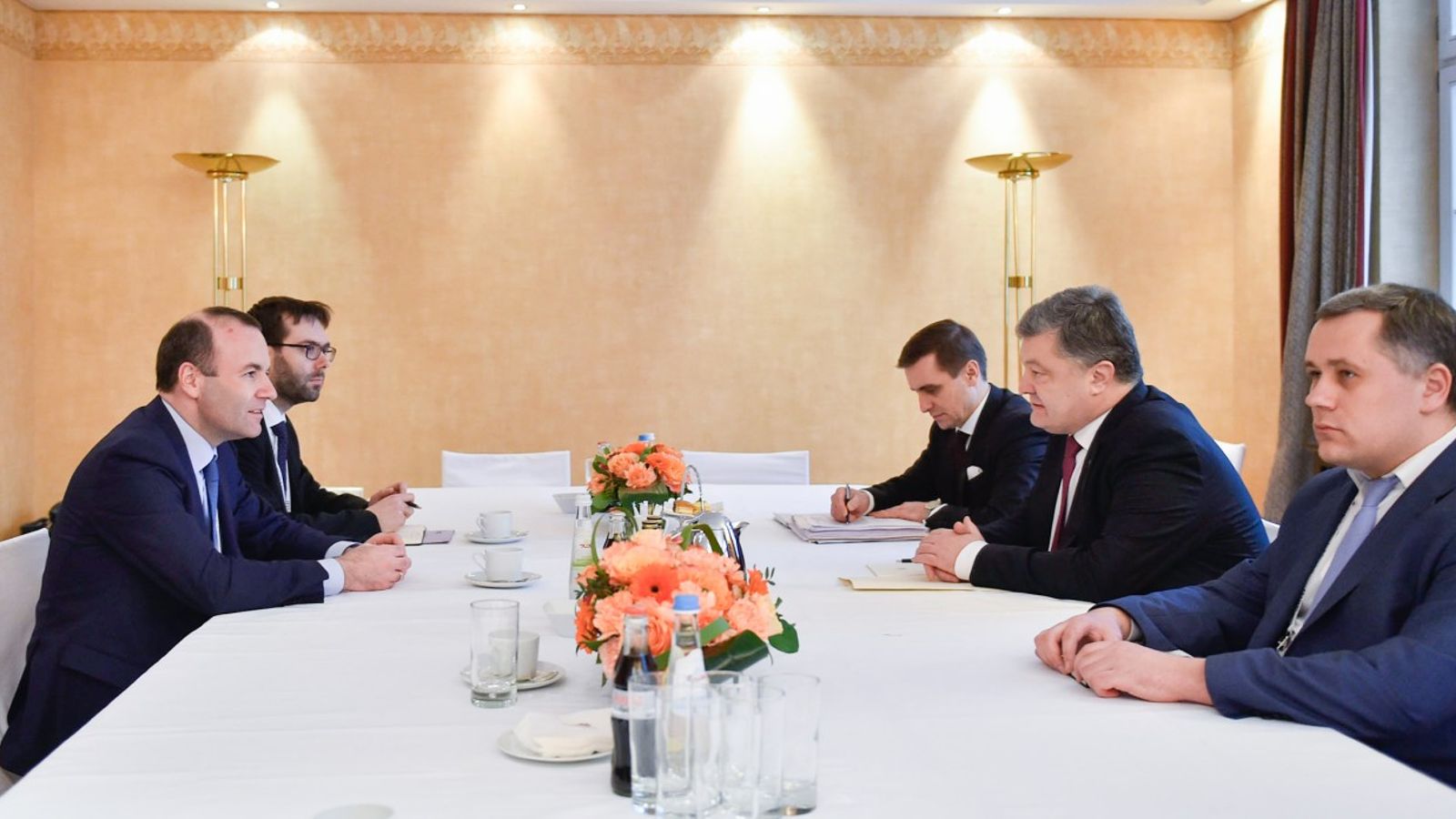
But he still held close ties with Ukraine – he was actually photographed standing alongside the serving Ukrainian President Petro Poroshenko in Istanbul in 2019 during the signing of a document granting independence to the new Orthodox Church of Ukraine. This immediately sparked criticism over why the president was standing so close to a man with an alleged criminal background, although in fairness the event was open to everybody and it’s possible that Narik just managed to get close to the action. But it’s believed by many that Narik still holds some influence from afar in the underworld economy of Dnipro today, even though it’s worth emphasising that he has never once been convicted of a crime.
So this leads us to the question of just how much involvement, if any, Igor Komarov and Alexander Petrovsky had in the business affairs of their fathers. Whilst we don’t know much about the seemingly privileged lives of Igor and Alexander, we do know for certain that they weren’t averse to landing themselves in trouble. They were both part of a group of thirteen men who were all detained by Dnipro police in 2021 on suspicion of “Hooliganism with the use of firearms” which carries a maximum prison sentence of seven years.
That might sound a bit hardcore, but it seems that nobody had any intention of taking a life on that day, as the firearms used were traumatic non-lethal pistols. It did however escalate into a pretty noisy incident involving a shootout in a carpark. One of the targets appeared to be the general director of an agricultural holding, but it’s not clear why he was being targeted by the group of thirteen hooligans.
It’s also unclear what happened next as no public information was released regarding the outcome of the criminal case, although it seems likely that Igor and Alexander walked away without any major consequences after the police realised that they both had fathers in high places.
But when it comes to the matter of whether Igor Komarov may have had some direct connection with fraudulent call centres, we could do worse than ask the man himself. It turned out that he had quite a lot to say about it.
The Confession Videos
Igor Komarov looked a hell of a lot worse in the videos leaked on Telegram a few days after the original. Whilst we still only saw his face, and there was still no proof of missing limbs, his face looked very heavily battered, bruised, and swollen, and the guy really does seem in genuine distress. Either the acting skills and the make-up techniques had gone up several notches since the original video, or Igor was really not in a good place at all.
Whilst Igor continues to plead with his parents to stump up the $10 million ransom pretty sharpish, some of the videos also seem to serve as a detailed public confession, albeit a confession made under duress. And in contrast to the original video in which Igor twice accused his parents of stealing ten million dollars and getting him into this mess, Igor now appeared to be taking almost complete responsibility for his current situation, although he is now speaking much less coherently.
He explains to the camera that he was the co-owner of an entire network of call centres which was protected by bent Ukrainian law enforcers and those mysterious regional authorities. He personally raked in about 45% of the profits by overseeing the dodgy banking operations and the telephony structure. Another guy was in charge of general management of the centres, and he was entitled to 10%.
Igor claimed that the other 45% was scooped up by none other than his mate’s dad - Oleksandr Petrovsky AKA Narik – who provided his own specialist brand of security and protection. There was probably a good reason why Narik was allegedly earning over four times the amount of the guy who was just rushed off his feet managing everything.
Igor claimed in the video that he pulled in $15,000 dollars a month from a single call centre in his shared sprawling network, so it seems that he and Narik wouldn’t have been doing too badly out of it. He concludes the final video message by profusely apologising to his Russian victims, begging for forgiveness, and asking any friends or acquaintances to chip in to raise the $10 million ransom that will set him free.
It’s interesting that the blame now seems to have shifted from his parents to himself and his mate’s dad. We obviously can’t just assume that everything he says here is true. If anyone was being repeatedly beaten, tortured, and threatened with the removal of more limbs, they’d probably be prepared to falsely confess on camera that they and their mate’s dad were responsible for any crimes put in front of them. Incidentally, these video ransom messages have yet to be definitively confirmed as authentic, although the chances of them being AI-generated seem incredibly remote.
But assuming that this man was indeed the real Igor Komarov and that his life was in immediate danger, what were his parents, the Bali Regional Police, and the Ukrainian authorities actually doing about it?
The Investigation
Well, we never really heard too much from Ukraine. The acting head of the Ukrainian embassy in Indonesia, Yevhenia Shynkarenko, told The Jakarta Globe that she was aware of the ransom videos circulating the internet, but could not confirm anything about Igor Komarov’s background or even that he had been kidnapped. She stated that the embassy had never been approached by the police or immigration office for any kind of support.
We never heard a peep from the family. They only formally reported Igor missing to the police on February 23rd – a whole eight days after he was kidnapped, and a few days after the ransom videos were leaked online. The parents may naturally have been keeping quiet on their son’s own advice not to involve the cops or gangsters or the mafia. But after the ransom videos had already been seen online by thousands of people, it now didn’t seem massively important whether or not the family had formally reported him missing.
Besides, the Bali Regional Police had already swung into action after Alexander Petrovsky first alerted them to the incident on the night that Igor was abducted. Pretty much all we know about the police investigation we learned from a guy called Ariasandy who, like many Indonesians, uses only one name. Ariasandy is a Senior Commissioner serving as the police spokesman on this case. Practically nobody else in a position of authority in Indonesia has ever spoken publicly about it.
Ariasandy doesn’t seem to know or care too much about Igor’s history, stating that it was outside the police’s jurisdiction to determine Igor’s background in his own country, and that they were just treating him as a typical foreign tourist. He also made it clear that they had neither requested nor received any foreign intelligence relating to the matter.
But the Bali Regional police had certainly been busy in the days that followed the abduction. Whilst precise dates are a bit fuzzy, at some point in late February, investigators sifted through CCTV footage plucked from the streets of Jimbaran that night and spotted a Toyota Avanza that matched the description of the one into which Igor was bundled, flanked by two motorcycles. This already looked dodgy. It later transpired that the Toyota Avanza – along with the two motorcycles - had been rented by an individual using a fake passport and was never returned.
After perusing more CCTV footage, investigators were able to track the movements of the small convoy on a journey that lasted around an hour. The destination was a pretty swanky luxury villa in the Tabanan Regency in the south-western coast of Bali. Again, it later transpired that the villa had been rented using forged passports. We could presume that this was the secret location in which Igor was possibly forced to record his ransom messages.
But there was now no sign of either Igor or his abductors. The police did however find other fragments of evidence which painted a worrying picture in shades of crimson.
The Toyota Avanza had been abandoned near the property and was found to contain traces of blood. There were further blood stains splattered all over the walls and floors of the villa which were found to match the blood traces in the car. The property also contained a bag and a cell phone which were confirmed to belong to Igor Komarov.
A DNA sample was requested from Igor’s mother to determine whether there was a match, but it would take a short while to get a result. In the meantime, the signs weren’t looking good, and the natural concern here was that the police may have found the villa too late to save him. That concern only intensified when, in a separate development on February 27th, something nasty was discovered near the mouth of a river, just under 20 miles away from the villa.
The Discovery
The police were called to the Wos River in Catuwal Village after local residents reported the grim sight of human remains scattered close to the water. The mutilated, decomposing remains included a severed head, sections of a leg and an arm, fragments of a torso, a molar tooth, a collarbone, and internal organs. Part of a tattoo was visible on a section of the arm.
The early forensic examinations were challenging as the remains were in an advanced state of decomposition. It was estimated that the Caucasian male had probably died about three days earlier on February 24th. Further DNA testing would have to be undertaken to make an official identification, and again samples were requested from Igor’s mother, along with the relatives of other males who had recently been reported missing.
And whilst we were waiting for the DNA results on the blood found in the villa and the car, and the remains found at the mouth of the Wos River, the questions continued to pile up. Many of them are still unanswered today. Was there still a chance that Igor Komarov had played a role in staging his own kidnapping and indeed his own death in a bid to extract money from his rich dad?
If not, then why had he been killed so quickly after recording the ransom videos when there was a potential ten million dollars up for grabs? If the first message had been intended solely for his parents, then how did it end up getting leaked online? Could this have been the work of Russian special services, a rival criminal gang from Dnipro, someone surprisingly close to the family, or an aggrieved Russian pensioner who was getting really fed up with scam phone calls?
And could that simple Instagram post from Yeva Mishalova have intentionally or unwittingly led a gang of murderers to their target?
Atrocity Exhibition
The police were convinced early on in the investigation that Bali had simply been the unfortunate backdrop for a plot that was hatched and carried out by foreign nationals – a scenario which might be perceived as becoming increasingly common on a supposedly safe island with reassuringly low crime rates. To complicate matters further, it was believed that the criminals had likely entered Indonesia illegally using those fake passports.
By early March however, the first arrest had already been made. Unfortunately, it would also be the only named arrest made so far, and it might not have been as useful as we might have hoped. Senior Commissioner Ariasandy confirmed that a man named CH had been arrested whilst trying to make his way to Bali’s neighbouring island of Lombok, using a fake passport as ID. CH wasn’t his full name, of course.
Indonesian authorities often only release the initials of a suspect until charges have been formally filed or a case goes to trial.
CH was described as Nigerian with a fake Belgian passport, and he was the one who had rented the Toyota Avanza and the two motorbikes for the equivalent of around $300. But that may be the full extent of what he did, and he may not have been a member of the main criminal gang. He insists that he was simply given the job of hiring the vehicles by a group of strangers. He was paid well but he had absolutely no idea of the heavy shit that was about to go down.
Ariasandy indicated that the police appeared to believe his story. It would after all make some degree of sense that the criminals would outsource this job to an oblivious third party who couldn’t lead a trail back to the main group when the police inevitably started poking their noses into the case. And that’s exactly how things may have panned out. Or was it?
Some unconfirmed Australian reports suggest that another individual of Indonesian origin was also arrested for supplying the passports to CH, but details on that are practically non-existent. And again, it’s likely that this guy was an outsider who had no knowledge of the intent and no direct connection with the main group. Still, at the very least, you would expect these two to face a mixture of charges including supplying fake passports, travelling illegally with a fake passport, and failing to return a blood-stained vehicle.
However, just a few days after the arrest of CH, Ariasandy had another significant announcement to make. Six more foreign nationals had been identified as suspects, and it appears that these guys were much more directly involved with the alleged kidnapping, torture and potential murder of Igor Komarov. Ariasandy identified the six with the not entirely insightful names of RM, BK, AS, VN, SM, and DH, and indicated that they were all males from Eastern European countries.
The problem here is that tracking any of them down has so far proved to be impossible. Two of them are believed to be hiding out somewhere in Indonesia, but four of them are believed to have already fled the country and could be anywhere. The police also noted that even getting a grip on their nationalities is tricky, as most of them are likely to have carried multiple fake passports containing multiple fake nationalities.
All six names have been placed on Indonesia’s ‘Wanted’ list, but perhaps more importantly, Interpol red notices have been slapped on all six – a request for cooperation from Interpol member countries in locating the suspects and detaining them with a view to extradition. Such cooperation is certainly not guaranteed, though. The Interpol red notices did however yield a little more information about the suspects than the Bali Regional Police were willing to give us.
But we only had to wait for another few days before Ariasandy made another couple of dramatic and conclusive announcements in early March which came a lot earlier than had been anticipated. Here was the first one: “The blood splatters found at the villa and in the Avanza suspected to have been used by the perpetrators have been tested, and the results are identical to the victim’s mother’s DNA.” If there was anyone still wondering if Igor Komarov had played a role in staging this whole thing, we now knew for sure that his blood was spilt. And there was more to come.
The results from the DNA testing relating to the recovered human remains were expected to take around a month to be confirmed by the National Police Forensic Laboratory Centre in Jakarta. The forensic medicine specialist Dr Nola Margaret Gunawan - who had worked on the autopsy of the remains - was one of many taken aback by how quickly the results came through. She even double-checked with the laboratory to make sure that they knew what they were doing. Dr Gunawan was apparently told that the process had been fast-tracked due to the press interest in the case but was unable to speculate on whether there might have been a political motive.
The results were in. And the DNA results confirmed with a probability of 99.9% that the remains belonged to Igor Komarov. If you’d already seen the stomach-churning images of the remains found at the mouth of the River Wos, you would have been in little doubt anyway. The Roman numerals tattoo visible on the section of arm is clearly part of the exact same tattoo that he was showing off in the Instagram photo.
Unless Igor had been quite extraordinarily committed to an elaborate hoax, we can now take it for granted that he was very much a victim of torture, mutilation, and murder. And that original unconvincing ransom video which was mocked and dismissed by many at the time now becomes far more disturbing to watch when you know that he was only days away from death. Ariasandy noted: “Police can only assume at the moment that Igor’s ransom was not paid.”
Bali’s Growing Crime Problem?
There remains a deafening silence over this case back in Ukraine where there has still been no statement of any kind from the government, the authorities, or any member of the Komarov or Petrovsky family. Back in Bali, there has been a lot more noise and concern over how this is just another very recent illustration of the way the holiday island appears to be evolving into the battleground location of choice for international organised crime.
For example, in March 2026, a 49-year old Dutch tourist called Rene Pouw was walking his dogs with his girlfriend near their rented villa when he was apprehended by two men on motorcycles and stabbed to death. The killers are believed to be from Brazil, but nobody has any idea of a possible motive. The fact that no attempt was made to take any of his belongings suggests that this wasn’t just a random brutal mugging, but more of a calculated murder that could have been a contract killing.
A much more high-profile example took place in June 2025 involving the murder of the Australian tourist Zivan Radmanocic who was gunned down in a villa owned by his friend. The thing about this case is that it appears to be all about the company that Zivan kept rather than anything he’d done himself. He had travelled to Bali with his girlfriend to celebrate her 30th birthday, and they were staying with his mate, the fellow Australian Sanar Ghanim who had been living in a villa in Badung Regency for some time. The trouble is that Sanar Ghanim had underworld connections back in Australia and it seems he’d made a few enemies and possibly run up a few substantial debts along the way with the kind of people to whom you really don’t want to be in debt.
Three gunmen burst into the villa and opened fire on both men, killing the innocent Zivan Radmanocic but only wounding Sanar Ghanim. It was believed for a while that the shooting was meant to send a message to Sanar Ghanim, but it now seems more likely that the assassins just made a mess of the job and killed the wrong man. The order from Australia to kill Sanar Ghanim appears to have been made using the encrypted Swiss app Threema. But whilst the three Australian gunmen were eventually apprehended and were sentenced in an Indonesian court to between twelve and sixteen years in prison – narrowly avoiding the death penalty sought by the prosecution – the man who ordered the hit was never identified.
Some have suggested that the recent rise in trouble with foreign nationals is down to a combination of Indonesia’s decision to open the gates wide for Bali tourism after COVID, the relative ease of moving around the country with fake documentation, and a perception that it’s easier to get away with criminal activity in Bali as the legal system is relatively soft and police can be bribed to turn a blind eye. Most of those points are arguable to say the least. And Gede Made Suardana, a professor of law and criminology at a Bali University, suggests that there’s been an increase of quality rather than quantity of crimes.
In other words, whilst there’s been an unfortunate spike in particularly brutal crimes involving foreign nationals, they’re still pretty isolated incidents and Bali is still considered to be the safest island in a country which has a relatively low crime rate. Even so, the Indonesian government and Bali Regional Police have between them recently vowed to enforce stricter checks on rentals, install more security cameras in holiday villas, invest more in forensic training, and strengthen relationships with embassies to ensure swifter cooperation and resolution.
Of course, there’s an argument that the location of Igor’s kidnap and murder was entirely immaterial and that the criminal gang were intent on tracking down their target to wherever he’d decided to take a holiday. If he’d hired a static caravan in Ingoldmells then he would have been taken in Ingoldmells. But what kind of organisation was so determined to track down Igor Komarov to Bali, what was the real motive, and could they have had inside help from people whom Igor thought he could trust?
Suspicion Falls on Yeva Mishalova
We don’t have any solid details on the funeral of Igor Komarov, and it may have been interesting to see who bothered to show up. It’s often reported that there was no sign of his father, his girlfriend Yeva Mishalova, or his buddy Alexander Petrovsky, but this has never been confirmed by any reliable sources. Some over-dramatic true crime websites and blogs claim that towards the end of the service, his mother approached the coffin and whispered the words “I’m sorry.
It’s finished now.” This had led to online speculation that she had knowledge of why her son had been killed and even bore some responsibility for his death. It’s more likely to be an example of complete fabrication though, composed by wannabe fiction writers who have never even stepped foot in Ukraine.
The same goes for the follow-on story in which the crackle of gunfire was heard in the distance immediately after she said these words, indicating that the gang weren’t quite finished yet.
Although we don’t know if Yeva Mishalova attended the funeral, we do have a lot more insight into her public reaction to Igor’s death than anybody else’s, and that’s because she was a social media influencer who continued to post to her followers. There has always been deep suspicion over whether Yeva may have double-crossed her boyfriend, and deliberately led the criminal gang to Bali with the Instagram post containing a geotag. It did seem odd that an experienced influencer with over 200,000 followers would reveal her exact real-time location in an Instagram post, particularly on the only photograph that revealed Igor’s face.
We don’t know how long they’d been dating or how much they really knew about each other’s lives. Is it possible that Yeva was hiding a secret and that her controversial Instagram post had a very unusual sponsor? Could the whole relationship have been nothing more than a trap?
Those who harbour suspicions about Yeva’s role in all this point to the tone and nature of her subsequent Instagram posts following the kidnapping and murder of Igor. This is actually a little confusing as some of the more significant posts have since been deleted. Perhaps slightly weirdly, the photograph of Igor and Yeva on the boat is still there, although the comments have now been turned off.
It’s often pointed out that on the very same day that Igor was first abducted, Yeva was happily posting on Instagram about a book that she was reading. But that’s not remotely important as this would have been posted long before Igor was abducted at 10:30pm. The posts following this do get a little stranger, though.
Merely two days after Igor was taken, Yeva posted a promotional collaboration with a health and wellness company, Perla Helsa, in which she was hawking a thrilling new brand of water which was apparently both “healthy water” and “sexy water.” Good to know if you’re not completely satisfied with your current choice of unhealthy and unsexy water.
Moving forward to 20th February, and five days have now passed since the incident, and the ransom videos are on the brink of being leaked online. Yeva Mishalova is spending the day promoting a brand of facial cream on Instagram, and later on that same day, she posts a picture of herself bopping away in a nightclub in Bali. The latter was deleted shortly afterwards.
This kind of post didn’t always get the kind of reaction that she might have been hoping for, especially after it was confirmed that Igor Komarov had been murdered. Many more of her recent posts now have comments switched off, which is maybe a good idea, as the following comment was pretty typical: “How much did you get paid to sell him out?”
Whilst some may have found it distasteful to say the least that Yeva appeared to be completely ignoring the predicament of her boyfriend and was instead just hitting the nightclubs and cheerfully ploughing on with more enthusiastic promotions for facial cream and sexy water, there are a few points to bear in mind here. Firstly, she did eventually address the incident on 31st March, after several weeks of inactivity. Yeva posted a photograph of herself in tears, accompanied with the text:
“I’ve been silent for a long time, and I want to sincerely thank everyone who supported me without unnecessary drama. You are very valuable to me. Right now I’m going through a loss. I’m working with a psychologist.
I’m cooperating with the investigation. Please do not spread rumours, do not post fucking content about me, and respect my boundaries. I’m not returning to my usual rhythm right now. I’m only showing my presence very carefully.
Thank you to those who are here for me in a human way. I’ll be back when I have strength.”
Sceptics noted that she had been far from silent in the immediate aftermath of her boyfriend’s abduction, and it didn’t take too long for Yeva to get her strength back following this tearful selfie. By early April, she was back to posting regular upbeat and perky content whilst promoting her iced coffee syrups.
One point that not many people seem to have picked up on is that Instagram has the option for scheduling posts, and it’s not so outlandish to think that Yeva might have pre-scheduled a few posts to run in late February so that she could relax and enjoy her holiday. So what we assumed to be inappropriately breezy promotional posts during a crisis could just have been scheduled much earlier in the month, and cancelling them wasn’t an immediate priority for Yeva who had more traumatic matters on her mind at the time. Even the picture of her dancing in a nightclub in Bali could have been taken much earlier in the holiday.
It was only when all the scheduled posts dried up that Yeva finally seemed to fall silent for over a month. We don’t know either way, but it’s a possibility.
But it does seem a bit unfair to criticise Yeva for carrying on with her work in early April. If she’d worked in a factory, it’s doubtful that anyone would have raised an eyebrow over the thought of her returning to work several weeks after the death of her boyfriend. But returning to work as a social media influencer just doesn’t seem to be so acceptable. More than that, it fuelled further suspicion that she was involved in the death.
For what it’s worth, the Instagram post with the geotag was likely entirely irrelevant. Igor was kidnapped the very next day after the photograph was posted and the location revealed. So if we’re to believe that the post led directly to the abduction, we have to assume that the criminals came across the photo whilst browsing Instagram, and then hopped on a plane for a spontaneous trip to Bali. But this is not what happened at all.
This operation had been planned out well in advance, including the rental of the villa and the vehicles. This was never just some last-minute rush job based on a surprise photograph. We don’t know how the criminals obtained the information that Igor was taking a holiday in Bali, and of course it’s possible that someone in Igor’s inner circle betrayed him. But they must have had that information long before Yeva posted on Instagram.
It’s interesting that Senior Commissioner Ariasandy hasn’t ruled out Yeva’s involvement. When asked about it by the press, he simply responded: “It is possible but we don’t know that.” And that’s a pretty accurate summary of where we are today. It’s possible that Yeva was involved but we can’t just make assumptions based on her carrying on with her job, and there’s no evidence or word from any authority that she bears any responsibility.
On the plus side, she’s picked up another 30,000 followers on Instagram since the holiday in Bali.
What About Alexander Petrovsky?
As for Alexander Petrovsky, we know so little about the man that it’s hard to see where exactly he fits in with this story. It does seem a bit sketchy that he managed to get away from the abductors and alert the police when this whole operation was meant to have been carried out with military precision. It’s also weird how the criminals don’t appear to have made any attempt to pursue him. This has helped to spark theories that Alexander must have been the mole who sold out his mate in what may have been some kind of internal war that had erupted between the fathers of the two men.
However, it could be the case that the abductors were never remotely interested in Alexander Petrovsky, and they only ever had one specific target. So it was never a botched kidnapping, and Alexander never made a miraculous and slightly unconvincing escape. He was just never part of the plan.
We also have to remember that Alexander’s father, Narik, was mentioned several times in one of the ransom videos as a kingpin in the illegal scam centres who was pulling in nearly half the profits. It would seem unlikely, although of course not impossible, that Alexander would have been involved in a plot that would spawn public criminal allegations against his own father.
Maybe there will be some intriguing revelations to come about how the criminals managed to track down Igor Komarov, but until then we’re in the dark. There’s no evidence yet of an inside job, and of course a serious criminal organisation is likely to have more than one way to keep tabs on an individual which don’t necessarily involve getting their claws into friends and associates of the target.
Who Was Behind It?
So that leaves us with the final question of which breed of organisation was likely to have carried out this operation and the real reason behind the murder. Well, there are a couple of other questions and mysteries that also remain unresolved. The original video still seems strangely fake, even when you now know that Igor would be dead within days of filming it.
And it still seems bizarre that Igor was killed so quickly after his abduction when there was a $10 million ransom at stake. This could obviously have been because the gang didn’t want to hang around for too long. Every extra day they stayed in that villa increased the risks of getting caught.
It was only a few days after they’d vacated the property that the police were on the scene after tracking the journey of the Toyota Avanza on CCTV. But then again, maybe they never had the slightest intention of ever getting their hands on the $10 million.
One widespread theory is that the gang weren’t necessarily your typical hardened criminals, but they were members of Russian special services who were seeking to close down the criminal call centres that were scamming vulnerable Russians out of hundreds of billions of rubles. The nature of the ransom video messages would seem to back up this theory to some degree. Igor is telling his audience that his kidnappers want their money back, indicating that they represent the victims who were allegedly wronged by Igor’s family. It would be interesting to hear their plans for how they were going to redistribute the money back to all the victims, though.
But those Interpol red notices might help point to a different story. Whilst the Bali Regional Police were tight-lipped about the six suspects, offering up little more than their initials, the Interpol red notices went into more detail on names and nationalities. Well, for five of them, anyway. There’s still nothing much known about the one identified only as SM.
But we now have the names for the other five - Nikolai Petrik, Vladislav Akhanov, Roman Melnyk, Vasyl Nemesh, and Denys Halushko. Those names don’t reveal much on their own, but their nationalities are quite revealing. Nikolai Petrik is the sole Russian of the group. Vladislav Akhanov is from Kazakhstan. But the other three are Ukrainian. You wouldn’t usually expect three Ukrainians to be involved in a Russian special services plot.
Not only that, but none of this really feels like a special services operation. They would have gone for something more subtle and much cleaner, like a targeted assassination that was over and done with in seconds. In contrast, this was quite chaotic and drawn out and messy, with much of it played out in public. It just doesn’t smell very Russian, and again you would think that special services would have more important things to do than target a young man potentially involved in a scam call centre.
The most likely scenario is that this was an internal criminal dispute blown over from Ukraine, either from a criminal organisation who believed that Igor’s family owed them a debt, or perhaps an attempt from a rival criminal gang to crush the Komarov empire and seize control of the illegal call centre market. We probably shouldn’t read too much into the framing of the video messages demanding the return of a supposedly stolen $10 million. The whole point of the videos may just have been to announce to Igor’s family – and indeed the rest of the world – that Igor Komarov had been captured and he was going to die.
Perhaps the very first video was staged to a degree. If they really had started chopping limbs off by this point, you’d think the video would have shown something more convincing than a bandaged hand at the end of a clearly attached arm. The gang may have felt it important that Igor should be in a fit state to record a coherent video before they started torturing him, and they advised him to ham it up a bit and exaggerate his injuries on a false promise that he might not get hurt too badly if the ransom was stumped up in time.
Maybe the gang felt there was an outside chance that the ransom might actually get paid, but that didn’t happen. Either Igor’s father didn’t just have ten million dollars in his back pocket, or he had no interest in coughing up. Although we don’t know if any private negotiations might have taken place after the abduction, it seems likely that the ransom demand was ignored. But it’s suspected the gang were never banking on receiving the money, and even if they had, they would still have murdered Igor anyway.
Because this was all about a show of strength and the sending of a very clear message.
Speaking of which, the ‘leaked’ video messages were surely leaked online by the gang themselves as they wanted the world to know of Igor’s predicament, and wanted him to admit to his alleged crimes on camera. There can’t have been many others in a position to do so. Igor’s family wouldn’t have been doing themselves any favours by leaking the original message which contained such damning allegations.
Besides which, the later videos weren’t even specifically intended for the family. They came across as shameful public confessions which were meant to be seen by as big an audience as possible. On a similar note, Igor’s remains weren’t hidden away in a secret location or dumped in the river.
They were scattered in a spot where they would be clearly visible to the next unfortunate soul who just happened to be wandering past. Every element of the operation seemed to be rooted in the idea that everyone got the message, even if not many of us can know for sure what the exact nature of the message was meant to be.
The Aftermath
Some of the online reaction to the confirmation of Igor’s death has been brutal to say the least. Many comments run along the lines of “He had it coming,” “It serves him right,” and “Good riddance to call centre scum.” Maybe part of this is down to our hatred of scam telephone calls. Having said that, most people would never resort to thoughts of dismembering them.
But then again, most people have never actually been scammed out of their life savings through a telephone call, and that might make you feel a bit differently.
The point is that we don’t know anything concrete about Igor’s family history or his own potential involvement in criminality. He certainly seemed to be living a lavish lifestyle without having a proper job and it’s possible that he was benefitting from criminal gains. He also appeared to admit to his own significant involvement in the ransom videos, but as we’ve already noted, you’ll say anything if somebody is threatening to cut your limbs off.
But even if he was guilty of everything he claimed on camera, surely nobody in the world – at least very few people – deserved the grisly fate that befell Igor Komarov. Yes, the owner of a scam call centre deserves to be arrested and imprisoned for swindling pensioners out of their money. But do they deserve to be tortured and mutilated for several days before getting dismembered? That seems a bit extreme.
Whether anyone out there will ever face consequences for this barbaric act remains to be seen, and the hunt for the suspects has fallen ominously silent over the last month. It could be argued that neither Bali police nor Ukrainian authorities are likely to treat this case as an urgent priority. From the point of view of Bali, this was a case involving foreign criminals and a foreign victim which had no impact on locals or tourists, except for another little dent in the reputation of the island.
From the point of view of Ukraine, their law enforcement and intelligence are pretty busy holding back an invasion from Russia, and they’re unlikely to devote too much attention on what may have been a gruesome act of score-settling between rival criminal networks. So the jury’s out on whether any of the six suspects will ever be apprehended or whether this case will quietly dissolve into static as the line finally goes dead.
Key Takeaways
- Ukrainian tourist Igor Komarov was kidnapped in Bali in February 2026, with kidnappers demanding a $10 million ransom in leaked videos.
- DNA testing confirmed Komarov was tortured and murdered, with his dismembered remains discovered near a river in late February.
- Komarov allegedly confessed under duress to co-owning fraudulent call centers targeting Russians, implicating his family and associates.
- Six Eastern European suspects received Interpol red notices, but four had already fled Indonesia and none have been apprehended.
- The case highlights Bali’s emerging role as a battleground for international organized crime, prompting calls for stronger security measures.
Dana Ortiz covers prosecutorial mechanics, evidentiary procedure, and how investigations unwind decades after the original case file went cold.
Frequently Asked Questions
Who was Igor Komarov and what happened to him in Bali?
Igor Komarov was a 28-year-old Ukrainian man who was kidnapped, tortured, and murdered in Bali in February 2026. He was abducted on February 15th while riding a scooter in Jimbaran by armed men in a military-style operation. His dismembered remains were discovered near the Wos River on February 27th, and DNA testing confirmed with 99.9% probability that the remains belonged to him.
What was the ransom demand in Igor Komarov’s case?
The kidnappers demanded $10 million from Igor Komarov’s parents. In leaked video messages, Igor pleaded with his parents to pay the ransom, claiming that his kidnappers had already chopped off some of his limbs and that he would die without the payment.
What role did Instagram play in Igor Komarov’s kidnapping?
Igor’s girlfriend, Yeva Mishalova, posted a Valentine’s Day photo on February 14, 2026 showing herself and Igor on a boat in Bali. The post included a geotag that revealed their exact location. However, the article suggests this was likely irrelevant to the kidnapping, as the operation appeared to have been planned well in advance, including rental of vehicles and a villa using fake passports.
Who were the suspects identified in Igor Komarov’s murder?
Six foreign nationals were identified as suspects with Interpol red notices issued: Nikolai Petrik (Russian), Vladislav Akhanov (Kazakhstani), Roman Melnyk (Ukrainian), Vasyl Nemesh (Ukrainian), and Denys Halushko (Ukrainian). A sixth suspect was identified only by the initials SM. Additionally, a Nigerian man using a fake Belgian passport, identified only as CH, was arrested for renting the vehicles used in the kidnapping.
What was Igor Komarov’s alleged connection to fraudulent call centres?
In leaked ransom videos, Igor claimed to be co-owner of a network of fraudulent call centres in Dnipro, Ukraine, that scammed Russian victims. He stated he oversaw banking operations and telephony structure, earning $15,000 monthly from a single call centre, with 45% of profits going to him, 45% to Oleksandr Petrovsky (Narik), and 10% to a general manager. However, the article notes these confessions were made under duress and may not be reliable.
How did the public initially react to Igor Komarov’s ransom videos?
The original ransom video was met with widespread derision, doubt, and scorn from viewers when leaked online in February 2026. Many found Igor’s performance unconvincing—his injuries seemed exaggerated, his eye makeup appeared smudged rather than like genuine bruising, and he rubbed his face repeatedly in ways that seemed inconsistent with real pain. The article notes this reaction became far more disturbing once it was confirmed he was genuinely tortured and murdered days later.
What theories exist about who was behind Igor Komarov’s kidnapping and murder?
Several theories are discussed: (1) Russian special services seeking to shut down scam call centres targeting Russians; (2) an internal Ukrainian criminal gang dispute, possibly over control of call centre operations or a believed debt; (3) a violent act of retribution from Russian agents unrelated to the Russia-Ukraine conflict; (4) betrayal by friends or associates; and (5) the possibility that Igor staged his own kidnapping. The article suggests an internal criminal dispute from Ukraine is most likely.
What happened to Alexander Petrovsky, Igor’s traveling companion?
Alexander Petrovsky was with Igor when they were attacked but managed to escape and was not pursued by the kidnappers. He alerted police on the same night of the abduction. There were conflicting reports that he was also kidnapped and later freed after ransom payment, but more reliable sources indicate his kidnapping was botched. Some theories suggest he may have betrayed Igor, though the article notes this is speculative and that Alexander’s own father was implicated in Igor’s forced confessions.
How did Yeva Mishalova, Igor’s girlfriend, respond to his kidnapping and death?
Yeva, a social media influencer, continued posting promotional content on Instagram in the days following Igor’s abduction, including collaborations for water and facial cream, and a nightclub photo. She eventually addressed the incident on March 31st with a tearful post stating she was working with a psychologist and cooperating with the investigation. She returned to regular promotional posting by early April. Some suspected her Instagram geotag led to the kidnapping, but the article argues the operation was too well-planned for this to be the case.
What evidence confirmed Igor Komarov’s death?
DNA testing confirmed with 99.9% probability that dismembered remains found near the Wos River belonged to Igor Komarov. Blood splatters found at the rented villa and in the Toyota Avanza used by the kidnappers also matched his mother’s DNA. A section of arm with visible Roman numerals tattoo matched tattoos seen in his Instagram photo. The remains included a severed head, sections of leg and arm, torso fragments, a molar tooth, collarbone, and internal organs.
Sources
- Original Casual Criminalist video: Igor Komarov: the Bali Dismembering Case
- Hero image source by President.gov.ua / openverse, by.