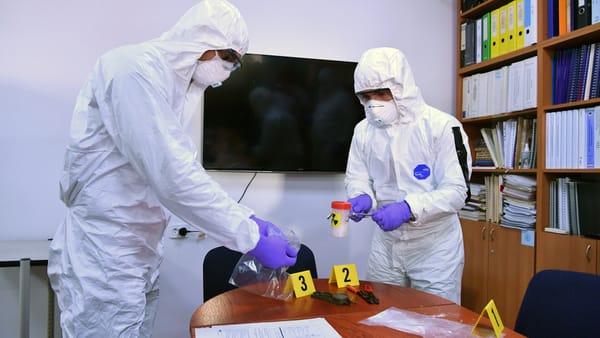

Like many stories in true crime, this one spans three decades, with enough police work to satisfy even the most dedicated follower of investigations. This is a story that luckily has a happy ending for the family of the victim, and the town itself.
The Town
Acme, Washington—yes, like the one from the Looney Tunes cartoons—sits in Whatcom County, covering a massive area of 9.8 square miles (25.4 square kilometers). Within its borders, you can find a general store, post office, gas station, a single diner, one elementary school, and two churches. All of those places are enjoyed by the whopping 243 residents. Essentially, everyone in Acme knows one another, having grown up together and frequented the same places.
The town is connected to Whatcom County, which has about a quarter million residents. Here’s an interesting tidbit: this region is responsible for 60 percent of America’s annual raspberry crop—and believe it or not, this detail plays a role later on.
Mandy Stavik
Born on January 13th, 1971, in Bellingham, Washington, Mandy Stavik lived with her parents, Cliff and Mary Stavik, as well as her siblings: Jill, Molly, and Brent. Soon after Mandy’s birth, the family moved to Alaska. Later on, her family would expand to include a younger brother, Lee, and a step-brother, Spencer, from her father’s second marriage. After her parents’ divorce, Mandy, along with her mother, relocated from Alaska to Acme.
Mandy had a deep passion for outdoor activities like running, biking, and cheerleading, and she was often found running the same route during her time at Mount Baker High School. In 1989, at the age of 18, she began her first year at Central Washington University.
On Friday, November 24th, 1989, during Thanksgiving vacation, Mandy was back in Acme, and ventured out for a run accompanied by her loyal German Shepherd, Kyra, going down her usual route. On her way back, a delivery man named David Craker spotted Mandy not far from her home. A short while later, Mandy’s brother, Lee, caught sight of her as she jogged past his friend’s house. She was now less than a mile away from home.
Then Kyra, her dog, appeared alone at the front door, raising alarm bells. Mary and the rest of the family immediately contacted Rick Zender, Mandy’s on-again-off-again boyfriend, and their friends, hoping someone had information about her whereabouts. Mandy was reported missing, prompting the entire town to mobilize in a search effort.
For three agonizing days, the town held onto hope. Unfortunately, that hope was shattered when her body was discovered facedown in a river, a few miles from her home. She was unclothed, except for her socks and shoes, and there were signs of sexual assault. It was determined that she had drowned.
Initial Investigation
On November 27th, the police search team, led by Detective Ron Peterson, made the discovery of Mandy’s body. According to Peterson, while navigating the river, the team turned a corner into a small, shallow side channel and spotted something pink. These were her running shoes, partially submerged in the riverbed. As they approached, the rest of her body came into view, lying face down. They observed matted grass and trampled bushes but found no signs of a struggle in the water.
In a later interview, Peterson, himself a father, recalled whispering softly “I got ya,” as he carefully lifted her out of the water.
While examining the crime scene, Peterson noticed scratches on Mandy’s body, leading him to realize that she had attempted to escape, likely running through the nearby raspberry bushes. This being 1989, DNA evidence was still relatively new at the time, but Peterson had received recent training from the FBI in various techniques for collecting DNA evidence, so he was extremely careful.
As they conducted DNA testing, the investigators also delved into the possibility that Mandy had been stalked. David Craker provided a lead, mentioning that he had observed a maintenance truck with a large model on top—imagine the way ice cream trucks look with the cone on top. Inside the truck, there were two individuals that he said looked to be in their 30s. Another man had been spotted in the vicinity of Mandy’s last known location, leading the police to create a composite sketch.
Mandy’s boyfriend, Rick, underwent interrogation but fully cooperated and was soon ruled out as a suspect. Additionally, saliva swabs were taken from over thirty local men, chosen due to their proximity to the crime scene, yet none of them yielded a match either.
Here, the initial investigation reached a standstill, and the case went cold for three decades, with no prospects of closure or resolution on the horizon. However, during her lifetime, Mandy Stavik had left an indelible mark on her community. As you will soon discover, her memory was never truly forgotten.
A Cold Case Turns Hot
Even three decades later, the tightly-knit community still carried the weight of their loss. In June of 2013, Heather Backstrom and Merrilee Anderson, along with several other mothers, were at the water park with their children. During their conversation, the topic of the Mandy Stavik case arose. Despite their limited acquaintance, Merrilee made a bold assertion—she claimed to know the identity of the murderer: Timothy Bass.
Heather, taken aback, revealed that she had also harbored suspicions about Bass’s involvement. Both of them had personal experiences with Bass that had fueled their theories.
In 1989, when Heather was just fifteen years old, and Bass was twenty-two, they found themselves seated next to each other in a truck with a group of friends after a softball game. Bass engaged Heather in conversation, complimenting her on her beautiful eyes and, unsettlingly, began running a pen along her knees, which left her feeling nervous and uncomfortable.
Merrilee, the other woman, had her connection to Bass through her husband. In 1991, during a night when she was home alone with her son, Bass appeared at their doorstep. He asked to use their phone to call his wife. He claimed he had been hunting all day and that his wife would be concerned if he didn’t check in.
However, when he dialed a number, Merrilee heard a disconnected tone and suspected that he had intentionally dialed the wrong number. Bass then confessed his love for her and made an inappropriate advance. Understandably alarmed, she demanded that he leave, threatening to call the police when he refused.
Upon sharing their unsettling stories, Heather and Merrilee made the decision to contact the police and express their suspicions regarding Timothy Bass. To bolster their hunch with some tangible evidence, it was discovered that Bass had resided just a few houses down from Mandy’s home, and the two families were acquainted, with both Bass and Mandy having attended the same school. At the time of her murder, Bass was twenty-two years old. Surprisingly, despite this close physical and personal proximity, Bass, his brother Tom, and his father Bud were never asked to provide DNA samples as part of the investigation.
A Bit About Tim Bass
Back in 2013, police zeroed in on Bass, looking at his background with help from his younger brother, Tom. Growing up, the brothers were competitive but close. However, Bass’s teenage years marked a turning point, with social interactions becoming increasingly unnatural for him. Tom remembered a disturbing incident when his brother, reeling from a breakup, threatened to end his life with a pistol in hand, eventually firing the gun into the air.
This signaled a shift in his demeanor, marked by disdain and disrespect toward women. Robin, Tom’s wife, corroborated this change, describing Bass’s belief in women’s inferiority.
Bass married young, just six weeks after Mandy’s murder, moving away from the area. Naturally, his marriage to Gina Malone was far from a fairy tale. Gina endured nearly 30 years of controlling and emotionally abusive behavior, feeling like a servant and enduring countless demands. Gina tried to leave, even obtaining a restraining order and starting divorce proceedings. However, Bass’s constant threats to take their children away left her frightened and trapped.
While detectives believed he was their killer, they continued to investigate other potential suspects to ensure they were on the right path.
Second Investigation
When the police sought to speak with him, he was still married to Gina, and they had three children together, residing in Everson. Bass was employed as a delivery man for a commercial bakery. Police visited Bass’s home to engage in a conversation with him. However, when they inquired about Mandy, he initially seemed unfamiliar with the case, which struck the officers as peculiar since everyone in Acme was aware of Mandy’s name and the crime.
Furthermore, his refusal to provide a DNA sample, citing distrust, raised concerns.
Gina informed the police that on the day Mandy was abducted and killed, she had been with Bass. Subsequently, the police visited his workplace and conversed with his manager, Kim Wagner. However, the employers declined consent for the police to access his details and delivery route without a subpoena. At that time, Kim was unaware that the police were investigating Mandy’s murder.
Several years later, upon learning the nature of the investigation, Kim reconnected with police, promising to find something Bass had used from which they could potentially obtain his DNA. However, they had to decline her offer, as they couldn’t ask a civilian to collect evidence. Nonetheless, they could accept it if it was brought to them.
Kim, determined to help, took matters into her own hands. “I 100% volunteered to do it,” she stated. “The reason I wanted to know was I’m a mom now. If something happened to my daughter, I’d want someone to help me. And the thought of her mom never having an answer of who did that to her daughter, if I could help her find that peace, I wanted to do it.”
Kim kept a close eye on Bass. When the bakery acquired a water cooler, she observed him drinking from one of the plastic cups and then disposing of it. She looked into the garbage, saw his cup, and immediately took it out, carefully avoiding the rim, along with a can of Coke. She kept it in her desk drawer, heart beating out of her chest.
When investigators sent the cup for testing, they discovered that the DNA retrieved from it matched the DNA found on Mandy Stavik’s body. This conclusively proved that Bass had been involved in the murder.
Following the DNA match, detectives confronted Bass as he left work. Detective Kevin Bowhay questioned him, asking if he had any relationship with Mandy. He initially denied any involvement, claiming he had never even kissed her. Bowhay pressed, asking why his DNA was found inside her. His demeanor shifted from denial to confusion, questioning how they obtained his DNA.
Shortly after this conversation, on December 12, 2017, which was 28 years after Mandy’s death, police arrested the 50-year-old Bass in the bakery parking lot. He was charged with kidnapping, rape, and murder. As he was being handcuffed, Detective Bowhay informed him of his arrest for the murder of Mandy Stavik.
Later that day, on her birthday, Sheriff Bill Elfo came knocking on Mary Stavik’s door. Mary Stavik recalled, stating, “He said, ‘We’ve got him.’ That’s all he said, ‘We got him.’ And I said, ‘Who?’ I really never dreamed… I never dreamed it.”
The trial marked the beginning of the path to justice. Each year, as Elfo met with Mary at the same family home in their tight-knit community along Highway 9, he had briefed her on the progress the sheriff’s office had made in the case. In an interview with The Bellingham Herald, Elfo explained, “We would provide her updates just to let her know that we hadn’t forgotten about her or her daughter.” Now, after so many years, he proved that they had, indeed, remembered Mandy.
“I think the highlight of my career, and it’s been a long one… is being able to tell Mrs. Stavik that the case had finally been solved,” Elfo would state. “People have traveled the world trying to solve the case. There’s been lots of effort from a lot of different detectives, generations of detectives have come and retired. This has been something our deputies have worked long and hard on. We’re really proud of people that put work into the case, and we will hopefully have justice for Mandy and her family.”
Tim Bass’s trial was scheduled for April 8, and he remained in Whatcom County Jail with bail set at $1 million. If convicted, he could face 20 years to life in prison. Whatcom County Prosecuting Attorney David McEachran, who had worked on the case from the beginning, mentioned that he would likely return as a special prosecutor for the trial, as he plans to retire at the end of the year. McEachran expressed his desire to see the case through to its conclusion, stating, “I’ve worked on the case since 1989 and would love to see it to the end.”
Trial and Aftermath
For prosecutor Dave McEachran, the journey to justice has been a long one. At the age of 44 when Mandy Stavik was murdered, he is now 73 and has come out of retirement for this deeply personal case, insisting on not receiving payment. Emotionally, he reflects, “She was such a good kid—it just shouldn’t have happened. It shouldn’t have happened at all.” Driven by both his heart and intellect, McEachran is determined to see this through.
After three decades of heartache, fear, and frustration, the trial of Mandy’s alleged killer finally commences. The state’s case appears straightforward: “The defendant’s DNA was inside her. And we know that she was kidnapped, she was raped, and then she was killed,” asserts McEachran in his opening statement.
However, defense attorney Stephen Jackson presents a different narrative to the jurors, insisting that his client is innocent. Jackson even suggests a shocking theory: the possibility of consensual sex between Bass and Mandy Stavik in the hours leading up to her murder. He argues, “There were no signs of a struggle… Evidence of sexual contact is not evidence of rape.”
During his interrogation after his arrest, Bass insisted, “Everything I’ve said’s the truth.” He described his relationship with Mandy as initially a friendship that gradually became more physical, although they didn’t engage in intimate activities frequently; it was mostly kissing and such. Starck Follis, one of Bass’ defense attorneys, went on to suggest a scenario where Bass and Mandy met during her Thanksgiving break and had an intimate relationship.
When asked about proof, especially considering that no one saw them together and there were no telephone calls between them, Follis responded, “First of all, I don’t have to prove it. The burden of proof is on the state of Washington, not on the defense.” This suggestion raised questions since when Bass was first questioned in 2013, he claimed to barely remember who Mandy was.
The prosecutor, Dave McEachran, believed that Tim’s evolving story was an attempt to cover himself, stating, “Because he’s making it up.”
Stephen Jackson, one of Tim Bass’ public defenders, filed a motion to suppress the DNA evidence in the case, arguing that it violated Bass’ Fourth Amendment right against unreasonable search and seizure. Jackson contended that the coworker who collected the cup and can acted as an agent of the state, thus making the evidence inadmissible. To establish someone as an agent of the state, it needs to be shown that the person conducting the search intended to assist law enforcement efforts rather than pursue their own objectives, and that the government was aware of and approved of their actions.
However, during a suppression hearing in late August, Judge Raquel Montoya-Lewis ruled against suppressing the DNA evidence. She determined that although Bass had a reasonable expectation of privacy at work, the coworker was not acting as an agent of the state, and therefore, Bass’s rights were not violated. Judge Montoya-Lewis explained that there was little evidence presented during the testimony at the suppression hearing suggesting that detectives had instructed the coworker, directly or indirectly, to collect an item containing Bass’s DNA.
She noted that because the woman had initiated the idea on her own and expressed a sense of obligation to help, she was not acting as an agent of the state. As a result, the DNA evidence could be used during the trial.
Subsequently, Stephen Jackson appealed Montoya-Lewis’ decision to the Court of Appeals. However, Court of Appeals Commissioner Mary Neel denied the review of Montoya-Lewis’ decision to not suppress the DNA evidence. Neel stated that “Mr. Bass has not demonstrated that the court’s conclusion is obvious error.”
Testifying for the prosecution was Kim Wagner, the woman responsible for retrieving the DNA evidence that connected Bass to the crime scene. Despite feeling terrified, she knew she had one more task to complete. Kim, while on the witness stand, expressed her desire to do the right thing for Mandy, stating, “If Tim was potentially involved in that crime, I wanted to do the right thing for Mandy.”
The defense aimed to use scientific evidence to support Bass’ account and called upon Dr. Elizabeth Johnson, a forensic expert. She testified that the semen could have been deposited up to two days before Mandy’s death, with the most consistent timeframe being within hours to days, possibly up to 48 hours. In contrast, the prosecution’s expert, the original medical examiner from 30 years ago, Dr.
Gary Goldfogel, disagreed. He argued that various indicators suggested it occurred much sooner and that it was consistent with Mandy being raped and killed before being deposited in the river and drowning.
Following the expert testimonies, it was Gina Malone’s turn to take the stand. As Bass’s ex-wife, who divorced him after his arrest and the claims regarding his affair with Mandy, she described her nervousness and discomfort, stating, “I was so nervous, and I was … shaking … I don’t even want to see his face.” During her testimony, Gina Malone revealed that she had witnessed Bass asking his mother to lie for him by implicating his own father. He had asked, “Can we say dad did it?”
despite his father having passed away more than a decade earlier. His mother’s response, to nobody’s surprise, was a resolute “No.”
As Bass’ trial continued, it became a nightmarish family reunion. His brother, Tom, also took the stand. Tom explained the emotional turmoil he experienced leading up to his testimony, saying, “Very little. It was—it was agonizing … As hard as it was, I—I—knew I had to do it.”
Tom Bass recounted that during the investigation, his brother had confessed to sleeping with Mandy Stavik decades ago and then asked Tom to tell the police that he had also slept with her. Tim’s motive appeared to be to make it seem like Mandy had multiple sexual partners. Tom struggled with how to respond to the request, saying, “He said, ‘You believe me, right?’ I didn’t know what to say.”
Tom Bass went on to describe another damning incident that occurred after the arrest, adding to the mounting evidence against him. Tom Bass, while testifying, shared that Bass had expressed fear of going to prison, believing that everyone was lying and out to get him. He had asked his mother to provide a strong alibi, suggesting they were Christmas shopping, and urged Tom to do what he could to help. However, defense attorney Shoshana Paige offered an explanation for Tim’s behavior, suggesting that even innocent individuals, when facing intense suspicion, might take actions that could be interpreted as those of a guilty person.
As the nine-day trial came to a close, both sides made their final appeals to the jury. Defense attorney Starck Follis emphasized that assumptions should not be made solely based on appearances and the lack of witnesses. He argued that the investigation was flawed due to the assumption of sexual assault and that it may not have been the case. Prosecutor Dave McEachran countered this by asserting that there was no evidence of consensual sex, no contact between the individuals, and that Mandy was abducted, raped, and killed.
He urged the jury to hold the man accountable.
The trial had hinged on DNA evidence, and now the jury had to deliberate based on the information presented to them. One juror mentioned the possibility of a secret relationship, highlighting the complexity of the case. As the jury in the Mandy Stavik case deliberated, the passage of time felt excruciatingly slow. Reporters noted the weight of the situation: “30 years of wondering, two weeks of trial, 5 hours of deliberations.”
Juror Molly Brighton expressed her fear and hope, urging her fellow jurors to “do the right thing.” Mary Stavik, Mandy’s mother, understood the gravity of the situation, knowing that the jury had to reach a unanimous decision. She prayed that they wouldn’t face a hung jury, which would require starting the process all over again.
While no one had testified to seeing Bass and Mandy together, juror Ed Beaman explained that they approached their deliberations like investigators and attorneys. They meticulously examined the evidence, using posters and maps, and discussed every aspect of the case. Juror Jay Van Mersbergen mentioned that a portion of the jury was focused on whether there might be reasonable doubt. Ultimately, deliberations lasted a little over a day, signifying the gravity and complexity of the decision they had to make.
In the courtroom, the tension was palpable as the court clerk announced the verdict: “We the jury find the defendant Timothy Forrest Bass guilty… Guilty of murder, rape, and kidnapping.” Molly Brighton, one of the jurors, expressed the overwhelming relief she felt. Reporter Peter Van Sant questioned Detective Kevin Bowhay about the emotional moment when he witnessed Mandy’s family embracing and shedding tears. Bowhay affirmed that at that moment, he thought, “This is why we do what we do.”
Prosecutor Dave McEachran acknowledged the incalculable harm caused by the crime and stated that the justice served couldn’t make up for it, emphasizing that Bass should never be released.
Six weeks later, during the sentencing phase, Mary and Molly Stavik were too emotional to speak, so Molly’s husband, Mike Brighton, addressed the court on their behalf. He emphasized that their family could never fully heal and called for Bass never to be allowed to walk free.
Then, it was the Bass family’s turn to speak. Tim’s mother, Sandra Bass, insisted that her son never tried to blame his father for Mandy’s death, countering earlier claims. The judge offered him the opportunity to speak. Newly-convicted murderer Tim Bass spoke in court for the first time, asserting his innocence: “I would first like to say that I’m 100% innocent of this crime.
Furthermore, I don’t believe I received a fair trial. In saying that, though, the better man in me says I should say very little today and give this day to the Stavik family.” However, the judge remained unswayed and sentenced Bass to the maximum term, nearly 27 years. Bass couldn’t receive a life sentence because prosecutors hadn’t charged him with premeditated murder, as they were uncertain about their ability to secure a conviction on that charge.
The judge addressed Bass, noting the decades of living free from responsibility and the web of lies that ensnared his family and others. Despite Bass’s claims of innocence, Gina Malone, his ex-wife, firmly believed in his guilt, stating, “Guilty as hell.”
For Mary Stavik, who had once doubted she would ever see justice, Bass’s sentence provided some closure, ensuring that he would spend enough years in jail to significantly impact his life if he were ever released. Tom Bass wondered if his brother had considered other killings, possibly involving Heather Backstrom or Merrilee Anderson. Both women reflected on their fortunate survival and the role they played in putting Bass behind bars.
Kim Wagner credited the entire community for their relentless pursuit of justice. Detective Kevin Bowhay, emotional but relieved, affirmed that they had indeed captured the right person, hoping that the family could heal and the community could feel safe and whole again.
Bass might be eligible for parole in 24 years. He is currently serving his sentence at Clallam Bay Corrections Center on the Olympic Peninsula. His tentative release date is set for 2045. While Bass’s legal team mentioned plans to appeal, there have been no further developments in this regard as of this writing.
Dismembered Appendices
Tragically, Mandy was not the only child the Stavik family had lost. Her older brother, Brent, had been murdered in 1975, while the family still lived in Alaska, and her step-brother, Spencer, died in a boating accident just a year before Mandy’s death.
As she was involved in numerous sports during high school, Mandy grew very close to Jim Freeman, her coach. He became a father figure to the girl, encouraging her to push herself. He would go on to deliver her eulogy to a crowd of over a thousand. In honor of her memory, a scholarship fund was established in her name at Mount Baker High School. Additionally, her sister Molly named her daughter after her.
Key Takeaways
- Mandy Stavik, 18, was abducted, raped, and murdered during a Thanksgiving run in Acme, Washington in 1989.
- The case went cold for nearly three decades despite early DNA collection and over thirty suspect swabs.
- Two women who had unsettling encounters with Timothy Bass independently identified him as a suspect in 2013.
- Bakery manager Kim Wagner voluntarily retrieved Bass’s discarded cup, yielding DNA that matched evidence from Mandy’s body.
- Bass was convicted in 2019 of murder, rape, and kidnapping, receiving a nearly 27-year sentence.
Dana Ortiz covers prosecutorial mechanics, evidentiary procedure, and how investigations unwind decades after the original case file went cold.
Frequently Asked Questions
Where was Mandy Stavik born and when?
Mandy Stavik was born on January 13th, 1971, in Bellingham, Washington.
What happened to Mandy Stavik on November 24th, 1989?
On Friday, November 24th, 1989, during Thanksgiving vacation, Mandy went out for a run with her German Shepherd, Kyra, on her usual route. She was spotted by a delivery man and her brother Lee, but then Kyra appeared alone at the front door, raising alarm. Her body was discovered three days later facedown in a river, a few miles from her home. She was unclothed except for socks and shoes, showed signs of sexual assault, and had drowned.
How was Timothy Bass’s DNA obtained by police?
Kim Wagner, Bass’s manager at the bakery where he worked, volunteered to help police obtain his DNA. She observed him drinking from a plastic cup and disposing of it, then retrieved the cup and a Coke can from the garbage, carefully avoiding the rim. Investigators sent the cup for testing and found that the DNA matched DNA found on Mandy Stavik’s body.
Why did the defense try to suppress the DNA evidence?
Defense attorney Stephen Jackson filed a motion to suppress the DNA evidence, arguing that it violated Bass’ Fourth Amendment right against unreasonable search and seizure. Jackson contended that the coworker who collected the cup and can acted as an agent of the state, making the evidence inadmissible.
What was the verdict in Timothy Bass’s trial?
The jury found Timothy Forrest Bass guilty of murder, rape, and kidnapping.
What sentence did Timothy Bass receive?
The judge sentenced Bass to the maximum term of nearly 27 years. He could not receive a life sentence because prosecutors hadn’t charged him with premeditated murder, as they were uncertain about their ability to secure a conviction on that charge.
What role did Heather Backstrom and Merrilee Anderson play in the case?
In June 2013, Heather Backstrom and Merrilee Anderson were at a water park when the topic of the Mandy Stavik case arose. Merrilee claimed to know the identity of the murderer: Timothy Bass. Heather revealed she had also harbored suspicions. Both shared unsettling personal experiences with Bass from 1989 and 1991 respectively, and decided to contact police with their suspicions.
What was unusual about Bass’s initial reaction when police questioned him in 2013?
When police visited Bass’s home and inquired about Mandy, he initially seemed unfamiliar with the case, which struck officers as peculiar since everyone in Acme was aware of Mandy’s name and the crime. He also refused to provide a DNA sample, citing distrust.
What did Bass ask his family members to do after his arrest?
Bass asked his mother to lie for him by implicating his own father, asking ‘Can we say dad did it?’ despite his father having passed away more than a decade earlier. He also asked his brother Tom to tell police that he had also slept with Mandy, apparently to make it seem like she had multiple sexual partners. After the arrest, he also asked his mother to provide a strong alibi suggesting they were Christmas shopping.
What is Timothy Bass’s tentative release date?
Bass might be eligible for parole in 24 years. His tentative release date is set for 2045. He is currently serving his sentence at Clallam Bay Corrections Center on the Olympic Peninsula.
Sources
- Original Casual Criminalist video: Mandy Stavik: The Case that took 30 Years to Solve
- Hero image source by V Smoothe / openverse, by.