Getting frisky in the backseat of a car is a time honoured tradition, and it’s one that’s come up on this channel before because it attracts serial killers like moths to a flame. Serial killers target vulnerable people. This tends to heavily skew towards younger people, and for many teenagers the most vulnerable they will be is literally being caught with their pants down.
Lovers’ lanes are dark, secluded areas where randy teenagers can go park to enjoy each other’s company in isolation without fear of their parents or a sibling walking in on them. Though this setting is conducive to young love, it also makes them prime targets for potential killers. These makeout spots became such popular targets that you can find lists of the top 10 unsolved lovers’ lane murders from around the United States.
Thanks to sharp uptick in property development, these lovers’ lanes largely don’t exist anymore. The few that remain are often frequented by police who will tap on your window, ask if you’re decent, then send you off on your way. It can be extremely embarrassing when it happens…or so I imagine, but it’s still better than being murdered. Of course instead of eliminating these hookup spots all together, amorous American couples could have just adopted the British practice of dogging so that they wouldn’t have to worry about being attacked while they were alone.
But that’s a modern practice, and it’s time for us to return to a simpler time. A time when lovers’ lanes were common, when drinking while driving was legal, when a rifle could double as a cell phone, and when questionable age gaps didn’t seem to raise an eyebrow. The year is 1946, and the Phantom Slayer is about to commit Texas’s most famous unsolved murders.
Paradise by the Dashboard Light
Texarkana was a moderate sized community with a total population just under 30,000. I say it was a community rather than a city because it was actually two cities in one. The area got its name because it straddles the Texas/Arkansas border, and the greater community is made up of both Texarkana, Texas and Texarkana, Arkansas. It was a safe area, at least for the most part.
The city was young, having only been founded in 1874, and it wasn’t yet fully separated from its early frontier days. Most of the city was nice, the sort of place people would picture when they think of “the good old days”. Residents wouldn’t bother to lock their doors at night, and it was common to just sit on one’s porch at night and talk to passersby.
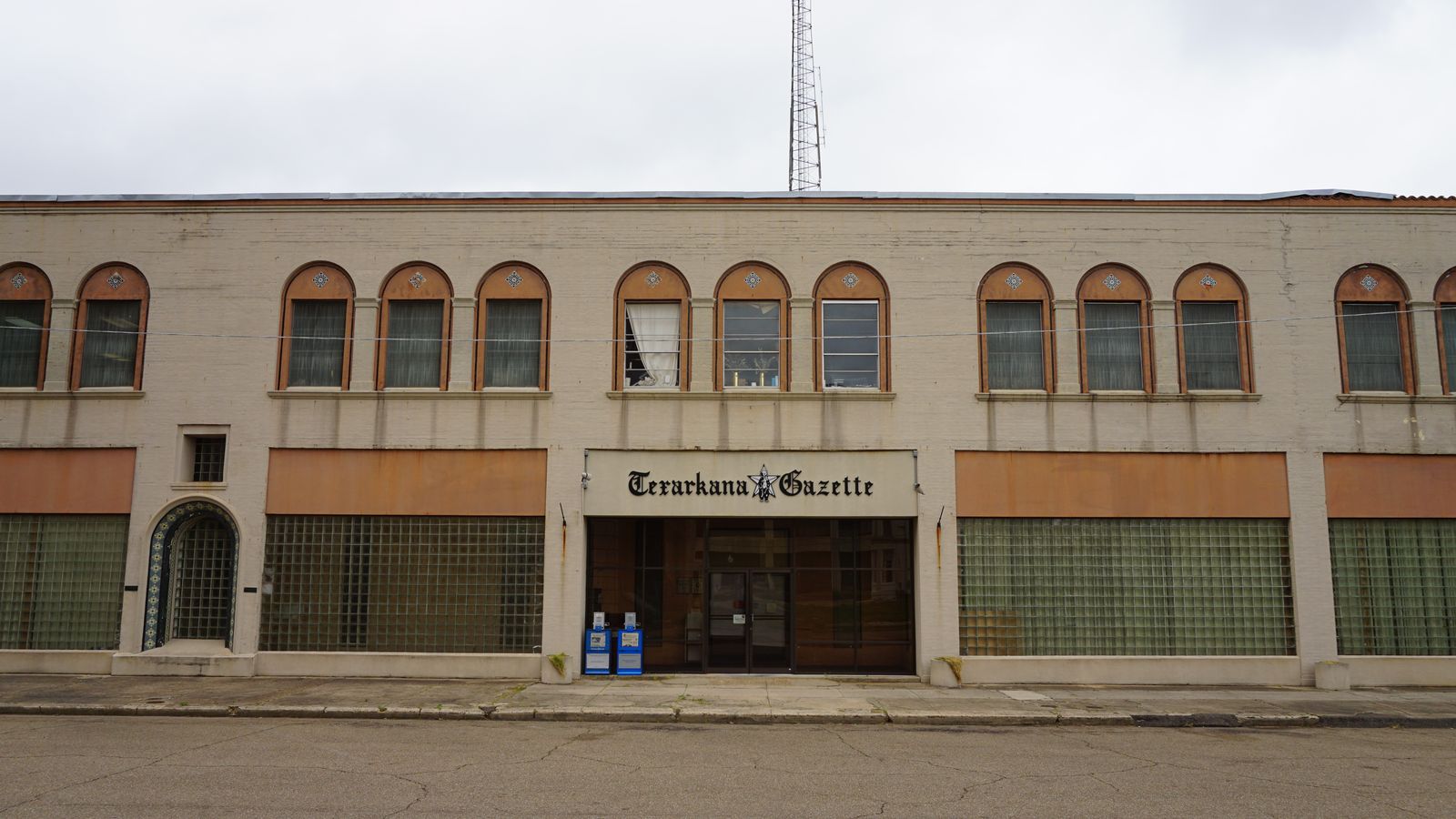
However, the city had been built around a railroad junction that connected Texas and Arkansas. Trains would bring through rowdy soldiers, and there were lots of young, male laborers who worked in lumber and oil. Drunken fistfights and knife fights were common, and shootings, while rarer, didn’t come as a huge surprise. When these violent events occurred, people would read about them in the Texarkana Gazette and be momentarily dismayed at the plights of youth before quickly moving on. They were small, isolated incidents. The people had grown used to them, but they didn’t feel like it defined their city.
On Friday, February 22, 1946, 25 year old Jimmy Hollis took his 19 year old girlfriend, Mary Jeanne Larey, out for a night on the town. It was your typical dinner and a movie, followed by parking somewhere secluded so things could get a little more intimate. It was around 11:45 pm when Jimmy parked his Chevy at the well known lovers’ lane, but it would only be about ten minutes before their good time would be rudely interrupted. They had been so preoccupied with one another that they didn’t notice the other car pull up and park nearby.
An extremely bright light suddenly shone upon the couple from the driver side window. Though partially blinded by the light, they could see that in this person’s other hand, being held just below the flashlight, was a gun aimed directly at them. Jimmy tried to tell the man that he had the wrong person, but he was told “I don’t want to kill you, fellow, so do what I say.”
Both Jimmy and Mary exited the car through the driver side door, and Jimmy was ordered to “take off [his] goddamn britches.” He did as he was told, but it didn’t matter. The attacker pistol whipped him twice, sending his unconscious body to the ground. When the butt of the gun connected with Jimmy’s head, the sound of his skull cracking was so loud that Mary thought it was the sound of the pistol being fired.
Mary tried to maintain her composure, thinking that the masked man was just trying to rob them. After all, a gunman with a mask may let you live, so it was in her best interest to cooperate in any way possible. She grabbed Jimmy’s wallet to show the attacker that they didn’t have any money, but she was also struck and sent to the ground. He then told Mary to get up and run.
She did as she was told and began running towards a ditch, but the attacker ordered her to run up the road instead. As she ran, she saw an old car parked just off the road. Not realizing that this car had almost certainly been how the gunman got to their location, she veered towards the car hoping there might be someone inside who could help her. By the time she saw that the car was empty, the masked man was upon her once more. He demanded to know why she was running.
When Mary said that she was running because he had told her to, the attacker called her a liar and knocked her to the ground. He then began raping her with the barrel of his gun. The attacker suddenly became spooked when he saw a pair of headlights approaching from the distance, and he vanished from the scene. Either the old car had been parked far enough off the road to be out of sight or the driver was an asshole, because they did not stop to help Mary.
Still wearing the high heels she had worn for her date, she fled on foot, desperately looking for help. The first house that she would find was roughly half a mile away, and she woke up the residents to have them call the police. While Mary had been fleeing, Jimmy regained consciousness. He was able to flag down a passing car and have them contact the police as well.
Bowie County Sheriff Bill Presley arrived at the scene with three other officers within 30 minutes, but that seems like an extraordinarily slow response time for such a violent crime.
The couple was taken to the hospital to have their wounds treated. Mary was hospitalized for the night with a minor head wound while Jimmy would spend several days there recovering from his multiple skull fractures. Despite the head injuries, both of them were able to remember the events that transpired in detail. Unfortunately, while they could describe exactly what happened to them, describing their attacker proved a bit harder thanks to the mask.
Police had some serious issues with Jimmy and Mary’s descriptions of the man, which they labeled as inconsistent. Personally I take exception to them writing it off as inconsistent, but I’ll let you decide.
The man was wearing a white mask with holes cut out for his eyes. So it was less of an actual mask and more like a pillowcase or other piece of white fabric that had been fastened around his head with some eyeholes added. Mary said that she could catch small glimpses of the man through the eyeholes and that he was 6 feet tall, in his 20s, and was a light-skinned black man. Jimmy, on the other hand, said the man was 6 feet tall, around 30 years old, and was a dark-tanned white man.
First of all, let’s cut the kids some slack since they had almost been murdered and were trying to identify someone that was wearing a mask in the dark after being temporarily blinded by a giant flashlight. But more importantly, how inconsistent is that really? The ages aren’t that dissimilar, and it gave them at least a reasonable idea of the person’s skin tone. Sure, they couldn’t rule out either all white or all black people, but they could rule out any white person that wasn’t very tanned or any black person that wasn’t particularly light-skinned.
But there was a lot more to be annoyed with the police about than whether or not those eyewitness descriptions were consistent with one another. The police repeatedly challenged Mary and her account of the attack. I’m going to choose to believe that they focused on berating only her because Jimmy was still recovering from the skull fractures, not because they saw her as some sort of hysterical female.
Law enforcement was convinced that the couple knew exactly who the attacker was and that they were covering for him. Why on Earth would police think that these two victims would cover for the person that put them both in the hospital and could easily have killed them, you ask? Shut up, that’s why. Unfortunately, other than some basic demographic info and the utterly insane hunch that Jimmy and Mary were protecting the identity of their brutal attacker, there wasn’t any evidence to go on.
It was decided that the attack was a random act of violence. I mean, that’s accurate, but that shouldn’t somehow constitute a free pass. Declaring something as a random act of violence isn’t like declaring it force majeure. There is still a criminal who did this thing, and maybe you should keep an eye out to make sure they don’t do it again.
This initial conclusion to the case was as bizarre as their insistence that the couple knew the attacker, and Jimmy summed it up best in his words to Sheriff Presley: “If you don’t find him…he’s going to kill someone.”
Jimmy Was Right
Despite the exceptionally violent nature of the attacks on Jimmy and Mary, it didn’t really get a lot of attention. If something like that happened in my similarly populous town people would absolutely lose their minds, and the fact that these people didn’t leads me to question if Texarkana was really as safe a place back then as the residents made it out to be.
A month later, on Saturday, March 23, police found a 1940 Hudson sedan that had been reported stolen ten days earlier. The car was found abandoned near the Griffin residence, where 29 year old Navy war veteran Richard Griffin was visiting his mother. That night, he and his 17 year old girlfriend, Polly Ann Moore, planned to spend the evening together. They had dinner with Richard’s sister at around 10 pm, then planned to go to a midnight movie followed by stopping at an all night diner.
While we can’t say for certain exactly what happened after dinner, the good news is that means there won’t be any gruesome details of exactly what followed. It is believed they went to the movie and diner as planned before parking at a lovers’ lane in the early morning hours.
At around 9 am, a driver passing by saw Richard’s car parked on the lovers’ lane. He thought it was a bit odd for someone to be making use of such a place at that time of day, so he decided to stop and take a look. When he saw the couple in the car, his first thought was that they were asleep. But upon closer inspection, they were definitely not sleeping, they were dead.
The man went to the nearest payphone and called the police. Once police arrived, it attracted a crowd who then began spreading the word of the double homicide that had taken place in their city. The public would again remain largely indifferent, but they were definitely aware that it had happened.
Polly was laying face down in the backseat while Richard was between the front seats on his knees, his head resting on his crossed hands. Richard had been shot twice while in the car, and both victims had been shot in the back of the head. A patch of blood-soaked soil near the car led investigators to believe that the couple had been killed outside of the car, possibly while laying on a blanket, and then been posed inside the car.
Richard’s pockets were turned inside out, likely to make it appear as if robbery was the motive. The rumour at the time was that Polly had been sexually assaulted, though this has since been disproven. There was a single .32 cartridge casing likely fired from an automatic Colt pistol found, and it was believed that the casing may have been ejected from a pistol that was wrapped in a blanket.
I’m not entirely sure why the police’s theories involved so many blankets, but I suppose wrapping the pistol in a blanket could be a way to attempt to collect the shell casings so as not to leave evidence. After all, there were multiple shots fired but only a single casing found. Regardless, the type of gun was a more important detail than the alleged blanket anyway. It was all they had to go on, as the rain that night and morning washed away any shoeprints that might have been used to help identify the killer.
But an even more important detail is that authorities would not publicly connect these murders with the first attack until after the Phantom Killer had disappeared forever. It wasn’t long after, but it was long enough. Because of this, the public thought these murders were another isolated incident and didn’t take it very seriously.
The police on the other hand were taking it seriously. Although both incidents took place on the Texas side of Texarkana, officers from both the Texas and Arkansas city police took part in the investigation along with the county sheriffs’ departments of both Texas and Arkansas, the Texas Rangers, and the FBI.
Despite the complete lack of evidence in the murders aside from a single shell casing and potentially the stolen car that was abandoned near Richard’s mom’s house, over 200 people were brought in for questioning and hundreds of false leads were chased down. There were three suspects that were detained based on having bloodied clothing, but they were all released once it was deemed they had suitable explanations for the state of their clothes. There were considerable resources being dedicated to tracking the killer, but nothing was yielding any results.
Double Double Murders
Three weeks later, the next attack would finally get the attention of the public. Fifteen year old high school junior, Betty Jo Booker, was a skilled alto sax player, an officer in the school marching band, an A student, and a former Little Miss Texarkana. On Saturday, April 13, she was performing at the local VFW hall with her high school big band, Jerry Atkins and the Rhythmaires.
Normally she would receive a ride home with either Jerry Atkins or the other saxophone player, but on that night she was scheduled to be picked up by 17 year old Paul Martin with whom she had been friends since kindergarten. Paul was going to drive her to a friend’s house where she was having a sleepover. The pair doesn’t seem to have been romantically involved, but these secluded parking spots weren’t just for getting handsy with one another and they may have chosen to stop at a lovers’ lane just to talk and catch up for a little bit.
The performance at the VFW ran late, and Betty and Paul didn’t leave the VFW hall until around 1:30 am. Paul’s body would be found on the side of the road at about 6:30 am by a family out for a morning walk. He had been shot four times, and there was blood on the opposite side of the road indicating that he had tried to either run or crawl away from his attacker after the first shot. Once again, we can only guess as to exactly what happened.
Paul’s body was found about a mile and a half from where his car was parked, and there’s no way for us to know how the killer got him this far or what exactly happened at the moment he decided to commit his heinous crime. However, it is likely that the first shot was the one that pierced Paul’s right hand. He then may have turned around to flee, with two more shots being fired as he ran.
One bullet went through his ribs from behind, the other shot through the back of his neck. When he collapsed on the pavement, the killer likely walked over to fire the fourth shot through Paul’s nose to guarantee that his victim was dead. Though the exact sequence of events can’t be stated for certain, it’s a reasonable possibility given the locations of the four gunshot wounds that were inflicted upon Paul and the presence of blood on both sides of the street.
This just left the question of where Betty was. She had never arrived at her friend’s house, and word of the murder and the missing girl quickly spread. Volunteers began setting up search parties, with one such group being men and boys that left Sunday school at the First Methodist Church to join the search. At around 11:30 am, that group found Betty in a grove of trees over a mile from where Paul was found and three miles from the car.
Betty’s body was posed lying on her back and fully clothed, with her right hand in the pocket of her buttoned overcoat. She had been shot once in the chest and once in the face. The gun used was the same .32 Colt pistol.
Although she was found fully clothed, the autopsy revealed the presence of semen and vaginal bruising. Paul’s genitals were clear of any sort of bodily fluid, and so it was presumed that Betty was raped by her killer before being murdered and the body staged.
The Texarkana Gazette ran the headline “Teen-Age Couple Shot to Death”, and the public was finally beginning to get concerned. This was the second double murder in under a month, and the theory that the first had just been an isolated incident was harder to sell. Two days later, the Texarkana Daily News would run the headline “Phantom Killer Eludes Officers…”, with the Gazette following suit the next day and going with the headline “Phantom Slayer Still at Large…”.
Unfortunately, these murders didn’t give the police any more clues. There was evidence that it was the same killer as before, but no new evidence that might help identify who was behind the murders. The only potential lead was that Betty’s saxophone was nowhere to be found, leading authorities to believe that the killer may have stolen it to sell.
The Final Victims
On May 3rd, two troopers from the Arizona State Police were driving out of Texarkana to turn in their monthly expense report in Hope, Arkansas. As they neared the outskirts of the city, they noted an old car parked off the road near the 500 acre Starks farm. They decided that they would check it out when they returned from filing their paperwork, but by the time they made their way back to Texarkana it would be too late.
Sometime before 9 pm, 37 year old Virgil Starks was sitting in his armchair reading the newspaper as his wife, 36 year old Katie Starks prepared for bed. The window shade directly behind Virgil was only halfway close, giving the killer a perfect view of inside. Two rounds were fired, both hitting Virgil in the back of the head.
Hearing the sound of breaking glass, Katie came to see what had happened. Katie saw the two bullet holes in the window, then saw Virgil attempt to stand up only to slump back in his chair, dead. She immediately ran to the old fashioned crank telephone to call for help. She frantically began turning the crank to alert the telephone operator, but it only rang twice before two more shots were fired through the same window.
The bullets hit Katie in the face, knocking out some of her teeth with one bullet lodging under her tongue.
Katie collapsed to the floor, but was quickly able to regain her footing. She tried to make her way to the back of the house to retrieve a pistol, but was having difficulty seeing through the blood dripping down her face. That’s when she heard the killer approaching the back door. She turned around and headed for the front door, running barefoot across the highway that separated her house from the house where her sister and brother-in-law lived. But nobody was home.
Undeterred, Katie ran to the house next door where she caught the attention of her neighbour, A. V. Prater. All she could say was “Virgil’s dead” before collapsing. Prater grabbed his rifle and fired it into the air to summon another neighbour, Elmer Taylor, because I guess that’s just how they do it in the south. He had Elmer fetch his car, and the two took Katie to the hospital where she would make a full recovery.
Initially police were hesitant to link the Starks’ case with the other attacks, and rightfully so. Of the four incidents, it was the only one to take place on the Arkansas side of Texarkana. The Starks were attacked before 9 pm whereas the other victims were all targeted much later at night, between roughly midnight and 3 am. They were also in their mid 30s while the other victims had been younger couples, always including at least one teenager.
Most glaringly, the Starks were attacked in their home while the other victims were all parked in some secluded lovers’ lane. And if all of that wasn’t enough, when police arrived to investigate Virgil’s murder they determined that the gun used was a .22 rifle, not a .32 Colt pistol. Aside from the relative proximity to the Phantom Killer’s other attacks, there wasn’t anything to link this incident to the others.
This was almost certainly an unrelated crime. As I said, police were hesitant to link them in the first place, and by 1948 the Starks were no longer considered connected to the other murders. Despite not being committed by the same killer, this incident remains important to the story because of what happened next.
Citywide Hysteria
As is often the case, the police posted a reward for information that could lead to the arrest of the Phantom Killer. It is also common for residents to contribute money to the reward fund in the hopes it will help keep themselves safe and expedite the search. On March 30th, about a week after the murders of Richard and Polly, the police were offering a $500 reward. Within days of the murders of Betty and Paul, the fund had grown to $1,700.
The night that Virgil was murdered, the fund shot up to over $7,000, and in the next 10 days it would exceed $10,000, which is over $150,000 in today’s money. But the sudden spike in the reward being offered was just the smallest part of the fear that was gripping the people of Texarkana.
Stores began instituting curfews and theaters stopped showing late night movies in the hopes it would keep people off the streets. People began locking their doors and windows at night for the first time, and stores completely sold out of guns, ammo, Venetian blinds, and deadbolt locks. Families would set up rudimentary alarm systems in their homes using pots, pans, and fishing line to alert them if anyone tried to open a door while they slept, and there was a sudden increase in the number of families that kept guard dogs as pets. If a husband had to go out of town for the night on business and the family could afford it, his wife and their children would check into the unfortunately named Hotel Grim seeking safety in numbers.
The once relatively peaceful city had suddenly became an incredibly dangerous place. The citizens were armed and terrified, and matters were made worse thanks to Texas Ranger Manuel Trazazas “Lone Wolf” Gonzaullas. Despite seeming like a pretty cool nickname, “Lone Wolf” was not meant as a compliment. Manuel got his nickname because he didn’t work well with others, but not in the sense of a badass renegade cop who didn’t play by the rules but got results, damnit.
He was heavily criticized for being a media showman who took credit for the work of other officers and spent entirely too much time with female reporters. Manuel also stoked the fears of the citizens, telling them in the days following Virgil’s murder to oil their guns, make sure they were loaded, and not to hesitate if they thought it was necessary to use them. And the people definitely thought it was necessary.
Where residents had once sat on their porches at night chatting with anyone who passed by, now they sat on their porches at night with loaded guns in hand awaiting intruders. If the police had to go to a house to ask questions of the owner, they now needed to show up with their sirens blaring, stand directly in their headlights to make themselves visible, and identify themselves before attempting to approach the house. Anything less, and the nervous homeowner may start unloading their weapon on what they saw as a potential intruder.
The city was also overflowing with rumours about the killer. There were your typical rumours and false accusations that only intensify people’s panic and waste police time, but there was also a belief that the Phantom Killer had already been arrested and the police were keeping it secret because it was the son of a prominent and wealthy family. There were an awful lot of baseless rumours and speculation, and it was only making it harder for the authorities to try to track down potentially meaningful leads.
Police and residents alike also began trying to lay traps for the killer. Authorities had already been surveilling lovers’ lanes, and even had officers hiding atop the trees to keep watch while remaining out of sight. But rather than simply watching, they decided it was time to use themselves as bait. Channeling their inner Steve Buscemi, the police would disguise themselves as teenagers and park on secluded roads, sometimes with a real partner and sometime with a mannequin.
The authorities weren’t the only ones to have this idea, and vigilante teenagers had been trying to bait the killer out on their own. An Arkansas State Trooper noticed a car parked on a lovers’ lane late at a night and decided to investigate. He saw a couple in the car, so he came to introduce himself and ask if they weren’t afraid to be parked alone with a killer on the loose. The girl replied, “it’s a good thing you told me who you are” as she revealed the pistol she had been about to kill the officer with.
I’m sure they had a good laugh about it afterwards.
Over the course of the investigation, hundreds of people were brought in for questioning. There were countless false leads, insane rumours, and false confessions, but there were only a few theories that weren’t completely insane.
The first promising suspect came just six days after the murders of Betty and Paul. Friends had seen Betty put her saxophone in the back of Paul’s car, but it was missing once the bodies were found. A suspicious man had gone to a music store in Corpus Christi, Texas to inquire about selling an alto sax. The store clerk said he’d have to get his manager, and the man immediately became cagey and evasive of the manager’s questions before fleeing from the store.
Because of his suspicious behaviour, police were called and they were able to locate and arrest the man. He didn’t have a saxophone in his possession, but he did have a bag of bloody clothing. The man claimed that he had gotten bloodied in a bar fight, and after being held in custody for several days for questioning, witnesses from the bar were able to corroborate his story and the man was set free. Betty’s saxophone would be found some months later in the underbrush near where her body was discovered.
That only leaves us with the two main suspects.
“Doodie” Tennison
In 1948, Henry Booker “Doodie” Tennison was an 18 year old college freshman attending the University of Arkansas in Fayetteville. It was in the room he was renting from a family that he would be found dead, having poisoned himself with mercury cyanide that he purchased claiming he wanted to use it as pest control for rats.
Henry left behind an awful lot of written material following his death. He had written his own epitaph, headlines for the papers to run, riddles, and incomplete letters. Police found everything he had been written, but it’s possible that this was not his intent. Of everything he left behind, there were three main notes.
The first was a letter that he had titled “The Final Word”. This was on top of his desk in a brown folder and would have been the first note found by authorities. The letter began, “Please disregard all other messages which I have written, they are only thoughts which I was thinking about as possible reasons for taking my own life. As I think about it, it is none of these things.” It’s a long note, but the rest of it isn’t very important for our purposes.
According to one forensic psychiatrist, this was the only note that was intended to be read by the police. For some reason, Henry could have expected them to follow his instructions of disregarding everything else he had written down and deliver his personal effects to his family. They did not, and they also found the “instructions” note. This letter contained instructions about his funeral and other aspects of what to do with his belongings, as well as an extremely simple riddle that gave the combination to his lockbox.
There was also a note containing a different riddle which seemed to have been discarded. That riddle directed the reader to look inside the Beebe fountain pen on his desk with which he had signed the letters. Hidden on a piece of paper rolled up inside the pen was the combination to the lockbox. The lockbox contained some personal items as well as the confession note.
It is believed by some that this confession note was intended only for his family, but after being discovered by authorities it was published in the Texarkana Gazette. The most pertinent part of the letter read:
“Why did I take my own life? Well, when you committed two double murders you would too. Yes, I did kill Betty Jo Booker and Paul Martin in the city park that night, and killed Mr. Starks and tried to get Mrs. Starks. You wouldn’t have guessed it, I did it when Mother was either out or asleep, and no one saw me do it. For the guns, I disassembled them and discarded them in different places.”
That’s a pretty clear confession, but false confessions happen all the time. There was also the belief that this was a lie and was contradicted by his letter “The Final Word”. Police naturally looked into the matter, but one of Henry’s friends provided an alibi for the night of the attack on the Starks. There was also no physical evidence to link him to the crimes, not that there was physical evidence linking anyone else to the crimes either.
Seeing as the murders remain unsolved, whether the confession was sincere or not is really anybody’s guess. To this day, Henry has not officially been ruled out as a suspect. One person who seems to believe that Henry could be the killer is Dr. John Tennison, the forensic psychiatrist I mentioned earlier and Henry’s first cousin, once removed; he certainly feels that Henry is the most compelling suspect.
It is important to note that the “once removed” portion of that relationship means that John is younger, and in fact wasn’t born until long after Henry had committed suicide; the two never met one another.
John put forth the theory that only The Final Word was intended for police and that the confession and other materials were meant only to be read by his family, not published in the newspaper. He also claimed that Henry had a connection to all of the victims.
Many of the young victims attended the movie theater where Henry worked as an usher. That would seem pretty inconsequential by itself, but the first two couples were both attacked after leaving the movies; coincidentally, those victims are the ones not explicitly named in the letter.
Betty and Paul had been at the VFW hall rather than at the movies, but Henry was the trombonist for Jerry Atkins and the Rhythmaires. As for the Starks, one of Henry’s friends lived directly across the street in the same house as Katie’s sister.
When Henry left for college he was 6’3”, which would make him taller than the man who attacked Jimmy and Mary that first night. However, it was also two years earlier and he would have only been 16 at the time. While most boys reach their maximum height when they’re 16, it’s not that unusual to continue growing until the age of 20 and there are some reports that Henry had an unusual growth spurt around the time he left for college.
I was 6 feet when I left for college and 6’2” when I came home after my first semester, so I’m going to say that it’s definitely possible for him to have been the right height two years early. Plus, 6 feet was an estimate from his victims not an exact measurement, so he could have been a tiny bit taller at 16 as well.
There’s no hard evidence beyond Henry’s own confession letter which he may or may not have also contradicted in his Final Word letter, but it’s certainly interesting. He seemed to have at least a passing connection with all of the victims in a way that would have provided opportunity. He was also probably the right height, though he was much younger than the victims reported and from the pictures I can find most likely much paler as well.
That just leaves the question of motive. Why would a 16 year old boy with no history of violence and with what sounds like a good upbringing commit such horrific acts of violence? Henry was clearly depressed, and his letters made it sound as though he felt like a burden and that he was wasting his life and his family’s generosity in sending him to college; he thought that his family would be happier and better able to get on with their own lives if he was gone.
That certainly speaks to why he committed suicide, but it doesn’t present any rationale for committing multiple murders. In his confession, after stating that he committed the crimes he didn’t give any reasoning or justification for it, he simply moved on saying to give his typewriter to his brother and the View-Master (a toy) he had just bought to the 12 year old daughter of the couple he was renting a room from and whom Henry had claimed to fallen in love with about a week prior. But that’s an entirely different issue, and one that he fortunately does not seem to have acted on in any way besides the View-Master as a parting gift.
Youell Swinney
In June, one of the Arkansas State Troopers was investigating a case of non-payment of rent, because apparently that’s a thing that police used to have to look into. According to the landlord, the 29 year old man by the name of Youell Swinney was several months behind on his rent and needed to be tracked down. The landlord gave the officer a description of Youell’s car along with the license plate number.
After running the plate, it was discovered that the car was a stolen vehicle. This wasn’t a huge shock as Youell was a known car thief and counterfeiter with a rap sheet going back to his juvenile years. It was also shortly before this that the connection had finally been made between stolen cars and the murders. Shortly following each attack, a car that had been reported as stolen was found abandoned in relative proximity to where the murders and assaults took place.
Police put out a bulletin for Youell’s stolen car, but it was actually a tip from one of his own relatives that helped the police track the car down. According to this relative, there was a certain parking lot in Texarkana where Youell would always park his cars. Sure enough, the car was in the lot, so police set up a stakeout to wait for him to return. But instead of finding Youell returning to the car, they wound up arrested 21 year old Peggy Swinney.
She informed police that she had just married Youell earlier that day, but didn’t know where he was at the moment.
Once taken into custody, Peggy confessed, in great detail, that Youell was the Phantom Killer. The only problem is that her details kept changing. Police had believed that she was withholding information for fear of implicating herself in the murders, however with each new telling of the story she took a more active role.
In her second interview regarding the murders of Betty and Paul, Peggy said that she and Youell had parked at Spring Lake Park and had some beers. She then claimed that Youell told her he needed to take a leak, at which point he disappeared from the car for an hour before she heard two gunshots ring through the air. As daybreak approached, Youell returned to the car and put a black case in the trunk. Peggy said that he was wet up to his knees and damp up to his waist, potentially from washing blood off his clothes in the lake.
By the third interview, Peggy was painting herself as being much more involved. Rather than just needing to water the plants after enjoying some road beers, in this telling Youell said he was leaving the car to go to the park and rob someone. Peggy insisted on coming, and was with him when they found the car with Betty and Paul inside it. She claimed that Youell pulled a gun on the kids, and when she refused to search them for money he got angry and shot Paul twice.
Peggy then held Betty in place while Youell went to retrieve his car. When he arrived, he made them both get inside. Paul had survived the gunshots and was trying to crawl to safety, so Youell shot him two more times before driving away with Peggy and Betty. After driving a couple miles, Youell took Betty into the woods. When he returned, he told Peggy that he had tried to “get some” from the young girl but shot her when she refused.
The stories were inconsistent with each other, possibly because Peggy was initially trying to protect herself and possibly because she was outright lying, but it meant that she was going to be an unreliable witness. Not only that, but as Youell’s wife they couldn’t even force her to testify against him. Even so, the police were convinced they had found the killer and that Peggy was an idiot who couldn’t keep the details straight. According to one of the interrogating officers, Peggy’s “bread wasn’t baked.
The elevator didn’t go all the way to the top.”
But Sheriff Presley was convinced of Youell’s guilt based on one simple detail Peggy had. During her third interview, he asked her if Youell had taken anything out of Paul’s pocket. Peggy replied that he had taken “some papers or stuff” and thrown it in the bushes. The sheriff then pulled out Martin’s date book, a piece of evidence he had found in the bushes at the crime scene but hadn’t told a single person about. Because I guess all the rules we have today regarding evidence didn’t exist yet.
Convinced or not, the police were still going to need evidence. Peggy ultimately wound up recanting her confession, and they couldn’t force her to testify anyway. Youell’s fingerprints didn’t match anything found at the crime scenes and he didn’t own a gun that matched either of the ones used in the murders. All they could do was hope to get a confession from him.
Two weeks after Peggy’s arrest, Youell was arrested after trying to sell a stolen car in Atlanta, Texas. His attempted sale had caught the attention of police, who caught up with him at the Arkansas Motor Coach Station. Following a short chase, an Arkansas detective cornered Youell trying to climb up a fire escape at which point he begged the officer not to shoot.
When the detective told him, “I’m not going to shoot you for stealing cars”, Youell replied, “Mister, don’t play games with me. You want me for more than stealing cars.” He was then arrested and brought to the police station. As the deputy sheriff carted him to a jail cell Youell asked, “What do you think they’ll do to me for this? Will they give me the chair?”
That is three extremely incriminating statements, and as they say three strikes and you’re out. Not with regards to the murders, of course. Despite spending six months trying to find any evidence to link Youell or Peggy to the attacks, police couldn’t find a single thing and Peggy’s inconsistent confessions were useless. Instead, it was three strikes with regards to car theft.
As a habitual offender, Youell would be eligible to receive life in prison for the stolen cars. Police viewed this as a de facto plea bargain for the murders. Youell refused to confess to murder, but he was so terrified of being sent to the electric chair that he agreed not to contest the habitual offender charge. He went to trial in 1947 where he attempted to plead guilty, but wasn’t actually allowed to as the habitual offender charge required a jury trial.
Instead, he let the prosecution present their case without opposition and was sentenced to life in prison. Which lasted for 26 years.
In 1973, one of his previous convictions from 1941 was overturned because he was not given legal representation. Because this prior conviction was the basis for the enhanced sentencing he had received as a repeat offender, he was released from prison. He seemed to live a quiet life after prison and died in a Dallas nursing home in 1993.
Wrap Up
To this day, the Phantom Killer of Texarkana remains an open case with virtually no evidence. There are the two eyewitness accounts from Jimmy and Mary, neither of whom could identify their masked attacker. Then there are the contradictory confessions from Peggy, a woman whose sanity was called into question by one of the investigators who interviewed her. And then there is the written confession from Henry, which may or may not be contradicted by his other writings.
As far as physical evidence that modern forensics could use to identify new leads, there is nothing.
We’ll likely never know the identity of the Phantom Killer. And since the crime was almost certainly unrelated, nor will we know the identity of the person that attacked the Starks in their home. While Henry was certainly suffering from a lot of guilt and mental anguish, I disagree with Dr. Tennison that his cousin is the most compelling suspect.
If his confession is taken at face value then of course he would be, but people confess to crimes they didn’t commit all the time. I’m not going to speculate as to why he would have done so, but I don’t believe he was the killer.
Youell, on the other hand, I think is a much more compelling suspect. He was the right height and age for the killer, and maybe it’s just the quality of the black and white photography, but he looks like he was extraordinarily tanned as well. Then of course there are his extremely suspicious statements upon being arrested and the confessions from his wife.
The two had gotten married mere hours before Peggy was arrested, so why implicate him in murders if he was innocent? She clearly knew Youell was a criminal before they got married, but she also would have known that he was no Al Capone; she wasn’t going to suddenly control a vast fortune if he was shipped off to prison forever. It’s all very suspicious, but I’m still not convinced.
Many of the officers involved were convinced that they got their man when Youell went to prison for life for 26 years, but there is one other wrinkle in that story. According to a front page story in the Texarkana Gazette from December of 1946, on the night that Betty and Paul were murdered, there was proof that Youell and Peggy were sleeping in their car under a bridge in San Antonio, over 450 miles away. So who was the Phantom Killer?
Key Takeaways
- The Phantom Killer of Texarkana targeted young couples at lovers’ lanes in 1946, murdering five people and assaulting two survivors.
- Police never solved the case due to lack of physical evidence, unreliable witness accounts, and contradictory confessions from suspects.
- Two main suspects emerged: Henry ‘Doodie’ Tennison, who left a suicide confession note, and Youell Swinney, whose wife implicated him before recanting.
- The Starks murder, initially linked to the Phantom Killer, was later deemed an unrelated crime committed with a different weapon.
- Texarkana descended into mass hysteria with armed citizens, curfews, and police bait operations, yet the killer was never caught.
Dana Ortiz covers prosecutorial mechanics, evidentiary procedure, and how investigations unwind decades after the original case file went cold.
Frequently Asked Questions
What is Texarkana and why is it called that?
Texarkana was a moderate sized community with a total population just under 30,000 that was actually two cities in one. The area got its name because it straddles the Texas/Arkansas border, and the greater community is made up of both Texarkana, Texas and Texarkana, Arkansas.
What happened to Jimmy Hollis and Mary Jeanne Larey on February 22, 1946?
On Friday, February 22, 1946, 25 year old Jimmy Hollis took his 19 year old girlfriend, Mary Jeanne Larey, out for dinner and a movie, then parked at a well known lovers’ lane. Around 11:45 pm, a masked man with a flashlight and gun approached them, ordered them out of the car, pistol whipped Jimmy twice causing multiple skull fractures, struck Mary, then raped her with the barrel of his gun before being spooked by approaching headlights and fleeing.
How did police respond to Jimmy and Mary’s account of the attack?
Police repeatedly challenged Mary and her account of the attack, were convinced that the couple knew exactly who the attacker was and that they were covering for him, and labeled their descriptions of the man as inconsistent. Jimmy described the attacker as 6 feet tall, around 30 years old, and a dark-tanned white man, while Mary described him as 6 feet tall, in his 20s, and a light-skinned black man.
What happened to Richard Griffin and Polly Ann Moore on March 23, 1946?
On Saturday, March 23, 1946, 29 year old Navy war veteran Richard Griffin and his 17 year old girlfriend Polly Ann Moore were found dead in Richard’s car at a lovers’ lane around 9 am. Both had been shot in the back of the head, and a patch of blood-soaked soil near the car led investigators to believe they had been killed outside the car and then posed inside it. Richard’s pockets were turned inside out, likely to make it appear as if robbery was the motive.
What happened to Betty Jo Booker and Paul Martin on April 13, 1946?
On Saturday, April 13, 1946, 15 year old Betty Jo Booker and 17 year old Paul Martin were shot to death. Paul’s body was found on the side of the road at about 6:30 am, having been shot four times. Betty’s body was found in a grove of trees over a mile away, posed lying on her back and fully clothed, having been shot once in the chest and once in the face with the same .32 Colt pistol. The autopsy revealed semen and vaginal bruising, indicating she had been raped before being murdered.
What happened to Virgil and Katie Starks on May 3, 1946?
Sometime before 9 pm on May 3, 1946, 37 year old Virgil Starks was shot twice in the back of the head through a window while reading the newspaper in his armchair. His wife Katie, 36, was shot twice in the face when she came to investigate, knocking out some teeth with one bullet lodging under her tongue. Katie managed to escape barefoot across a highway to seek help from neighbors and survived, though police ultimately determined this was likely an unrelated crime committed with a .22 rifle rather than the .32 Colt pistol used in the other attacks.
How did the public and city respond to the Phantom Killer attacks?
The city experienced widespread hysteria. Stores instituted curfews, theaters stopped showing late night movies, people began locking doors and windows for the first time, and stores sold out of guns, ammo, Venetian blinds, and deadbolt locks. Families created rudimentary alarm systems with pots, pans, and fishing line, guard dog ownership increased, and some families stayed at Hotel Grim for safety.
Texas Ranger Manuel ‘Lone Wolf’ Gonzaullas stoked fears by telling citizens to oil their guns, make sure they were loaded, and not to hesitate to use them. The reward fund grew from $500 to over $10,000 (over $150,000 in today’s money).
Who was Henry Booker ‘Doodie’ Tennison and why was he a suspect?
Henry Booker ‘Doodie’ Tennison was an 18 year old college freshman who poisoned himself with mercury cyanide in 1948. He left behind multiple notes, including one that confessed to the murders of Betty Jo Booker, Paul Martin, and Virgil Starks, stating ‘when you committed two double murders you would too.’ He had connections to the victims: many attended the movie theater where he worked as an usher, he was the trombonist for Jerry Atkins and the Rhythmaires (Betty’s band), and one of his friends lived across from Katie’s sister. However, a friend provided him an alibi for the Starks attack, there was no physical evidence, and his confession may have been contradicted by another note.
Who was Youell Swinney and why was he a suspect?
Youell Swinney was a 29 year old known car thief and counterfeiter. He became a suspect when police discovered he was driving a stolen car, and shortly after each Phantom Killer attack, a stolen car had been found abandoned near the crime scenes. His new wife Peggy was arrested and gave multiple inconsistent confessions implicating Youell, including details about the murders of Betty and Paul.
Upon his own arrest, Youell made three incriminating statements, including asking ‘Will they give me the chair?’ However, no physical evidence linked him to the crimes, Peggy recanted and couldn’t be forced to testify, and a newspaper article claimed he and Peggy were in San Antonio, 450 miles away, on the night Betty and Paul were murdered. He was sentenced to life in prison for car theft as a habitual offender instead.
What is the current status of the Phantom Killer case?
To this day, the Phantom Killer of Texarkana remains an open case with virtually no evidence. There are two eyewitness accounts from Jimmy and Mary who could not identify their masked attacker, contradictory confessions from Peggy Swinney whose sanity was questioned, and a written confession from Henry Tennison which may or may not be contradicted by his other writings. There is no physical evidence that modern forensics could use to identify new leads. The identity of the Phantom Killer remains unknown, as does the identity of whoever attacked the Starks in their home, which is now considered an unrelated crime.
Sources
- Original Casual Criminalist video: The Phantom Killer of Texarkana: Hunting a Cold-Blooded Murderer
- Hero image source by Michael Barera / openverse, by-sa.