By Arnaldo Teodorani
The Raid Begins
On the 23rd of September 2009, it was yet to dawn over the Vastberga district of Stockholm. But the G4S cash depot was already coming to life. This facility owned by the huge security company is one of the main hubs in Sweden for the collection and redistribution of cash to banks, ATMs and small employers.
And today was payday.
The six-story building, topped by a pyramid shaped skylight, may appear to the malicious mind as a layer cake, stuffed with a delicious filling: 1 billion Swedish kronor in cash — roughly $150 million.
Around 5am, night shift team leader Oskar Lindgren walked into the armoured room where most of the cash was being held. Lindgren and his staff were about to clock out. Nothing to report so far, all was fine and quiet.
Well, not so quiet.
The air was filled by the sound of hundreds of thousands of bank notes, rattling through the counting machines. It was an obstinate, dull, repeating noise. Some may say this is the drum beat that makes the world spin.
Today, Lindgren noticed something else. It was like a second drummer had joined the band. One who didn’t care for keeping the same time signature as the steady march of the rattling notes. Another loud vibration was filling the room. Something was shaking. But what exactly?
Lindgren asked his colleagues to shut off the counting machines. And then he realised. The walls of the buildings themselves were trembling.
Another thrumming sound joined the ensemble, jamming Lindgren’s ears with yet more confusion. The drilling noise came from above this time, and it was not hard to discern what it was. It was the rotor of a helicopter, flying above the G4S building. Very low — dangerously low.
Lindgren’s team often joked about robbers attacking from above, smashing through the pyramid skylight. Well, one of them quipped, it seems like the day has finally arrived.
Oskar Lindgren left the cash room to investigate the source of the noise. He reached the building’s internal courtyard and looked up. Beyond the skylight he could make up the shadowy silhouette of a large craft. A helicopter was hovering above the roof of the building.
He then noticed that one of the glass panes of the pyramid had been smashed in, and two ladders had been lowered through the opening. More worryingly, one, two, three men, dressed in black and wearing motorbike helmets, had descended into the courtyard.
As he sprinted back into the cash room he shouted: “It’s for real! They are here!”
It seemed like that day had finally arrived.
Introduction
On the 23rd of September 2009 a well-organised team of professional robbers used a stolen helicopter to raid a G4S cash deposit, in the Vastberga district of Stockholm, Sweden’s capital. Everything about the heist was spectacular: the planning, the execution, the getaway … and the loot: 39 million kronor, or 8.7 million USD in 2022 money.
Several accounts of the robbery, especially those written in 2009 and 2010, highlight how the Swedish police had been tipped off by the Serbian foreign ministry weeks in advance. And it is hinted that the Swedish police had failed to act upon the tip — or had downright ignored it. Without spoiling too much in advance, the truth is far more complex.
Sure, we love a good heist – especially non-violent ones. And we may even begrudgingly admire the brains, brawns and brass appendages of those who carry it out. But we should not overlook the ingenuity and determination of police officers and prosecutors, who go after these real-life “Ocean’s 11”.
Looters from the Skies
The main action of the helicopter heist took place at around 5:20am, on the 23rd of September 2009. But some members of the gang had been at work since much earlier.
At approximately half past 4, a robber disguised in a balaclava broke into a Police helicopter depot, located in Myttinge, 40 km northeast of Stockholm. The man dropped two packages: one in front of the hangar housing the choppers; the other close to the fuel tanks. If we could zoom into those packages, we would notice a red LED, blinking with sinister promise. An explosive device?
The man left the hangar undisturbed and walked into the nearby woods. He then set fire to his gloves, his balaclava, his burglar tools and left the scene.
Around the same time, two men were breaking into another helicopter hangar – this time a civilian one, located in Norrtalje, 160 km north of Stockholm. The robbers forced their way into a red and white Bell 206 Jet Ranger chopper, switched on the engine and took off, heading south.
About half an hour later, in eastern Stockholm, another much lesser incident was taking place. A white Toyota had collided with a black Audi. A very mild collision, with no injuries and very little damage involved. The driver of the Toyota took some photos for the insurance claim and then shook hands with the driver of the Audi.
The latter signed the insurance papers as Alexander Eriksson, a TV producer, cameraman and amateur helicopter pilot. He had a history of cocaine and amphetamine use, an addiction in which he may have relapsed after a stressful assignment in Malaysia.
Let’s now focus our gaze on the main stage of the action: the G4S building in Vastberga.
At approximately 5:20am the Bell 206 chopper landed gently on the roof of the cash deposit. Three masked men climbed out: one of them smashed in the pyramid skylight with a sledgehammer; the other two immediately swooped in, lowering two long ladders through the breach.
That’s when our friend Oskar Lindgren took notice of the raid taking place. Once he rushed back into the armoured cash room, he instructed his team to throw as much cash as they could down the chutes leading to a more secure vault. Other bundles of notes had already been secured inside padlocked metal cages. He then gathered the staff in a corner of the room and asked them to wait for help.
In the meanwhile, the three robbers had blown up a bulletproof window with a small explosive device and entered the offices. They broke open a door and found themselves just outside the cash room. A reinforced steel door was the only defence standing between them and the loot.
Inside the room, panic was spreading like wildfire. In the G4S alarm centre, located somewhere in Stockholm, a guard on duty received an urgent phone call from Lindgren. The team lead was worried about his panicked co-workers. The robbers were just outside the steel door. Should they wait? Or should they make a sortie, risking a confrontation with the robbers?
Before the guard could provide advice, an explosion thundered at the other end of the line. And Lindgren’s phone went dead.
By now the G4S guards had already alerted the police, who immediately sent orders for their own pilots at Myttinge to take off. The pilots on duty rushed to get to the chopper. But the cops found a small surprise: a mysterious box with a blinking light, deposited just next to their hangars. And more worryingly, there was another box by the supply tank containing 6,000 gallons of fuel.
Some reports of the event state that the officers at Myttinge were stumped by a mysterious package with the word ‘Bomb’ scrawled on it. The reality was less farcical, and far more worrying. Logically, the personnel on duty preferred to call in the bomb disposal squad before taking any risks. With the police helicopters grounded, the chopper raiders could get on with their job.
At 5:38am, the reinforced door to the cash room collapsed, after a third explosive charge had gone off. The three robbers strutted in, Kalashnikovs and handguns at the ready. Luckily, Lindgren and his staff had already vacated the room by using another exit. The three masked raiders were free to unleash their power tools: circular saws, with which they broke into the metal cages containing the cash.
Outside the building, the first police patrols were arriving on scene. Or rather, they were trying to, as their cars almost drove into a perimeter of chains strung across the streets, and lined with caltrops. A caltrop is basically a four-spiked metal nail designed to puncture car tires. And when a dad finds a perimeter of colourful bricks, he knows better than to advance. The first police units on site were of the same persuasion.
Here they had a gang who had assaulted a cash deposit with a helicopter, who had detonated explosives and had prevented the arrival of police forces by cordoning off the area with chains. Clearly, they were facing some pretty hardcore professionals. Better wait for their own, hardcore SWAT teams.
As they did so, cops on the scene set up a command centre at a nearby gas station, where they were soon reached by one Johan Petersson. A former military police captain, Petersson was the chief of security for the G4S deposit. He fired up his laptop and logged into the CCTV feed, revealing the images of the three commando-like robbers sawing their way into piles of cash.
Petersson noticed two very interesting details. First, there were no bombs placed by the entrance, which could allow for a tactical team to burst in. Second, the robbers were getting tired of hoarding bundles of banknotes. When the cash you are stealing becomes so much that you couldn’t be bothered with doing some extra lifting, it is a clear signal you are about to call it quits.
Shortly after 5:40am in fact, the gang dragged their sacks full of kronor to the inner courtyard, and started climbing up the ladders. Their helicopter, which had been hovering until then, descended upon the roof. The gang hauled sack after sack of booty, up the ladders, and into the chopper. A tiresome endeavour, surely. So much so that one of them slipped onto the bottom rung, leaving a trace of blood.
Finally, the three raiders climbed onto their Bell 206, slid the doors shut and took off into the Stockholm dawn.
It was now time for the gang to execute their well-prepared getaway. The helicopter flew to the southwest of Stockholm, making a landing in Norsborg. Part of the heist squad climbed out, before the Bell lifted off again. The chopper made a second landing by the Lake Mälaren, west of Stockholm. Here, other team members disembarked, boarded some pre-prepared speedboats, and thundered off into the watery horizon.
But the pilot still hadn’t finished his shift. He took off once again, before touching ground in a forest north of Stockholm. The pilot turned off the rotors, locked the craft and walked towards the nearest town, Täby. On the ground, he had dropped some plastic zip ties and a handheld GPS unit.
At about 7pm, a bearded man in a dark suit walked into the Täby McDonald’s. He did not order an Egg McMuffin or whatever was in the menu at the time. He simply asked if he could call a cab, to be driven to central Stockholm.
Until then, the pilot and his Bell 206 had flown undisturbed, as the police pilots in Myttinge were waiting for the bomb disposal team. When they arrived, they blasted the alleged bombs with a water cannon. Upon inspection, the police realised they had been fooled, baffled, swindled, bamboozled: the supposed bombs were just empty plastic boxes, fitted with red LEDs.
Enter the Police
Time for a recap now: an audacious gang of robbers had taken by surprise one of the largest security companies in the world and the Swedish police, performing a spectacular raid which had clearly been well-planned and well-rehearsed. They had stolen a helicopter, they had pinned the police’s own choppers on the ground with decoy bombs, they had stumped the arrival of patrol cars with caltrop chains. They clearly knew by heart the layout of the G4S’ offices and had meticulously prepared their escape route with those speedboats.
They had gotten away with 39 million kronor. But the loot could have amounted up to 150 million, if it weren’t for Lindgren’s order to drop most of the money down the chute.
But were the police truly and thoroughly baffled?
Well, as it will turn out, the cops were not so clueless.
Around 7am, news of the heist were already spreading, while the police was actively collecting clues on the event. Quite early on, they found out that the helicopter used in the heist was a Bell 206, stolen in Norrtalje.
Now, do you remember Mr Alex Eriksson, the TV producer who had been in a collision with the Toyota? Early in the morning he received a phone call from a reporter he had worked with in the past. The reporter seemed to remember that Alex owned a chopper in Norrtalje. Could it be that the gang had stolen his helicopter? Alex replied that no, it could not be. His craft was undergoing repairs. And sorry, but he was driving to a business meeting, so he couldn’t talk right now.
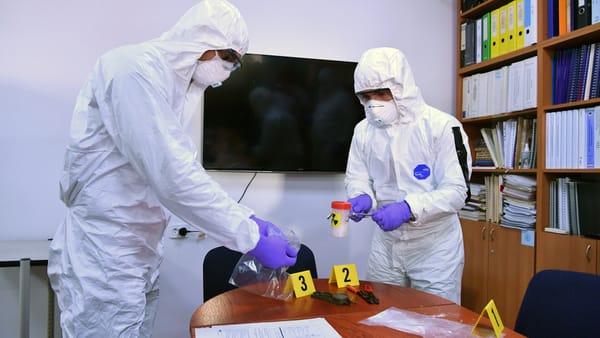
Let’s take a look at what the police had found out. Their forensics team had actually gathered a fair amount of evidence. They had the chains and caltrops. The blood spilt on the ladder. And potential DNA traces on the sledgehammer, and on the zip ties used to secure the ladders. Moreover, they had scouted the area where the Bell 206 had landed, had spoken to the McDonald’s staff and even found some CCTV footage of the mysterious bearded man in the dark suit.
All the evidence was funnelled towards the office of public prosecutor Leif Görts, working with the RKP, Sweden’s National Criminal Investigations Department. The twist is that both Görts and the RKP had a very clear idea of who was behind the heist.
We will have to step back in time now.
Back on the 27th of August, the Serbian foreign ministry had alerted Swedish authorities that a certain Milan Sevo had been in contact with one Goran Bojovic. Mr Sevo was a member of the Stockholm Mafia, Sweden’s own organised crime outfit. He had recently relocated to Belgrade, Serbia. While there, he had received calls from Mr Bojovic, a 38-year-old Swede, son of Montenegrin immigrants.
Officially, he ran a construction business. But the RKP had long suspected this activity was a mere front for something more illicit.
Bojovic had asked Sevo for help: he needed logistical support to carry out a major robbery in Stockholm. The Serbian police could not tell when or where exactly the crime would take place, but they did know it would involve the use of a helicopter, and the raiding of a large cash repository.
The RKP approached public prosecutor Leif Görts to authorise surveillance on Bojovic. Görts was expected to coordinate investigations, although he did not appear as a likely candidate: his expertise, in fact, was in money-laundering cases. Plus, the idea of a heist via helicopter may have sounded ludicrous to his rational mind.
And yet, recent years had proved that robberies in Sweden were frequent and spectacular. The entire population of Sweden in the 2000s was about 9 million – more or less the same as London. And yet, Swedish heists accounted for a tenth of all robbery losses in Europe.
This may be due to factors such as the centralisation and relative vulnerability of the cash-distribution systems, managed by a handful of private security companies. The relative leniency of sentences, as compared to other European countries, may also play a part in attracting gangs of internationally-sourced, highly professional robbers, with military-grade expertise in high-speed driving, infiltration tactics and explosives.
So, detectives at the RKP now had a golden opportunity to bust a gang before the robbery was committed. But Görts applied the brakes: sure, they could arrest Bojovic and his associates based on the wiretapping. And yes, they could charge them with conspiracy to commit a crime. But there was no certainty that such charges would result in a conviction.
Görts and the RKP investigators agreed to continue surveillance on Bojovic and associates, until they decided to make a move. And then, they would catch them – in the act.
Bojovic kept in touch with Sevo, asking him for help in hiring a Serbian pilot for a project. Sevo’s initial hire, however, seemed to back out from the ‘project’. Bojovic even considered taking flying lessons himself.
The RKP intensified surveillance on Bojovic. On the 2nd of September 2009, undercover police officer Annika Persson followed him to a small island off mainland Stockholm. Posing as a dog walker, she was able to witness a meeting between Bojovic and two associates. And before you ask, Annika had taken along her small schnauzer to give credibility to the disguise.
She recognised one of the associates at the meeting: Charbel Charro, a first-generation Swede with dual Syrian citizenship. Charro worked as a PE teacher in southern Stockholm, but had a criminal record. However, Annika had never seen the third guy, a bearded man, and so she decided to follow him. She trailed him all the way back to Stockholm, then handed over surveillance to a colleague.
The officer followed the bearded man to an office building, where he lost him. Luckily, he was able to note down his car’s registration number.
One week later, Bojovic rang Sevo and told him that he had found a pilot, and that the heist was imminent. Was the bearded man the pilot? And when and where the robbery would take place?
Based on hints picked up from earlier conversations, Görts and the RKP detectives identified a likely candidate for the place and date: the Stockholm Arlanda airport, on Thursday the 17th of September. Back in 2002, three robbers disguised as a maintenance crew walked onto Arlanda’s runway, whipped out their assaults rifles and held up a plane, just landed from London. They left behind a decoy bomb to delay the police and sped away with 7 million USD in cash. But this time RKP would catch Bojovic and gang, red-handed.
They put on high alert their SWAT teams and helicopter crews, ready for the 17th, which came and went – but nothing happened. The RKP held their breath for a few days, until that Bell 206 landed on a building in Vastberga.
Görts on the Hunt
Görts and colleagues had not been able to catch the gang in the act, but they could still chase after them. The priority was to scan again the transcripts of Bojovic’s mobile traffic. The morning of the heist, at 8:13am, the alleged ringleader received a very short message from his friend in Belgrade, Mr Sevo. The message read: colon; hyphen; capital ‘o’. In other characters: ’ :-O ’. In other words: ‘Wow, that was tots amazeballs, mate.’
To monitor suspicious phone traffic and to trace the movements of the robbers, the RKP could rely on the expertise of Jonas Hildeby, a geographic profiler. Hildeby and his analysts trawled through 300,000 phone calls taking place in the days leading to the heist, looking for patterns and clues that could lead to their whereabouts.
He was looking for something very specific: a closed circuit. In simple terms: organized criminal gangs are smart enough to use only pre-paid phones to make their calls. Users don’t need to sign contracts to purchase these phones, which are supposedly untraceable and can be disposed of after use. Now, very well organised criminal gangs will make sure that they use such phones not only to make calls, but also to receive them.
This would generate a closed circuit of pre-paid phone numbers, communicating to each other. But this type of ‘pro’ move is exactly what sly foxes like Hildeby are looking for.
The profiler and his team eventually identified a closed circuit of 14 disposable phones: they had been used in the weeks before the chopper raid and had fallen silent after the morning of the 23rd of September. Each call from the 14 phones had been routed through a particular cell-tower. By analysing the calls history, Hildeby was able to put together a timeline and map of the raid’s events, from the planting of fake bombs at the police hangar, to the escape via speed boat.
Hildeby’s work had been a massive leap forward in investigations, but Görts and the RKP only had the name of a suspect – Bojovic – and no one in custody yet. Where to focus next? Or rather, on whom to focus? The answer was obvious: the most visible, most skilled element of the gang – the helicopter pilot.
Elusive Mr Chopper
The RKP detectives cross-referenced the list of Swedish helicopter license holders with pilots who had used the hangar in Norrtalje. They then scanned the resulting short-list, looking for any significant detail. And the officers did notice something interesting: one of the licenses listed a home address in the town of Ljusterö. Where had they seen that address before?
They went back to the report of the 2nd of September. Remember? When officer Annika and her schnauzer had eavesdropped on the meeting between Bojovic and the bearded guy. The unnamed guy had driven away on a Peugeot. And its license plate was registered against an address in Ljusterö. The same address. And whose license it was? It belonged to a TV producer called Alexander Eriksson.
Now that Görts and the RKP had two named suspects, they decided it was time for some action: on the 27th and 28th of September, they arrested both Bojovic and Eriksson – the latter, just when he was about to board a flight to the Canary Islands.
Bojovic laughed off all allegations, simply asking for a lawyer. Eriksson was no more cooperative. We could paraphrase his answers to questioning as follows: ‘Mr Bojovic who? Never heard of him. Never met him!’ And ‘Me, piloting a helicopter for a heist? Impossible, on the early hours of the 23rd I had relapsed into my old drug habits! And I even had a collision with a Toyota while driving my Audi! I have time-stamped photos to prove it!’
When detectives pointed out he had been seen at the McDonald’s in Täby, he admitted he had driven there after some early-morning partying. Beyond that, Görts could not extract further info from the pair. The Swedish laws prevented him from offering more lenient sentences or impunity in exchange of a confession.
But another break-through would come from cooperation between patrol officers and the geographic profiler, Jonas Hildeby. On the 27th of September, Charbel Charro, right hand man to Bojovic, had been stopped for a routine check. The uniformed officers noticed a receipt from a phone shop in his car, took a photo and attached it to their report. The receipt listed the purchase of five prepaid phones and five SIM cards.
Hildeby compared the five mobile numbers to those of the ‘closed circuit’ he had identified, and bingo! One of them had been used during the heist. The RKP had found a third named suspect.
In early October, forensic analysis provided yet more names. Remember the guy who had dropped the fake bombs at the police helicopter base? He had set his tools and gloves on fire. Or so he thought. A fire brigade had put out the bonfire on time for DNA to be retrieved. And more DNA was recovered from rubber bands inside the bombs used during the heist. Database searches revealed the names of Nemanja Alic and Mikael Södergran, a friend of Charro’s.
Next, forensic analysts examined the drops of blood found on the ladder at the G4S depot, which gave away the name of an old acquaintance of the police. He was a Swede national of Iraqi origin called Safha Kadhum. In 2000, he and his crew had stormed the Swedish National Museum, stolen two Renoirs and a Rembrandt and escaped via speedboat. Police cars had been stumped by – guess what – chains and caltrops.
Kadhum had managed to leave the country after the helicopter heist, but justice eventually caught up. In January 2010 he was arrested in the Dominican Republic and then extradited to Sweden. The march of justice proceeded inexorably.
Not Bad of a Pay Day
By summer of 2010, Görts and the RKP had charged 10 suspects. They had even unveiled Eriksson’s little trick. The collision with the Toyota had been staged: another accomplice had been driving his Audi.
The trial began in early August and went on for six weeks. The prosecutors proved how every time Bojovic and Charro had used their ‘work’ pre-paid phones, the signals were just centimetres away from their ‘private’ mobiles. Then, Görts produced transcripts of Bojovic’s conversations with his Serbian contact, Mr Sevo, which revolved around the search for a pilot.
Bojovic replied that he and Sevo had been talking about a construction project. Bojovic wanted to hire a crane operator, and one of the candidates happened to be a dead ringer for Maverick, Tom Cruise’s character in ‘Top Gun’. Hence, he referred to him as ‘the pilot’.
Mr Eriksson, the actual pilot, also put up a good defence. He came from a well-off background and had a steady job. Sure, he had a history of drug abuse, but he did not have a criminal record, nor clear motivations to participate in such a felony. His defence was conducted by ‘star attorney’ Leif Silbersky, who had once represented Julian Assange.
Silbersky argued that Eriksson wasn’t a good enough pilot to pull such stunts. Plus, that night he had relapsed on old habits: he had been on a drug binge, which concluded with a severe case of the munchies at the McDonald’s in Täby.
But Görts was one step ahead: the forensics team had found Eriksson’s DNA on the GPS device and some of the zip ties found near the chopper. Moreover, Annika Persson, the dog-walking cop, testified that Eriksson had met with Bojovic and Charro on the 2nd of September.
In early November, the court issued its verdict. The two accomplices who had staged the traffic accident were sentenced to less than two years each. The explosives expert, Södergran, received five years. Safa Kadhum, the once art thief, received seven years for storming the depot armed with a Kalashnikov.
And then: Alexander Eriksson – seven years, for stealing and piloting the Bell 206. Bojovic and Charro – three and five years respectively, for planning the heist.
Görts pressed for more serious sentences, but his team could not prove that the two had physically raided the G4S building. Finally, Nemanja Alic, accused of placing the fake bombs at Myttinge, got away scot-free. His lawyer successfully contested the DNA evidence by claiming that he had loaned his gloves to someone else.
On the 16th of February 2011, an appeals court in Stockholm revised these verdicts, without significant changes. Eriksson and Kadhum had their prison terms increased by a year, but all other sentences remained the same.
What of the loot of 39 million kronor, almost 8.7 million USD in today’s value? Gone, disappeared into thin air, flown into the atmosphere like a manically revving chopper. Possibly laundered into a front business, or re-invested in the drug trade.
Görts suspected that the gang included from 10 to 20 members. Let’s go for 14, based on the number of pre-paid phones. And let’s assume they split the bounty into equal shares, even though some had a more active role than others. That’s more than 620,000 USD per member. Not bad of a pay day, considering that the planning and execution took barely two months.
Aftermath and Legacy
The story of the Stockholm helicopter heist has been considered for a Netflix adaptation since 2018, with Jake Gyllenhaal attached to star, though it is yet to appear on screens.
The case remains one of the most spectacular robberies in European criminal history, demonstrating both the audacity of modern organised crime and the evolving sophistication of law enforcement response. The Swedish police, through the RKP and prosecutors like Leif Görts, showed that patient surveillance, forensic analysis, and innovative techniques like geographic profiling could eventually unravel even the most meticulously planned criminal operations.
Yet the money itself – the 39 million kronor that vanished that September morning – has never been recovered. It stands as a reminder that in the world of high-stakes heists, the perfect crime may not exist, but the perfect getaway for the loot sometimes does.
Key Takeaways
- On September 23, 2009, professional robbers used a stolen helicopter to raid a Stockholm G4S cash depot, escaping with 39 million kronor.
- The gang disabled police response with fake bombs at a helicopter hangar and caltrop chains to block patrol cars.
- Swedish police had been tipped off weeks earlier by Serbia about a helicopter heist but chose continued surveillance over premature arrest.
- Geographic profiler Jonas Hildeby identified a closed circuit of 14 prepaid phones, mapping the entire raid timeline.
- Ten suspects were eventually charged through DNA evidence, phone records, and undercover work, though the stolen money was never recovered.
Dana Ortiz covers prosecutorial mechanics, evidentiary procedure, and how investigations unwind decades after the original case file went cold.
Frequently Asked Questions
When did the Stockholm helicopter heist take place?
The heist took place on the 23rd of September 2009.
How much money was stolen in the heist?
The gang stole 39 million kronor, or approximately 8.7 million USD in 2022 money. The building contained up to 1 billion Swedish kronor (roughly $150 million), but most was saved when Oskar Lindgren ordered his team to throw cash down chutes to a more secure vault.
What type of helicopter was used in the robbery?
A red and white Bell 206 Jet Ranger helicopter was used. It was stolen from a civilian hangar in Norrtalje, 160 km north of Stockholm.
How did the robbers prevent police helicopters from pursuing them?
A robber disguised in a balaclava broke into the police helicopter depot in Myttinge and left two packages with blinking red LEDs—one in front of the hangar housing the choppers and another near the fuel tanks. These decoy bombs caused police to wait for the bomb disposal squad, grounding their helicopters.
Who was the ringleader of the heist?
Goran Bojovic, a 38-year-old Swede of Montenegrin origin, was the ringleader. He officially ran a construction business, but Sweden’s National Criminal Investigation Department (RKP) suspected this was a front for illicit activities.
How did police eventually identify the helicopter pilot?
Police cross-referenced Swedish helicopter license holders with pilots who had used the Norrtalje hangar. They found a license registered to an address in Ljusterö—the same address linked to a Peugeot driven by a bearded man that undercover officer Annika Persson had observed meeting with Bojovic on September 2nd. The license belonged to Alexander Eriksson, a TV producer and amateur pilot.
What role did Serbian authorities play in the investigation?
On August 27, 2009, the Serbian foreign ministry alerted Swedish authorities that Milan Sevo, a member of the Stockholm Mafia who had relocated to Belgrade, had been in contact with Goran Bojovic. Sevo had been asked to provide logistical support for a major robbery in Stockholm involving a helicopter and a large cash repository.
How did geographic profiler Jonas Hildeby help solve the case?
Hildeby analyzed 300,000 phone calls and identified a closed circuit of 14 disposable prepaid phones used by the gang. By mapping which cell towers these calls routed through, he was able to reconstruct a timeline and map of the raid’s events, from planting fake bombs to the speedboat escape.
What were the sentences for the main convicted criminals?
Alexander Eriksson received seven years for stealing and piloting the Bell 206. Safha Kadhum received seven years for storming the depot armed with a Kalashnikov. Goran Bojovic received three years and Charbel Charro received five years for planning the heist. On appeal, Eriksson and Kadhum’s sentences were increased by one year each.
What happened to the stolen money?
The 39 million kronor was never recovered. It disappeared, possibly laundered into a front business or reinvested in the drug trade.
Sources
- Original Casual Criminalist video: The Spectacular Stockholm Helicopter Heist
- Hero image source by Alindfors / openverse, by.