It is hard to imagine a worse crime than a mass shooting. The epitome of senseless violence, they are horrific and barbaric affairs in which lives are ended wholesale—without warning, without reason, and without any restraint. But even this doesn’t quite convey it correctly. There is something about such crimes, and the way they transform ordinary locations, the kind usually typified by peace, tranquillity, and above all else happiness, into scenes of unforgettable tragedy that makes them sting in a way that other crimes simply can’t.
Regrettably, America has an all too familiar acquaintance with such violent incidents. Be it the Sandy Hook Shooting, where 26 lives, including those of 20 children were ended in the corridors of an elementary school, or the Pulse Nightclub Massacre, where 49 innocent LGBT people fell victim to hatred and bigotry—the incidents have become an all too familiar feature of the nation’s news cycle.
But even amongst this loathsome litany, one stands out above all the rest for its calculated brutality, the callousness of its execution, and above all else, the sheer number of lives it claimed: The Las Vegas Shooting of October the 1st, 2017. Here, in the heart of the city’s vibrant strip, a music festival and the hotel overlooking it became the tragic setting for the deadliest mass shooting in modern American history. With 60 innocent lives lost and over 800 people injured, the tragedy left an indelible scar on the face of a nation, and forever darkened a city that previously had been known the world over for its glittering lights, high-stakes entertainment, and unending revelry.
This is the story of that tragedy.
The Shooting
It all began at the Mandalay Bay Hotel, when Security Officer Jesus Campos was out and about patrolling its quiet corridors. Campos was no stranger to the job, and for him, his daily march around the hotel had become ritualistic; checking doors to make sure they were secure, identifying safety hazards, and occasionally stopping to exchange pleasantries with guests—these were the bread-and-butter regularities of his profession. Certainly, this is not what one would call adrenaline pumping, but little did he know, a disturbance most wicked was about to change that.
At 9:18pm, a call came out to Campos over his radio; an alarm was blaring out in a suite on the 32nd floor, and as the hotel had been unable to raise the occupants with its internal telephone, it fell to Campos, who was only two floors down, to head up and check it out. This was no cause for Campos to worry however, at least not yet. Such alarms were routine things and occurred many times throughout the day. Typically, it was something asinine; someone smoking in their room and tripping the fire alarm, a tipsy guest getting lost and staggering through a fire door—something like that.
But as Campos ascended to the 32nd floor, he began to see signs that the matter at hand was far from routine. His first clue being that the door that led to the hallway from the stairwell had been secured shut. Given the fact that this was a heavy fire door intended to stay unlocked in all situations barring emergencies, this made Campos raise an eyebrow.
It had to have been done intentionally; there was no way a rogue child or drunken staggerer would have been able to accidentally knock it shut—its mechanism was just too substantial. But still, despite his initial intrigue, his mind raised no alarm bells. After all, the situation he was stumbling into was so unusual, so unexpected, so evil, how could he have been expected to have any other response?
Unable to open the door, Campos headed back down the stairs and instead used a guest elevator to reach his destination—a route that he did not find obstructed. Soon enough he found himself at the suite in question, suite 32-125, and he found himself greeted by another strange sight—someone had screwed an “L” bracket between the door and its frame, securing it tight. Sensing that something weird was afoot, he knocked on the door, and when he received no answer, he got on his radio to summon an engineer to help get the door open, pacing down the hallway as he talked.
As he put down his radio, he heard the muffled echoes of a very loud, almost industrial sound coming from inside the suite. It was unclear what it was, but given its volume and rapidity, almost like a very large power drill, he headed back over to investigate once again. He pressed his ear to the door, but whatever the sound was, it was well enough muffled by the luxury suite’s extensive soundproofing that he simply couldn’t place it.
He remained there, pressing his ear against the door as he pondered, when suddenly, the penny dropped—it was gunfire, very fast, very rapid, thunderously loud gunfire. Instantly his fight or flight instincts kicked in, and he dived for cover in an alcove between suites 122 and 124. Unfortunately, he hadn’t been fast enough, as the very instant he began to dive for cover, a ferocious volley penetrated the door, striking Campos in his left leg.
Mercifully, his wounds were minor; the great mass of the fireproof door had reduced the velocity of the rounds so much that it made his injuries minimal—minimal enough for Campos to believe he had only been hit with something small like a bb gun or .22 rifle. So, with himself safe, for now, he did the only thing he could do in that situation: keep his head down and try to raise the alarm over his radio.
Meanwhile, at the festival, the scene was one of hell itself. The shooting began at 10:05pm. The shooter had taken up position on the sill of one of two windows that they had earlier smashed with a hammer, and opened fire just as the headline act, Jason Aldean, was getting into his closing number.
Initially, he just took a few isolated single shots to gauge his aim, and then, having adjusted his windage and elevation, he welded his finger to the trigger and unleashed an unrelenting barrage on the poor crowd below. The shooting was to continue for exactly ten minutes, a time long enough to allow the shooter to discharge over 1,000 rounds, mostly in unrelenting bursts of 80 to 100 rounds that emptied entire high-capacity magazines with a single trigger pull.
Amidst the noise and action of the festival, many on the ground mistook the early shots for fireworks, or simply didn’t notice them at all. Tragically, this illusion was soon shattered as festival goers began falling to the floor by the dozen. A mass panic then emanated across the festival as this grim realisation set in.
A brave few remained on the scene, doing what they could to keep low and administer first aid to the initial victims, but the majority, quite understandably, tried to flee. Unfortunately, their escape was hampered by the festival’s perimeter security fence. Once a symbol of protection, the fence, and its limited number of gates, were now a bottleneck, slowing down escape and leaving many attendees penned in and in the shooter’s line of fire.
Also on the ground were several police officers who had been posted to the enormous festival. They too generally mistook the initial shots for fireworks, with the first officers to realise the true nature of the situation being Officer Hutchason and Special Events Coordinator Rodriguez. They had been posted to the festival’s command post and had used the vast network of cameras connected to it to search for the source of the ‘fireworks’, initially believing it to be some overenthusiastic spectators, or unruly local kids who were setting them off. These cameras gave them a full 360-degree view of the situation, and as they watched people collapsing to the ground en masse, reality hit them like a train, with their system of cameras now forcing upon them the burden of co-ordinating the initial police response.
Fortunately, Hutchason and Rodriguez proved to be competent, and as rounds continued to rain down, they identified casualties on their cameras, and tried to make sure that their fellow officers administered first aid in those precious life-deciding first few minutes that come after being shot, saving dozens of lives in the process. In a further fortuitous turn, Hutchason and Rodriguez also managed to identify the source of the shooting; the constant muzzle flash standing out clear as day amidst the dark backdrop of the Mandalay Bay Hotel.
They fed all of this information back to Central Command, who now found themselves with the unenviable task of having to co-ordinate the full response. Mercifully, that response was swift in arrival. Every single available officer in the police department was immediately scrambled to respond to the situation, forming a blue tidal wave of officers that surged toward the chaos with the inexorable force of a tempest, ready to subdue the storm of violence that was wreaking havoc on the innocent festivities.
Fortunately, by pure fluke of fate, there also just so happened to be two police officers in the hotel when the shooting started; Officers Hendrix and Varsin, who had been in the process of arresting two women for trespassing when the shooting began, and thus were able to respond almost immediately.
They formed a posse with anyone handy who happened to be present, namely Security managers Oelke, Sottille, and Umstott, as well as Engineering Supervisor Alsbury, and then stormed skywards as fast as the main passenger elevator could carry them, making sure to lock it behind themselves to help prevent civilians from getting caught in the crossfire.
Inside the tight confines of the elevator, a confusion that mirrored the pandemonium outside swirled. It was all happening so fast; Campos’ clear reporting on the positioning of the shooter had yet to reach the responding posse, and so, with the shooter’s exact position unknown, they did all they could do—cast a wide net and hope they caught him. Whispers of potential sites were thrown into the air, and it was decided to focus on the 29th through 33rd floors.
This lack of precise intel made the experience rather unsettling for the posse; they had so many floors to search, and so many rooms and alcoves to pass, any one of which could be hiding a shooter waiting to greet them with a barrage of automatic fire. But daunting though it was, they pressed on; the madness had to end and it had to end now, and they were going to do everything in their power to do just that. Then, when the doors finally opened after what must have been the slowest elevator ride of their lives, they set about their task.
Initially, they were met with silence, only getting a hint of the shooter’s location when they reached the 31st floor, at which point, the unending tide of rifle fire, though dim and muffled, could easily be heard above them, and so, for the last time, they pressed upwards.
By now it was 10:08. Three minutes had passed since the shooting began, and already 389 rounds had been discharged into the crowd. But at this point, the civilians at the festival were granted a brief reprieve, as for a time, the shooter took his scope off them, and turned it on McCarren Airport—which sat right beside the hotel.
His target was the great hulking fuel tanks that sat right on the airport’s perimeter. He fired a single shot, and fortunately, cleanly missed—the round harmlessly cracking through the air, going over the fuel tank, and disappearing off into the distance. But unfortunately, as we saw earlier, the shooter was a competent marksman, and so he adjusted his windage and elevation once again, and began inching single shots ever closer to the fuel tanks.
The fifth and sixth shots actually connected, striking a fuel tank on its top and bottom respectively. Mercifully, the rounds failed to penetrate—having lost so much velocity by the time they reached their target that they simply bounced off the thick steel skin of the tank, causing naught but cosmetic damage. Given the fact that the two on-target rounds left scorch marks indicative of incendiary rounds, it is truly lucky that the tanks hadn’t been built just that bit thinner, or that the shooter hadn’t been just that bit closer, or else the story may have taken a very dark turn indeed at this point.
This detour provided a small, but precious window of time that allowed the evacuation and treatment of many civilians still on the ground at the festival, but this reprieve wasn’t to last, and with it being clear that the fuel tank wasn’t going to go up, the shooter blindly let off a further two rounds towards the airport in anger, and then returned his attention back to the festival, with the shooting resuming just before 10:10.
It was at this point that Campos’ alarm would finally be answered, but not by the police-security posse we discussed earlier, as they, for some reason, hadn’t managed to climb a single flight of stairs in the two minutes that the shooter had been focused on the airport. No, instead it was one Engineer Schuck who would be next on the scene.
Up until now Schuck had been blissfully unaware of the foul events unravelling on the 32nd floor. He was well aware there was a weird noise, but on account of the many thick layers of concrete and steel that supressed and distorted the sound on its way to him, he was unable to properly identify it, and so, he assumed it to be the maintenance team hard at work on some task or another and paid it no heed.
But then he strolled on to the 32nd floor, and the reality of the matter hit him like a train. He immediately disregarded his own safety and quickly charged in to investigate further. Fortunately for him however, Campos shouted out a warning of imminent danger from the alcove he was still sheltered in, which gave Schuck just enough time to dive for cover as another hail of bullets tore through the door leading to the shooter’s suite.
Having survived the volley unscathed, he attempted to crawl to another room for cover, but it was locked, so he did all that could be done—he kept his head down and called his boss for help, grabbing his radio and desperately shouting “Shannon, call the police! Someone’s firing a rifle on the 32nd floor down the hallway.”
This sparks a couple of questions: where the hell were the police? And why weren’t they on floor 32 at that very moment, sending the shooter down to hell where he belonged? After all, they had been perfectly positioned; fate had put them in the lobby of the hotel right at the moment the shooter began his brutal massacre, and they were hardly dragging their heels in getting up there—so what gives?
In a word, incompetence. Not from those responding officers mind you, by all accounts their heroism and willingness to get themselves in harm’s way to bring this madness to an end went absolutely above and beyond the call of duty. No, instead it was one Officer Hendrex whose shoulders this fatal failure lies on.
In the police report we get a single line on the matter: “Officer Hendrex instructed everyone to move back.” For a report which is otherwise so detailed, this shortness of detail is peculiar, and it turns out, at the time this report was published (the 3rd of August 2018) he was under investigation and was later fired for actions (or lack thereof) on the night of the shooting.
As this needless delay continued to drag out, the situation on the ground was only getting worse. Detective Clarkson, who was initially positioned on Las Vegas Boulevard, and had promptly reacted to the initial shots, was searching for the ruthless perpetrator amidst the chaos, desperately searching for anything he could do to bring the madness to an end as bullets rained down around him. He soon found himself a direct target, and as the volume of fire landing around him made this fact abundantly clear, he took cover behind a patrol car, and took a round to the neck. Tragically, this wasn’t just a fate reserved for Clarkson either, as his comrade Officer Cook, also took a round that penetrated straight through his right bicep and came to rest in his chest—fortunately, they both survived.
The officers still on their feet were doing what they could to gain some control of the chaotic situation: leading people to exits, administering first-aid to the wounded, and coordinating with off-duty medical personnel attending the concert. In a particularly bold display of heroic disregard for their own safety, officers to the west of the festival even formed a human barrier against the ever-oncoming fire. Tragically however, Officer Hartfield, who was off-duty and attending the concert as a punter, was fatally wounded during this action.
Mercifully, at 10:15, after ten long minutes, the shooting stopped; the end of the massacre being marked by the shriek of a single revolver shot, as the shooter took his own life.
Meanwhile, back in the hotel, the police were finally getting a response figured out. The burden of heading up to suite 32-125 fell to Sergeants Richmond, Riddle, and Van Nest, who all rapidly assembled Strike Teams from available officers, and with unwavering resolve, traversed the chaotic Las Vegas Boulevard, cut through the Luxor Hotel parking lot, entered the Mandalay Bay, and began making their way to the shooter’s suite.
Their first task was to get Campos and Schuck out of there. Fortunately, the pair were still alive and well, and they were both extracted from floor 32 and sent to the hospital without further incident. Then, with a heat scan of 32-125 confirming that the shooter was very much dead, the next thing to be done was to extract all of the civilians from the floor before they penetrated the suite. Again this was done without incident—with there being a particularly heartwarming moment when officers discovered a small infant alone in a room and swiftly reunited her with her grandma across the hall, much to the relief of everyone present.
Then, it was the main event: penetrating the suite. Immediately they ran into an obstacle; remember those baby monitors the shooter had set up? Well, the officers weren’t blessed with the power of hindsight like we are, so when they saw some modified electronic things with a load of wires poking out of it, they naturally assumed it could be a bomb. Fortunately, one Officer Hancock, who was present on the floor, had experience on the bomb squad, so he was quickly able to relieve everyone’s fears.
Then there was the matter of the “L” bracket keeping the door to the suite bolted shut. For this problem a swift and direct solution was decided upon: explosives. As Lieutenant Huddler carefully applied the explosive to the door, the rest of the team prepared.
Sure, they believed the shooter to be dead, but they were taking no chances—they had seen just what he was capable of. So, Officer Newton crouched ready with a ballistic shield, while Sergeant Bitsko stood over him with a high powered rifle, and after 30 seconds of waiting just to see if the shooter had any more tricks up his cold sleeve, Huddler flicked the switch, blew the door, and the team piled in through the resulting smoke, with Newton leading the charge.
What followed was a grim exploration. Front and centre was the shooter’s cold lifeless body, along with a blood-stained revolver laying on the carpet beside him. Not that you could see much of the carpet by that point, as the floor was practically filled with brass cartridge cases. Then there were the guns, as rifles upon rifles were strewn everywhere. All of this ominously topped by the howl of the cold night air entering the suite through the smashed windows.
But harrowing as this scene was, there would be time to document it later, as the officers had something much more pressing on their mind—making sure no other individuals were hiding away in the suite waiting to give them a violent surprise. Fortunately, there wasn’t, and with that, the scene was turned over to forensics, and the Las Vegas Shooting was finally over.
The Shooter
Before we delve deeper into today’s story, one thing must be made blatantly apparent—the shooter will not be named in this account. This decision is rooted in the belief that the ones that are truly worthy of memorialisation are his 60 victims. The shooter himself is little but a demon wearing the skin of a human being, a parasite whose only notable contribution to the human experiment is the brutal extinguishing of five dozen innocent lives, and so, they don’t deserve to be remembered. God willing, with this approach we can do our small part in erasing their name from the cultural zeitgeist, because personally, it would be a very happy outcome if in the near future, his name invoked not anger, not rage, not disgust—but absolutely nothing at all; his being becoming no more pertinent to history than the dirt that currently resides on the sole of a shoe.
There is also some method to the madness here, because while this decision is ultimately one based on emotion rather than reason, research done on the question of naming mass shooters would also imply this choice is also the rational one. One theory of note is that of ‘contagion’. Within the context of mass shootings, this theory suggests that there is a direct causal link between one mass shooting inspiring further incidents in its wake—akin to a copycat effect. For many years, specifically in the immediate post-Columbine years, this theory was the accepted rationale for pundits who chose not to name shooters, but it appears to have fallen out of vogue in recent years, having been made obsolete by more fleshed out thinking, and being criticised as simply ascribing a causal link when it only really presented evidence of a correlative one.
For a more nuanced understanding, we must look to ‘Generalised Imitation Theory.’ This describes the learned ability to perform behaviours similar to those observed or described, even after some delay, creating a propensity for behaviours where previously there was none. Numerous factors can influence this propensity for imitation, including the model’s perceived similarity to the observer, their social status, the rewards they receive, and their competence. Suddenly, with this understanding of the theory, we can see why the choice not to name the shooter would appear to be a most sensible one.
It also makes the role of a content creator a somewhat burdensome one; make no mistake, every effort should be made to approach every topic with respect and dignity, but never before has there been such need to contend with the possibility that content could play a small part in pushing an unstable person over the edge and lead to further tragedy.
But unfortunately, many in the media, both new and legacy, do not seem to be quite as conscientious with their reporting, and so there has been ample opportunity to discover exactly how Generalised Imitation Theory plays out in the real world. One of the chief things that is discovered, rather morbidly, is that sloppy reporting can serve as an ad-hoc training manual, with an unstable person effectively taking notes from media reporting; seeing what past shooters did right, where they messed up, and making refinements to their own plans accordingly.
Furthermore, it was also found that careless media reporting can, for lack of a better description, make a shooter ‘sexy’, as in their unrelenting crusade for eyeballs on their screens, they end up dramatizing the shooting to the point where it is depicted as some kind of high adrenaline, at times bordering on heroic last stand against all odds. For this reason, in the recounting of the shooting above, the actual descriptions of the violence tended to be pretty bare bones; short and sharp paragraphs that rather plainly explained what he was doing, and then moved on, with far more of the story’s wordcount being dedicated to the victims and heroes of the story.
For those interested in knowing more, the source for this section has been a paper titled Mass Shootings: The Role of the Media in Promoting Generalized Imitation, written by Doctors James Meindl and Jonathan Ivy; should you be interested in a more in depth explanation of what was just discussed, this paper is freely available online.
Eyewitness Accounts
Now let us step back into the main narrative of our story. But now, having already seen how the main series of events played out, let us expand our understanding by zooming in and examining a few detailed witness accounts under the proverbial microscope. This will give us a valuable opportunity to appreciate the smaller, more nuanced details that did not fit in our main narrative; the emotions, the reactions, and the split-second decisions that decided life or death during those ten long minutes.
We will begin with Officer W Stutzman of the Convention Centre Area Command, who was posted to the festival, and so found himself right in the heart of the unravelling horror. To keep things authentic, this account has been lifted word for word from the Official Officers reports, with just a sprinkling of editing to remove technical police terminology that doesn’t help our understanding:
“(On the day in question) I worked the route 91 Harvest Festival. I was partnered with Officer … Tran … and we were assigned ‘Interior patrol west of the stage, grass area.’ Our shift was scheduled from 1700-0000. We were standing next to the guard rail that separated the general access area to the VIP tents that was located on the west side of the venue.
When the first shots occurred, Tran and I started walking south to investigate and I was looking in the air because it sounded like fireworks, I remember a few LAPD officers that were hanging out with us (who) said ‘get it boys’ as we walked away. While still walking towards the stage, a second volley went off and I realized that something wasn’t right. There were a few people standing around someone laying down on the grass to our left.
We turned and looked and saw a female laying on her back with a gunshot wound to her right eye. A man was holding her head … and looked at me and asked for help. The female’s gunshot wound was bleeding severely.
The blood was running and gushing out of her eye and spilling into her nose and mouth. At this point Tran called out (an alert on the radio). I told the male to turn her onto her side so she can breathe and he said no because she was having a seizure.
The female was violently shaking. The third volley rang out and I heard impacts hitting in front of me (unknown how far away they struck, but it seemed within 10 feet). At this point everyone started screaming and I told everyone to move.
The volleys were definitely coming from the (hotel) area and sounded like they were right outside the main fence. Tran and I ran back towards the VIP tent. There were people laying down and running for cover.
Tran told some people to get down and knelt with them at the base of the tent.
I continued to hear volleys which sounded like they were coming from … just outside the fence. I drew my weapon and ran up the stairs in the VIP tent because I knew there was another set of stairs on the south side. I was telling people to get down as I ran.
After I went down the south set of stairs, I realized that there was not an exit so I ran along the perimeter fence northbound to reach gate 2. I exited through the gate and got behind a 4-5 foot brick wall that runs parallel with Las Vegas Blvd. Then myself and another officer ran south along the wall.
At this time, it still sounded like the shooter was close and I was trying to get to the threat. When we reached the end of the wall, we were at Mandalay Bay … Blvd. there were about 5 officers and 10 civilians behind the wall. As more shots rang out, approximately 7 more officers jumped over the wall coming west to east to get behind cover.
We now realized the shots were coming from an elevated position, and we were in a horrible spot. I told everyone around to remove their traffic vests. The shooting continued for what seemed like 30 minutes.
We started telling all the civilians to move northbound and back into the grounds. There was a guy that could not stand or walk due to an unknown injury and I myself and Officer Ryan Courtney (I think it was him) picked him up and ran him northbound and then into the grounds where we dropped him off to other people that were helping.
When the shooting finally stopped, there were 3 sergeants and about 15 officers. We split into groups of three and ran across the Blvd going from cover to cover. On the other side of the Blvd we jumped over a fence and ran through a parking lot on the west side of the Blvd. Two groups went in through the Valet and the strike team I was with entered through the House of Blues.
At this time, we still thought there were multiple shooters and began to clear the casino floor of the Mandalay Bay. When we got to the Michael Jackson Theatre, we realized that there were 1300 people inside. Due to the amount of people and officers we had, we locked ourselves in the Theatre and sat on the exits until we were cleared to go back for debrief.”
This account speaks for itself, and Officer Stutzman’s own words do a far better job of conveying the horror of the shooting than any second-hand account ever could. So now, let’s do the same again from a different perspective, specifically Officer Brosnahan, who was one of the SWAT officers who entered the Mandalay Bay to stop the shooter:
“I, Officer … Brosnahan, … operating as a uniformed SWAT officer … did respond to the Mandalay Bay active shooter event … at 2215 hrs. I was off duty when I received a text message from my supervisor, (Sergeant) Wiggins stating that there was an active shooter at the Mandalay Bay, and that I, along with the entire SWAT team was to respond. I drove my unmarked metro vehicle …, logging on as I was enroute.
While listening to the radio, details were scattered and unclear as to the number of shooters, their locations, and how many locations they had attacked. Rather than pulling up to Mandalay Bay directly, and into an ambush, a supervisor got on the SWAT … radio channel, and instructed all SWAT personnel to meet at (South Central Area Command) to stage and deploy from there.
Once arrived, the assistant team leader, SWAT Officer … Stephens, told me he needed me to deploy as a sniper, so I grabbed my sniper gear, (including) my LaRue .308 semi-automatic sniper rifle. I then linked up with SWAT Officer … Mikkelson … and drove in his truck to Mandalay Bay. We arrived at the 4 season’s entrance, and immediately encountered 40 plus civilians taking cover and asking for help. Mikkelson and I escorted the crowd to (the) Blvd and directed them south towards the patrol perimeter.
Mikkelson and I then entered the 4 season’s entrance to Mandalay Bay. We were able to locate an elevator, and took it to the 35th floor, the lowest floor that we could get to on that elevator. We had heard radio traffic that the shooter was on the 32nd floor, and in a suite, where he was shooting at the Route 91 harvest festival concert.
Once on the 35th floor, we found stairs and took those down to the 32nd floor. We entered the hallway, and immediately to our left, found a suite at the end of the hallway, with a partially open door. We didn’t know if this was the suite the shooter was in, so we entered and cleared the suite, not finding anyone inside.
Mikkelson and I then made our way to the centre rotunda of the 32nd floor, and contacted several officers, and Mandalay Bay employees. They directed us towards the suspect’s suite. Looking down the wing of the suspect’s suite, we could see at the end of the hallway, the double doors to the suite.
The left door as you look at it had dozens of bullet holes in it. We also observed that several patrol and plain clothes officers, and 1 SWAT officer, O’Donnell, were halfway down the suspect hall, and taking cover in the hotel room alcoves. Mikkelson and I ran down the hallway to those officers, and set up as a sniper team, covering the suspect’s doors.
The officers informed us they had not heard gunfire come from the room for several minutes. SWAT Officer Hancock then broadcast … that he was entering the suspect hallway from the stairwell, next to the suspect’s suite, to hang an explosive breach. Mikkelson and I covered their movements. The breach was detonated, and the left door did come free from the hinges, only hanging up on the interior door return.
The breach team then tore the door all the way down, and slowly entered the suite. After the team entered, and Mikkelson and I were out of play, we were set to be a downed officer rescue team. Once a second charge went off inside of the suite, and we heard a discharge of a firearm, Mikkelson and I made the decision to enter the suite in case the team ran short of bodies. By the time we entered, the suite, and adjoining room were cleared, and the suspect was found dead inside.
The suspect had apparently shot himself in the head with a silver revolver. Inside of the room we observed at least 18 AR style rifles, with various type of accessories on them, hundreds of loaded rifle magazines, cameras attached to the backs of the doors, looking through the peep holes, a tube run from the bedroom of the suite, into the suite, monitors, and various other items. There were hundreds of spent shell casings on the suite floor, a sledgehammer, and two broken out windows.
One in the main suite and the other in an adjoined hotel room. The suspect had also run 2 cameras to a room service cart that was still in the hallway. Hancock was able to locate the suspect ID and broadcast the info.
I broadcast over the SWAT … channel that the suspect had been located, that we used explosive charges, and that the suite was (clear). The suite was then turned over to uniformed patrol officers, and Mikkelson and I made our way downstairs to link up with other SWAT personnel to begin looking for additional suspects.
We cleared a luggage storage/valet area that several hotel guests, security, and valet workers had taken cover in. Among the group, was a security officer that had been shot in the leg on the 32nd floor. I escorted him to our SWAT doctor for treatment. The team I was with then cleared the (staff) area of the Mandalay Bay, finding 2 employees hiding in the manager’s office.
We escorted them to safety. We were then tasked along with the entire SWAT team, to go floor by floor, and clear every hotel room in the Mandalay Bay. Once the rooms were cleared, we all met back … to debrief.”
Like with Officer Stutzman’s account, this came straight from the police’s Officers Reports, and gives us a level of insight that simply wouldn’t be possible if these experiences were recounted second hand.
At this point, having now seen the testimony of both an officer who was on the ground at the scene, and an officer who responded to it, we had hoped to make a nice well-rounded triumvirate of perspective by finishing with a similar perspective from a civilian who was on the ground during the shooting. But unfortunately, no such testimonies were able to be located during research. The Las Vegas Police certainly will have taken many such testimonies, but for whatever reason, they were not available.
But this valuable perspective still deserves representation, so what has been done instead is to collate a small selection of short witness testimonies from contemporary news reports. Also note, that as most of these interviews consisted of back-and-forth questions and answers, which really don’t lend themselves well to direct quotation in the manner used for Officer Stutzman and Brosnahan, these have been combined and paraphrased, while maintaining the language and context of the original quotes.
First, we have an anonymous concertgoer who spoke to ABC News, and recalled the dread that consumed them when they realised that the noise that they had previously believed to be fireworks, was not in fact fireworks. He then went on to recount how one of his friends was hit three times, and he had to drag him under the stage to escape the continuing gunfire. Then, realising that his friend was losing critical amounts of blood and couldn’t afford to wait around for the gunfire to cease, he dragged his friend through the incoming bullets to get him aid. The pair made it to an improvised triage centre without being hit any further, but sadly his friend didn’t make it, and he died in his arms.
Then there was Jamie Vazquez, who in an interview with Marie Claire revealed how she too had initially thought that the gunfire was fireworks, and when the grim realisation hit her, she had absolutely no cover she could easily flee to, so instead made the brave choice to lie down on the ground, minimising her profile to the shooter, then during one of the shooter’s many pauses to reload, she steeled herself and fled the scene, not stopping running till she hit the safety of a police roadblock.
Gail Davis proved luckier than most. Speaking to CBS she recounted how her husband had immediately recognised the first few aim adjusting shots taken at 10:05 as semi-automatic rifle fire, and so, he immediately took her by the hand and made for an exit, getting a several second head start on the majority of the crowd who initially mistook the gunfire for fireworks. Tragically however, she also recounted seeing a girl beside her get shot and immediately collapse, a girl that she later discovered did not survive.
Another anonymous concertgoer, also speaking with CBS, described the terrifying moment when mass panic consumed the festival crowd. They recalled seeing most people running with nowhere to go; the festival was packed shoulder to shoulder, and it was completely open with hardly any cover, but still, people instinctively just started moving, desperate to do anything and everything they could to escape the venue. They also recalled seeing a few brave civilians who disregarded their own safety and rushed to the aid of the casualties, doing anything they could to apply pressure to their wounds and buy them some more time.
And speaking of bravery, then there is Clay Wilson, who in an interview with People Magazine revealed how he used his own body to protect his wife, pulling her to the floor as she panicked and positioning himself on top of her. Then, certain that death was certain to come for him, he called his children amidst the shooting, for what he was certain to be a final goodbye.
One cannot help but admire Clay Wilson’s strength and quick thinking in the face of imminent danger. To shield a loved one without a second thought, while confronting the very real possibility of it being his last moments alive, is an act of bravery that embodies the essence of these civilian recollections; not mere anecdotes, but an anthology of raw human endurance, suffering, and bravery even in the face of insurmountable odds.
As we bring this section to a close, we are now able to appreciate the true tragedy of the event in a way that was simply not possible prior. These experiences, though unique, all bear the same heartrending undertones of fear, resilience, and tragic loss.
The Investigation
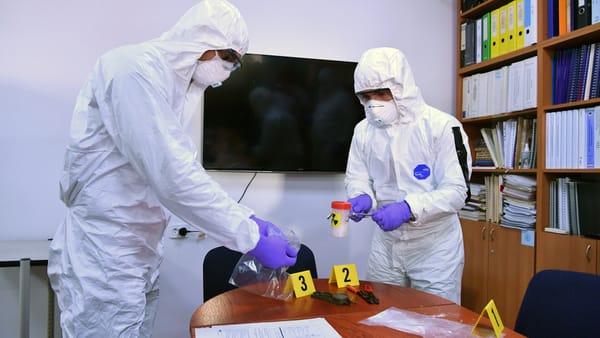
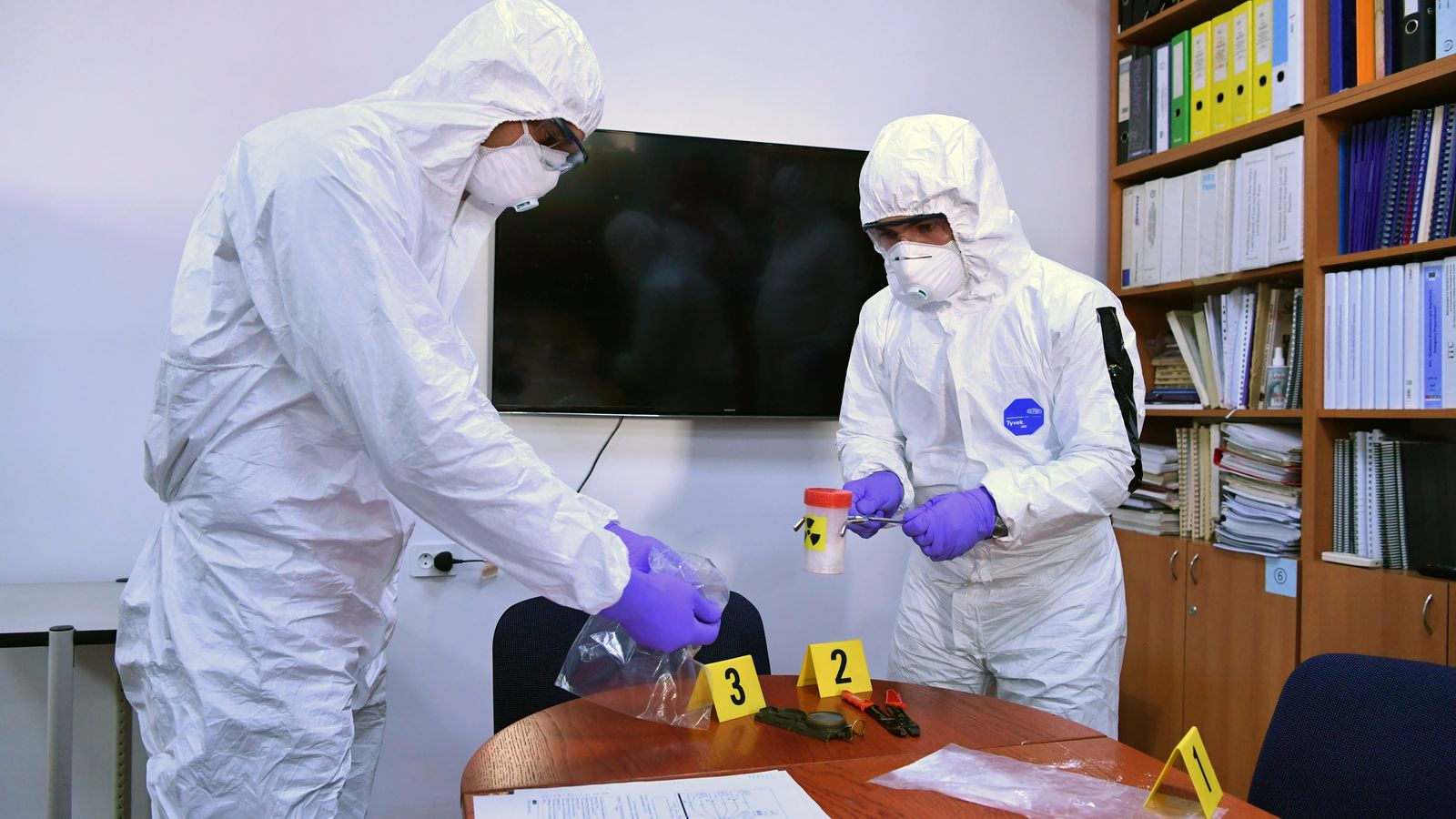
The Police’s first task following the shooting was to fully document the crime scene and recover every shred of evidence that it had to give. Naturally then, this also meant bagging and tagging the shooter’s cache of firearms, which as you may already have ascertained, was unfathomably large. 24 in total were recovered from the suite, including 14 5.56x45mm AR-15 type rifles from a range of different manufacturers, eight 7.62×51mm AR-10 type rifles, also from a range of different manufacturers, one 7.62x51mm Ruger American bolt-action rifle, and one .38 Special Smith & Wesson 342 Revolver.
Now if you know anything about firearms, you will know that none of the aforementioned weapons are fully automatic, with the Ruger American being manually operated, and the AR-10s and 15s all being semi-automatic self-loaders, which only deliver one round per trigger pull, and therefore shouldn’t have been capable of the exceptional rate of fire that the shooter was achieving, so how did he do it? The police had this question too, and as they inspected his weapons more closely, they found their answers: bump stocks and large capacity magazines. This terrifying combination, for all intents and purposes, allowed his semi-automatics to function as machine guns.
With their initial catalogue of the firearms completed, the police’s attention then turned to figuring out how and when each of the firearms seized from the hotel room had been used. A subsequent forensic investigation of the suite turned up 1,057 shell casings, which were meticulously studied to trace back to their firearm of origin. The analysis confirmed that 14 rifles had been fired during the incident. With most of the weapons having been fired for exactly, or just under the amount of rounds its now empty magazine could hold, it appears as though the shooter’s strategy was to have his cache of weapons lined up beside him, fire until its magazine was either empty or the weapon jammed, then drop it and repeat with another weapon.
Next on the to-do list was DNA. Every single item from the suite was collected and scraped bare for any trace of DNA, which the police hoped would allow them to ascertain if anyone else had been involved in the shooting. This seemed to prove conclusively that the shooter acted alone; the only other DNA recovered besides his belonged to the hotel staff, all of whom quickly proved they had absolutely nothing to do with the shooting thanks to watertight alibies, and extensive supporting CCTV footage from the hotel.
Then it was onto digital evidence, which proved to be no small task. The detectives sifted through 22,000 hours of CCTV footage and a whopping 252,000 images, which ultimately yielded just over 500 sightings of the shooter and allowed the police to build up a comprehensive understanding of his movements in the weeks leading up to the shooting.
They also dug into four laptops and three mobile phones that were discovered in the shooter’s suite, revealing online queries including everything from “Biggest open air concert venues in USA” to more specific searches related to anticipated crowd sizes for music festivals, including ‘Life is Beautiful’ and ‘Route 91 Harvest Festival’. They also found that he had sought out information on the height of the Mandalay Bay Hotel, various Las Vegas venues, SWAT tactics, and the performance of different types of ammunition over varying distances. Disgustingly, they also found several hundred images of child pornography.
They also found evidence of a failed previous attempt to carry out another mass shooting, having discovered that the shooter had previously booked a hotel room overlooking the Lollapalooza music festival in Chicago’s Grant Park in August. This reservation was mysteriously cancelled just two days before check-in.
But for all of this extensive searching, the one thing that was not discovered was a motive, and all investigators could do was piece together possible motivations from whatever scraps of evidence they could find.
One explanation that was floated was that the shooter was motivated by far-right political inclinations. Just a few days before the shooting, he was overheard discussing seminal far-right events—the Ruby Ridge standoff and the Waco siege, both of which catalysed the anti-government militia movement in the 1990s.
Additionally, a man who crossed paths with the shooter during an unsuccessful firearms transaction revealed that he had voiced strong anti-government sentiments, ranting about FEMA camps, likening them to government-controlled concentration camps. He also supposedly saw the agency’s operations after Hurricane Katrina as a guise for a larger conspiracy—a dry run for the law enforcement and military to start confiscating guns. These notions tie back to conspiracy theories originating in radical right circles since the 1980s, casting FEMA as a puppet in the hands of a global elite plotting to usurp US sovereignty.
Despite this, investigators treaded carefully, and were reluctant to ascribe far-right tendencies as the shooter’s definite motivation, because it was just one of several possible explanations that they discovered.
Another potential motivation was found in his family history. An FBI report suggested that the shooter was inspired, at least in part, by his father’s reputation as a bank robber who once made the FBI’s most-wanted list, potentially leading to an extreme desire for infamy as a perverse interpretation of his father’s criminal legacy. This potential explanation was compounded by his ex-wife, who indicated that he grew up in a financially unstable home with a single mother, resulting in an insatiable desire for attention that eventually mutated into the pure evil that unfolded on October the 1st.
The FBI’s Behavioural Analysis Unit considered these possibilities for a couple of years, but eventually arrived at a complete dead end, closing the case in January 2019 without ever having decided on a motive for the mass shooting.
The Victims
In the aftermath of any tragedy, it is vital to remember the victims—to recall the vibrant lives extinguished too soon, and to remind ourselves of the indelible imprints they left behind. In doing so, we humanize the numbers, we give meaning to the loss, we wrestle the victims from the clutches of oblivion, and we declare that they mattered, and will continue to matter.
Ordinarily, one might immerse themselves in this task—learning about every individual, committing to memory their names, their faces, their smiles, recounting their stories, no matter how unremarkable or extraordinary they might be, paying homage to them—to the life they led, the people they loved, the dreams they harboured.
But today, we are confronted by a daunting task—a canvas vast and overwhelming, populated by 60 distinct strokes, each rightfully demanding its unique due. Each victim was a universe in themselves, a constellation of experiences and aspirations that were abruptly extinguished. How then, can we distil these diverse realities into a single narrative without blurring the lines of their individuality?
Let us embark on this journey of remembrance together, bearing in mind that these stories, though a mere fraction of the toll, represent a whole—a mosaic of lives irrevocably altered by a senseless act of violence.
Think of Jack Reginald Beaton, a man whose final act was one of selfless love, his body becoming a shield to protect the woman he had loved for 23 years. Then there was Christopher Louis Roybal, a Navy veteran who traded the battlefields of Afghanistan for the neon lights of Las Vegas, only to lose his life far away from the combat zones he had survived.
Turn your thoughts to Lisa Marie Patterson, whose faith and love for sports lit a beacon in her community, or to Adrian Allan Murfitt, the jovial fisherman from Anchorage, dreaming of owning his own boat. And there was Angela Gomez, the diligent nursing student with an infectious zest for life, who had been at the very cusp of realizing her dreams.
Consider the heartache of Austin William Davis’s partner, mourning the loss of the man she had expected to spend the rest of her life with. And Stacee Ann Etcheber, whose husband, a police officer, was robbed of the chance to protect his wife as he had pledged to protect his city.
Among the victims were also those who served their communities with dedication and passion. Heather Lorraine Alvarado, a member of the Cedar City Fire Department’s Ladies Auxiliary, whose loss reverberated through her community. Charleston Hartfield, a police officer and National Guard member, who was slain while administering aid to the initial victims.
And finally, there were those whose potential was so cruelly ripped away. Like recent graduate Christiana Duarte, embarking on her promising career with the Los Angeles Kings, or Keri Lynn Galvan, a mother of three, who could recall every customer’s order, but was robbed of the chance to recall her children growing up.
These are but the briefest of sketches—incomplete and inadequate. Behind each name was a story, a family, a community that continues to reel from the devastating loss. Each death was a tear in the fabric of countless lives. Each absence is a gaping hole that can never be filled. These stories serve as a haunting reminder of the cost of hate and the price of indifference.
Yet, in the midst of this profound tragedy, it’s crucial to remember that the essence of these victims isn’t encapsulated in their deaths, but in the lives they led. They were parents, spouses, children, friends, neighbours, and colleagues. They were individuals who loved, who dreamed, who aspired, who left a mark on the world in ways both big and small.
While this account doesn’t encompass all 60 victims, each one of them is equally important, each story equally compelling. The sheer magnitude of the tragedy makes it impossible to delve into the narrative of every life cut short, yet they remain in our hearts, etched into our collective consciousness, standing as a testament to our shared humanity.
As for non-fatal casualties, approximately 869 individuals suffered physical injuries, with a police investigation confirming that about 413 of these injuries were a direct result of gunshot or shrapnel. A further 360 victims endured injuries not directly related to gunshot or shrapnel wounds, likely due to the chaos and subsequent stampede caused by the shooting. Unfortunately, for nearly 96 victims, their specific type of injury couldn’t be conclusively determined. In addition to this, the Las Vegas police also recognise all 22,000 festival attendees as psychological victims.
Conspiracy Theories
This is a section that brings no joy, but it is a sad reality of the Las Vegas Shooting that it has been the centre of a great number of conspiracy theories over the years. Initially, this section wasn’t going to be included at all; don’t fuel the fire and all that, but after further contemplation it was opted to do so for two reasons: firstly, because whether we like it or not, it is a part of the story, and if we are to bring a fully representative account of the shooting, it has to be included, but secondly, and more importantly, it’s far better to hear them from a writer who isn’t trying to sell any snake oil or wacky narratives, that way readers can be introduced to, and ultimately learn to combat the conspiracy theories rather than potentially find themselves susceptible to them later down the line.
The first conspiracy of note came from the minds of Brad Johnson, a retired CIA officer, and Rich Higgins, a former Pentagon official. They first entered the story a month after the shooting when they, along with a number of associates created a 51-page Power Point presentation which, according to its synopsis, used “open source information with tactical counter terrorism analysis, cyber intelligence, and data mining capabilities” to explain what they claimed to be the reality of the Las Vegas Shooting—and as you’ve probably already ascertained from its inclusion in this section, it was kind of a complete crock of nonsense.
But where their claims get really dark however, is when they named a completely innocent man, who was nothing but an innocent bystander at the massacre, as in fact being complicit in the shooting, claiming that he acted as a middleman between Antifa and ISIS, both of them they alleged were the real masterminds behind the disaster. Their big brained, irrefutable evidence for this claim? A social media post of him eating at a Turkish restaurant—and no, that’s not even being hyperbolic there, that was literally their proof.
Obviously, this was utter nonsense. The main source for this account is a 187-page document that was the result of a nearly yearlong investigation process and collated thousands of pieces of evidence from DNA to ballistics, and from CCTV footage to phone records—and at no point has any other sort of co-conspirator been mentioned. Because there wasn’t one.
But unfortunately, nonsense it may have been, but this conspiracy theory spread like a wildfire online, and soon enough the inferno was out of control. The man in question, naturally keen to have nothing to do with this utter drivel, privated his social media accounts and tried to get on with his life, but unfortunately, this was akin to waving a red flag to a bull, as those rabidly dogging him took this as an admission of guilt.
As if this was not bad enough, the story was then picked up by Laura Loomer, a rather controversial internet personality, at which point, the wildfire escalated into more of an atomic blast, and the harassment against him only continued to grow. His family and friends advised him to simply ignore the fervour and get on with his life, but eventually the stress of a total lack of privacy and constant death threats grew too great for the poor man, and he went to the FBI for protection.
As if this wasn’t bad enough, the conspiracy theory only continued to grow, even eventually finding itself entertained by actual, real world, not online public figures, such as various anchors on a particularly litigious news channel, and even Congressman Scott Perry.
Mercifully, the hate train eventually put on its brakes and pulled into a siding, and the unnamed innocent man was able to go about the rest of his life in peace and is alive and well to this day.
If nothing else, the unfounded accusations that nearly ruined an innocent man’s life underscore a grim facet of our internet-driven era. Innocent bystanders can find their lives upended due to baseless conjecture, magnifying the distressing aftermath of a tragic event. Once a narrative takes root in the fertile ground of the internet, it can prove disconcertingly resilient, irrespective of the protestations and evidence of those wrongfully accused. And of course, such baseless speculations are also an insult to the many innocent lives lost.
Another conspiracy theory that gained traction in the aftermath of the Las Vegas shooting posits that the nameless gunman was not the actual perpetrator. Instead, it was suggested that he was set up as a “patsy” or scapegoat by some larger, more sinister entity, whether it be the government, the “deep state”, a terrorist organization, or some other shadowy group.
At the core of this theory lies the belief that the scale, precision, and lethality of the attack far exceed the capabilities of a single man. Theorists often cite the number of guns found in the hotel suite and the rapid-fire nature of the attack, asserting these factors imply a degree of skill and planning beyond the actual shooter’s perceived abilities.
Additionally, some theorists latch onto perceived inconsistencies or ambiguities in the official timeline of events and law enforcement reports. For instance, the delay in police breaching the hotel suite, or conflicting initial reports about the number and nature of the shooter’s injuries are often cited as “evidence” of a cover-up.
Another branch of this theory focuses on the lack of an established motive for the perpetrator’s actions. Theorists argue that the absence of an apparent reason for him to carry out such a horrific act fuels suspicion that he was not the true perpetrator but rather the fall guy for a covert operation or broader conspiracy.
These theories, while prolific on certain internet forums and social media platforms, lack substantial evidence and are largely built on speculation, misinterpretation, and a profound distrust of official narratives. The consensus among law enforcement and credible media outlets is that the man we have been talking about was indeed the shooter, and any suggestion otherwise is a product of conspiracy theorizing. What’s more, we don’t even have to defer to the media to believe this—once again the main source for this account is an extensive 187-page investigative document published after the attack, and the pages are filled with CCTV stills of the shooter moving bags upon bags full of firearms to his room, and various other clear as light evidence that fully debunks this conspiracy.
As we bring this section to a close, we must remember that unchecked conspiracy theories are not just an annoyance—they are a peril. They can incite fear, stoke divisions, and harm innocent individuals. They are a symptom of deeper societal fissures, a manifestation of our struggle to navigate an ever-changing sociopolitical landscape where the line between truth and falsehood is continually blurred.
In the final reckoning, the Las Vegas shooting’s story has been obscured by the fog of conspiracy, which is itself a tragedy. This haze of baseless accusations and misinformation serves as a stark reminder of the need to reassess our digital discourse’s navigational tools. It underscores the urgency of discerning truth from fiction and treating each other with respect in the complex arena of online interaction. In the end, this is not just about ourselves—it’s about honouring the memory of those impacted by such horrific events, and not insulting their memories by peddling baseless and easily debunked theories.
The Fallout
The Las Vegas Shooting served as a potent catalyst for the rekindling of national debates on gun control. Legislative responses varied from state to state, but in many areas, there was a palpable push for more stringent gun control measures. Nevada, the very state scarred by the massacre, stood at the forefront of this legislative movement. In February 2019, Governor Steve Sisolak signed a bill into law that expanded background checks to private gun sales and transfers, effectively closing the so-called “gun show loophole.”
Following the devastating incident in Las Vegas, then-President Donald Trump also took a decisive step to address part of the firearms issue. On December 18, 2018, his administration officially announced a regulatory ban on bump stocks. The new regulation amended the definition of “machinegun” in the Gun Control Act (GCA) and National Firearms Act (NFA) to include devices that allow semi-automatic firearms to shoot more than one shot with a single pull of the trigger by harnessing the recoil energy.
Consequently, the possession, sale, and manufacture of bump stocks became prohibited under federal law. Existing owners were given a 90-day grace period until the 26th of March 2019, to either destroy their devices or turn them in to the Bureau of Alcohol, Tobacco, Firearms, and Explosives.
Beyond these two instances however, legislative changes were relatively minimal. Despite the limited federal action, the incident had an indelible impact on the ongoing discourse surrounding gun control. It served as a stark reminder of the potential devastation wrought by firearms and the urgent need for comprehensive and effective regulation. Today, the incident continues to reverberate through the national conversation on gun control, contributing to an ongoing debate that seeks to balance individual rights with collective safety.
There were also lawsuits that resulted from the shooting, with one example being one launched by Marie Parsons, mother of the late Carrie Parsons, one of the 60 victims of the tragedy, who launched a legal challenge against several gun manufacturers and dealers. Defendants included industry giants such as Colt, Daniel Defense, and Patriot Ordnance Factory, all of whom had produced firearms used during the massacre. The lawsuit, which demanded damages exceeding $50,000 per plaintiff and called for a jury trial, argued that these companies knowingly sold firearms like the AR-15, which could be readily converted into almost-automatic weapons using a bump stock.
Despite a compelling argument by the Parsons’ attorney highlighting the lethal potential of these modified weapons, the Nevada Supreme Court sided with the gun companies. Citing Nevada Revised Statutes 41.131, Justice Kristina Pickering stated that these companies were protected from wrongful death and negligence claims, unless the deaths resulted directly from a manufacturing defect. The decision underscored the legal safeguards for gun companies and underscored the need for potential legislative changes in the future.
Another lawsuit was settled in July of 2019, when MGM Resorts International, the parent company of the Mandalay Bay hotel, reached a monumental settlement agreement with the victims of the mass shooting. The hotel agreed to pay out up to $800 million to the victims, marking one of the most substantial financial resolutions of its kind. This settlement, the result of a gruelling two-year negotiation period, was slated to cover the trauma and loss suffered by approximately 4,400 relatives and victims. An independent third party was commissioned to distribute the funds based on factors like the severity of injuries and the impact on the victims’ quality of life, a process which brought some modicum of justice, albeit through financial compensation, to those affected.
In the aftermath of the tragedy, the hospitality industry also underwent a transformative reassessment of its security measures. The shooting had opened up a contentious debate about hotel liability, prompting many establishments to reevaluate and bolster their security procedures. Practices that were once commonplace began to shift. Routine room checks became more frequent, providing an additional layer of safety for guests and hotel staff.
“Do not disturb” signs, previously respected as inviolable, were now subject to stricter policies that balanced guests’ privacy with the overall safety of the hotel. These changes, while subtle, underscored the industry’s commitment to preventing a recurrence of such a tragic event.
Conclusion
So ends the story of America’s worst mass shooting; a bitter tragedy in which 60 innocent people lost their lives, 869 suffered life derailing injuries, and thousands more suffered psychological trauma the likes of which we cannot even begin to truly comprehend.
This is normally the part where one might tie things off in a neat little bow; maybe try to find some silver lining to the cloud, or in some way try to lessen the absolute punch to the gut that was the preceding account. But somehow, such an ending just doesn’t feel right today.
Instead, let us bring this to a close in the only way that is truly appropriate: by remembering the names of those who were lost.
Charleston Hartfield — Police officer and National Guard member, slain while administering aid.
Christopher Louis Roybal — Navy veteran, survived Afghanistan but not Las Vegas.
Jack Reginald Beaton — His final act was to shield his wife of 23 years.
Lisa Marie Patterson — Her faith and love for sports lit a beacon in her community.
Adrian Allan Murfitt — The jovial fisherman from Anchorage, dreaming of his own boat.
Angela Gomez — Diligent nursing student at the cusp of realizing her dreams.
Austin William Davis — Taken from the partner who expected to spend her life with him.
Stacee Ann Etcheber — Her husband, a police officer, robbed of his chance to protect her.
Heather Lorraine Alvarado — Cedar City Fire Department’s Ladies Auxiliary member.
Christiana Duarte — Recent graduate embarking on her career with the Los Angeles Kings.
Keri Lynn Galvan — Mother of three, robbed of watching her children grow.
And the 49 others whose names deserve equal remembrance, equal honour, equal grief. Each was a universe extinguished. Each was a story cut short. Each was a light that should never have gone out.
May they rest in peace. May their memories be a blessing. And may we never forget.
Key Takeaways
- The Las Vegas Shooting on October 1, 2017, was the deadliest mass shooting in modern American history, resulting in 60 deaths and over 800 injuries.
- The shooter used a combination of bump stocks and large-capacity magazines to convert semi-automatic rifles into machine guns, allowing for rapid fire.
- Security Officer Jesus Campos was injured while investigating an alarm in the shooter’s hotel suite, providing crucial information to responding officers.
- The shooting led to significant changes in gun control legislation, including a federal ban on bump stocks and expanded background checks in Nevada.
- The tragedy sparked numerous conspiracy theories, which were debunked by extensive police investigations and evidence.
Dana Ortiz covers prosecutorial mechanics, evidentiary procedure, and how investigations unwind decades after the original case file went cold.
Frequently Asked Questions
What was the Las Vegas Shooting?
The Las Vegas Shooting of October 1st, 2017, was the deadliest mass shooting in modern American history. It occurred at the Mandalay Bay Hotel and a music festival on the Las Vegas Strip, resulting in 60 deaths and over 800 injuries.
Who was the first responder to the shooter’s hotel room?
Security Officer Jesus Campos was the first responder to the shooter’s hotel room. He was patrolling the hotel when he discovered an alarm in the shooter’s suite and was shot in the leg while investigating.
How did the shooter manage to fire so rapidly?
The shooter used bump stocks and large capacity magazines, which allowed his semi-automatic rifles to function similarly to fully automatic weapons, enabling a high rate of fire.
What was the initial response of the police to the shooting?
The police response was swift, with every available officer scrambled to the scene. Officers on the ground initially mistook the shots for fireworks but quickly realized the severity of the situation and began coordinating the response.
What was the motive behind the Las Vegas Shooting?
The motive behind the Las Vegas Shooting remains unknown. Investigators considered various possibilities, including far-right political inclinations and a desire for infamy, but no definitive motive was ever established.
How many firearms were recovered from the shooter’s hotel room?
A total of 24 firearms were recovered from the shooter’s hotel room, including 14 AR-15 type rifles, 8 AR-10 type rifles, 1 Ruger American bolt-action rifle, and 1 Smith & Wesson 342 Revolver.
What legal actions were taken following the Las Vegas Shooting?
Following the shooting, Nevada expanded background checks for private gun sales, and the federal government banned bump stocks. Lawsuits were also filed against gun manufacturers and the Mandalay Bay hotel, with the hotel agreeing to pay up to $800 million to the victims.
What conspiracy theories emerged after the Las Vegas Shooting?
Several conspiracy theories emerged, including claims that the shooter was not acting alone and that he was set up as a ‘patsy.’ Another theory falsely accused an innocent bystander of being involved with Antifa and ISIS.
How did the Las Vegas Shooting impact gun control debates?
The Las Vegas Shooting reignited national debates on gun control, leading to some legislative changes, such as expanded background checks in Nevada and a federal ban on bump stocks. However, broader federal action was limited.
What changes did the hospitality industry make after the Las Vegas Shooting?
The hospitality industry reassessed its security measures, increasing the frequency of room checks and implementing stricter policies for ‘Do Not Disturb’ signs to balance guest privacy with overall safety.
Sources
- Original Casual Criminalist video: The Las Vegas Shooting
- Hero image source by IAEA Imagebank / openverse, by.